On this page
- The Dishes You Absolutely Cannot Skip
- Where to Eat Breakfast Like a Local
- Best Street Food Markets & Night Eating Spots
- Restaurant Districts & Areas Worth Knowing
- Bánh Mì, Bún & Bowl Foods: The Quick-Eat Scene
- Seafood: Where to Actually Eat It Without Getting Burned
- Coffee & Drinks Scene
- 2026 Budget Breakdown for Eating in Da Nang
- Pro Tips for Eating Well in Da Nang
- Frequently Asked Questions
💰 Click here to see Vietnam Budget Breakdown
💰 Prices updated: October, 2026. Budget figures are estimates — always verify before travel.
Exchange Rate: $1 USD = ₫25,964.41
Daily Budget (per person)
Shoestring: ₫650,000 – ₫1,550,000 ($25.03 – $59.70)
Mid-range: ₫1,800,000 – ₫3,900,000 ($69.33 – $150.21)
Comfortable: ₫5,200,000 – ₫9,100,000 ($200.27 – $350.48)
Accommodation (per night)
Hostel/guesthouse: ₫120,000 – ₫350,000 ($4.62 – $13.48)
Mid-range hotel: ₫780,000 – ₫1,850,000 ($30.04 – $71.25)
Food (per meal)
Budget meal: ₫60,000.00 ($2.31)
Mid-range meal: ₫250,000.00 ($9.63)
Upscale meal: ₫800,000.00 ($30.81)
Transport
Single metro/bus trip: ₫10,000.00 ($0.39)
Monthly transport pass: ₫300,000.00 ($11.55)
Da Nang has always been the city that gets overlooked between Hoi An and Hue. In 2026, that’s starting to change — partly because the city’s food scene has quietly become one of the best in Central Vietnam, and partly because travelers who actually stop here long enough to eat properly keep coming back. The problem most visitors face is time: they eat one bowl of mì Quảng, tick the box, and move on. This guide is built to fix that. It covers specific streets, real market stalls, honest pricing, and the order of operations for eating well in a city that rewards those who pay attention.
The Dishes You Absolutely Cannot Skip
Da Nang sits in Central Vietnam, which means the food here runs bolder and spicier than what you’ll find in the south. These aren’t dishes you find everywhere in Vietnam — they’re regional, and they’re the reason food travelers make detours to this city.
- Mì Quảng — Wide, turmeric-yellow noodles served nearly dry with a small splash of broth, topped with shrimp, pork, peanuts, and fresh herbs. The crunch of rice crackers crumbled on top is the textural detail nobody warns you about.
- Bánh xèo Da Nang — Smaller and crispier than the southern version. The sizzle of the batter hitting a blazing hot iron pan is half the experience. Wrap pieces in mustard leaf and rice paper, not lettuce.
- Bún chả cá — Fish cake noodle soup specific to Da Nang. The broth is clear but punchy with lemongrass and turmeric. Look for versions with fried fish cake slices, not just boiled.
- Bánh tráng cuốn thịt heo — Boiled pork and vegetables rolled in wet rice paper, eaten with mắm nêm (fermented anchovy dipping sauce). The smell of mắm nêm is intense and non-negotiable — it’s what makes the dish.
- Nem lụi — Grilled pork skewers on lemongrass stalks, eaten the same wrap-and-dip way as the pork rolls above. Often served together as a duo at the same restaurants.
- Bánh căn — Small, thick rice pancakes cooked in clay molds, topped with egg or shrimp. A popular breakfast and snack food that most tourists never encounter.

Where to Eat Breakfast Like a Local
Da Nang wakes up early. By 6am, the sidewalks around residential neighborhoods are already crowded with plastic stools and steaming bowls. If you’re eating breakfast after 8:30am, you’re already behind the curve at the best spots.
Hải Phòng Street is the most concentrated breakfast strip in the city. The block between Ông Ích Khiêm and Lê Độ is lined with stalls selling bún chả cá, mì Quảng, and bánh canh. Arrive by 7am. Most stalls close by 10am. Prices run 30,000–50,000 VND (around USD $1.20–$2) per bowl.
Nguyễn Chí Thanh Street near the Cồn Market area has a cluster of bánh mì carts that operate from roughly 6am. The bánh mì here use proper crusty bread baked fresh — you can hear the crackle when they press it.
For bánh căn specifically, walk through the residential backstreets around Thanh Khê District. These stalls rarely appear on apps, but ask any local for “bánh căn” and they’ll point you in the right direction within 30 seconds.
Best Street Food Markets & Night Eating Spots
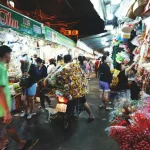
Cồn Market (Chợ Cồn) is the real everyday market of Da Nang, not the tourist version. Located on Ông Ích Khiêm Street, it’s a two-story wet market with a dedicated food hall on the ground floor. The bánh tráng cuốn thịt heo vendors here are as good as anywhere in the city, and the price is honest — around 60,000–80,000 VND (USD $2.40–$3.20) per full serve. Go before noon when everything is freshest.
Han Market (Chợ Hàn) on Trần Phú Street is more central and gets more foot traffic from visitors. The upstairs food section is decent for a quick bowl, but the market’s real value is for picking up dried goods and snacks — bánh tráng (rice paper), dried shrimp, and roasted sesame candy to take home.
The night food area around Lê Duẩn Street near the Han River lights up after 6pm. This isn’t a formal night market — it’s an organic collection of grilled meat vendors, bún bò stalls, and fruit carts that sets up on the sidewalk. By 7:30pm, every plastic stool within two blocks is occupied. Expect to share tables with strangers. Order grilled corn (bắp nướng) while you wait for your main.

The My Khe Seafood Night Market, which runs along Võ Nguyên Giáp Street parallel to the beach, operates every evening from around 5pm. It’s more tourist-oriented than the Lê Duẩn strip, but the seafood is genuinely fresh from the nearby fishing harbor. Pricing is on display boards and, as of 2026, most vendors have QR code menus in English.
Restaurant Districts & Areas Worth Knowing
Da Nang doesn’t have one single dining district — the eating is spread across several distinct zones, each with its own character.
Trần Phú and Bạch Đằng Streets along the Han River have the highest density of sit-down restaurants. This is where you’ll find the rooftop spots, the craft beer bars with food menus, and the mid-range Vietnamese restaurants that do well for groups. The view across to the Dragon Bridge is the draw here, but the food quality is inconsistent. Use it for the experience, not as your primary eating base.
Lê Độ and Hải Phòng intersection area is where locals go for Central Vietnamese food. The restaurants here are no-frills, well-lit, and cheap. Nem lụi and bánh tráng cuốn are the things to order. A full meal for two costs 120,000–180,000 VND (USD $4.80–$7.20) without drinks.
Phạm Văn Đồng Street running toward My Khe beach is lined with mid-range to upscale seafood restaurants. Many have live tanks out front displaying the catch of the day. This is the strip to know for a proper sit-down seafood dinner — but read the next section first before ordering.
Hòa Vang District, about 15km southwest of the city center, has a cluster of garden restaurants (nhà hàng vườn) serving countryside Quảng Nam cuisine. These are popular for weekend lunches with Vietnamese families and are worth the Grab ride if you want to escape the coast entirely.
Bánh Mì, Bún & Bowl Foods: The Quick-Eat Scene
Da Nang’s fast, cheap, standing-up food scene is some of the best in Vietnam. These are the meals you eat multiple times a day without thinking twice.
Bánh mì Bà Lan on Đống Đa Street is one of the most consistently cited local favorites for bánh mì. The bread is baked in-house, the pâté is house-made, and the queue at peak hours tells you everything. Open from early morning until sold out, usually by 10am. One roll: 20,000–25,000 VND (under USD $1).

Bún bò Huế is available everywhere in Da Nang because the city sits at the transition point between Hue and Hoi An. The better bowls are on Nguyễn Du Street, where several small family shops have been operating the same recipe for over a decade. The broth should be deep red from annatto and lemongrass, not pale.
For bánh cuốn (steamed rice rolls), the street running behind the Cồn Market area has several morning-only stalls. By 9am they’re gone. The rolls arrive glistening, filled with seasoned pork and mushroom, topped with crispy fried shallots. One serving of four to five rolls costs around 35,000 VND (USD $1.40).
Seafood: Where to Actually Eat It Without Getting Burned
This section exists because seafood in Da Nang has a pricing problem that hasn’t fully resolved itself in 2026. The city sits next to some of the best fishing grounds in Vietnam — the seafood itself is excellent. The issue is what happens between the boat and your plate in tourist-facing restaurants.
The core trap is ordering seafood by weight at restaurants that don’t display their per-kilogram pricing clearly. A crab that looks small can weigh more than expected, and some restaurants on the beach strip quote prices per 100 grams rather than per kilogram, which is easy to misread. Always confirm the total price before anything goes on the grill.
Where to eat seafood honestly:
- Mân Thái Fishing Village, about 3km north of My Khe beach toward Son Tra Peninsula — small family restaurants here buy directly from local boats. No English menus, but pointed at a tank works fine. Prices per kilogram are written on chalkboards and are about 30–40% cheaper than the beach strip restaurants.
- Bé Mặn Beach area (Bắc Mỹ An Ward) has a cluster of no-frills seafood restaurants that are popular with Da Nang locals on weekends. Grilled squid, steamed clams with lemongrass, and crab fried with tamarind are the standards.
- Chợ đầu mối (the wholesale seafood market) on Yên Khê 2 Street operates from around 3am to 7am. This is where restaurants buy their stock. Some small cook-to-order stalls operate right at the market’s edge — eating here at dawn with fishermen is a specific kind of Da Nang experience.

Budget for seafood: a proper meal of two or three dishes at a local restaurant runs 300,000–500,000 VND (USD $12–$20) for two people. The same meal on the tourist beach strip can easily cost three times that.
Coffee & Drinks Scene
Da Nang’s café culture has matured significantly since 2023. The city now has a dense network of independent coffee shops that go well beyond the standard cà phê sữa đá. In 2026, it’s one of the better cities in Vietnam for specialty coffee alongside the traditional Vietnamese filter style.
Trần Phú Street near the Han River has the highest density of café seating with river views. These are the Instagram-bait spots — acceptable coffee, better location.
The streets around Hoàng Diệu and Đống Đa in the Hải Châu District have a newer wave of specialty roasters and third-wave coffee shops. Prices here run 45,000–75,000 VND (USD $1.80–$3) for a filter or pour-over, which is competitive for the quality.
For traditional Vietnamese coffee, find a local cà phê vợt (sock coffee) vendor — filtered slowly through a cloth sock into a glass of ice, sweet and intensely strong. These set up as sidewalk operations around markets and older residential areas, typically before 8am.
Sinh tố (blended fruit) stalls cluster around Cồn Market and the Han Market area. In Da Nang’s humidity — regularly hitting 35°C in summer — a 25,000 VND (USD $1) glass of blended watermelon or avocado with condensed milk is a practical necessity.
Craft beer has a real presence in Da Nang now. Lê Duẩn and Bạch Đằng Streets have multiple craft beer bars with locally produced taps, often alongside decent pub food menus. A pint of local craft beer runs 60,000–90,000 VND (USD $2.40–$3.60).
2026 Budget Breakdown for Eating in Da Nang
Food in Da Nang remains affordable by any international standard, though prices at tourist-facing restaurants have risen noticeably since 2024 following increased visitor numbers from South Korea, Australia, and the expanded direct flight routes into Da Nang International Airport.
Budget Tier — Under 200,000 VND/day (under USD $8)
- Breakfast: bowl of bún chả cá or mì Quảng from a market stall — 35,000–50,000 VND
- Lunch: bánh mì or a quick bowl from a street stall — 25,000–45,000 VND
- Dinner: Cồn Market food hall or a local neighborhood restaurant — 60,000–90,000 VND
- Coffee and drinks: 25,000–40,000 VND

Mid-Range Tier — 300,000–600,000 VND/day (USD $12–$24)
- Breakfast at a café with food — 60,000–90,000 VND
- Lunch at a proper sit-down local restaurant — 80,000–150,000 VND
- Dinner at a seafood restaurant in a local area or a mid-range Vietnamese restaurant — 150,000–250,000 VND
- Coffees, a beer, and snacks throughout the day — 80,000–120,000 VND
Comfortable Tier — 800,000–1,500,000 VND/day (USD $32–$60)
- Café breakfasts, specialty coffee — 100,000–150,000 VND
- Lunch at a restaurant with air conditioning and a menu in English — 200,000–350,000 VND
- Full seafood dinner on the beach strip or a higher-end Vietnamese restaurant — 400,000–700,000 VND
- Craft beers, cocktails, rooftop drinks — 200,000–400,000 VND
Pro Tips for Eating Well in Da Nang
Timing matters more than anywhere else. The best street food stalls operate a two-to-three hour window, usually 6am–9am for breakfast spots and 11am–1pm for lunch stalls. Come outside those windows and you’ll find cold leftovers or closed shutters.
Use Grab for food delivery when you need a rest day. The GrabFood service in Da Nang in 2026 covers a wide enough radius to order from local stalls and neighborhood restaurants that don’t cater to walk-in tourists at all. It’s a backdoor into the local food scene.
Learn three words: “cay” (spicy), “không cay” (not spicy), and “thêm” (more). Central Vietnamese food defaults to genuinely hot chili levels that catch many visitors off guard. If you want to adjust heat, say so before the dish is prepared, not after.
Mắm nêm is the dividing line. Many Central Vietnamese dishes use fermented anchovy sauce as the dipping condiment. It smells extremely strong. Try it before dismissing it — it changes the entire dish. If it genuinely doesn’t work for you, ask for nước mắm (regular fish sauce) as a substitute.
Market stalls rarely have English menus. Point at what other people are eating. This works every time and often leads to better orders than the written menu would have produced anyway.
Stomach resilience: eat where locals eat in volume. A stall with twenty Vietnamese customers at 7am is safe. A quiet stall near a tourist hotel with laminated menus in four languages warrants more caution, not less.
Frequently Asked Questions
What is the most famous food in Da Nang?
Mì Quảng is the dish most associated with Da Nang and the wider Quảng Nam region. Bánh tráng cuốn thịt heo (pork rolls in rice paper with mắm nêm dipping sauce) is equally iconic and specifically tied to the city. Both are must-orders on any first visit.

Where is the best place to eat street food in Da Nang?
Hải Phòng Street has the most concentrated strip of local breakfast stalls. Cồn Market’s ground-floor food hall covers the widest variety during daytime. For evening street eating, the sidewalk zone around Lê Duẩn Street near the Han River is the most authentic after-dark option in 2026.
Is food in Da Nang spicy?
Yes, noticeably more so than food in Ho Chi Minh City or Hanoi. Central Vietnamese cuisine uses fresh and dried chilies generously. If you’re sensitive to heat, say “không cay” (no spice) when ordering. Many stalls will adjust. Chili is usually added to the broth base, so ordering early gives the kitchen time to modify.
How much does food cost in Da Nang?
A street food breakfast costs 35,000–50,000 VND (around USD $1.40–$2). A full local lunch runs 60,000–120,000 VND (USD $2.40–$4.80). A proper seafood dinner for two at a non-tourist restaurant costs 300,000–500,000 VND (USD $12–$20). Eating entirely from street stalls, you can eat very well for under 200,000 VND per day.
Is Da Nang good for vegetarians?
It’s manageable but requires effort. Buddhist vegetarian restaurants (quán chay) operate throughout the city and are easy to find near pagodas and in older residential neighborhoods. The 1st and 15th days of the lunar calendar see a surge in vegetarian stalls citywide. Standard street food menus are heavily meat and seafood based, so having Google Translate ready helps when navigating options elsewhere.
📷 Featured image by balliro tran on Unsplash.