💰 Click here to see Vietnam Budget Breakdown
💰 Prices updated: October, 2026. Budget figures are estimates — always verify before travel.
Exchange Rate: $1 USD = ₫25,964.41
Daily Budget (per person)
Shoestring: ₫650,000 – ₫1,550,000 ($25.03 – $59.70)
Mid-range: ₫1,800,000 – ₫3,900,000 ($69.33 – $150.21)
Comfortable: ₫5,200,000 – ₫9,100,000 ($200.27 – $350.48)
Accommodation (per night)
Hostel/guesthouse: ₫120,000 – ₫350,000 ($4.62 – $13.48)
Mid-range hotel: ₫780,000 – ₫1,850,000 ($30.04 – $71.25)
Food (per meal)
Budget meal: ₫60,000.00 ($2.31)
Mid-range meal: ₫250,000.00 ($9.63)
Upscale meal: ₫800,000.00 ($30.81)
Transport
Single metro/bus trip: ₫10,000.00 ($0.39)
Monthly transport pass: ₫300,000.00 ($11.55)
What Makes Cao Bang Different
Most travelers who make it to northern Vietnam stop at Sapa or Ha Long Bay and call it done. Cao Bang Province sits another 270 kilometres northeast of Hanoi, close to the Chinese border, and it rewards the extra effort with landscapes that feel genuinely untouched. The province sits inside the UNESCO-recognized Non Nuoc Cao Bang Global Geopark — a designation that has brought some improvements to visitor infrastructure since 2024 without yet turning the place into a tourist circuit. In 2026, it still takes real effort to get here, which means the crowds you’d find at Ban Gioc Waterfall five years ago have not materialized the way people feared. This guide is for travelers who want the payoff without the guesswork.
Ban Gioc Waterfall — The Main Event
Ban Gioc is the largest waterfall in Vietnam and one of the largest in Southeast Asia. Numbers alone don’t prepare you for it. Standing at the viewing terrace in the morning, the sound hits you before the image registers — a low, continuous roar that vibrates in your chest, and a permanent mist rising off the Quay Son River that keeps the surrounding bamboo permanently slick and green. The falls straddle the Vietnamese-Chinese border, with the main cascade on the Chinese side and a series of wide, layered tiers on the Vietnamese side that are arguably more photogenic.
The best light is between 7:00 and 9:30 in the morning, before tour groups from the Chinese side arrive by midday. There is a bamboo raft service (around 100,000 VND / ~4 USD per person) that takes you close to the base of the falls — wet, loud, and completely worth it. Bring a dry bag for your phone.
Seasonal timing matters significantly. The wet season runs from May through October, when water volume is at its peak and the falls are genuinely thunderous. September and October are the sweet spot — maximum flow without the worst of the rain. The dry season (November to March) drops the water level noticeably but offers cleaner skies for photography and cooler temperatures that make the 35-kilometre road from Cao Bang town more comfortable to ride.
Nguom Ngao Cave — The Underground Counterpart
About three kilometres from Ban Gioc, Nguom Ngao translates loosely as “Tiger Cave” in the Tay language, named for the tigers that once sheltered here. The cave system runs for over 3 kilometres, though only around 900 metres are open to visitors. That’s enough. The formations inside — stalactites that drape in curtain-like sheets, columns as wide as old-growth trees, chambers large enough to park a fleet of buses — make this one of the most impressive caves in northern Vietnam outside of Phong Nha.
The entrance fee is 40,000 VND (~1.70 USD) and includes a guide, which is mandatory and actually useful here. Lighting inside is permanent but basic — it illuminates the formations without ruining the atmosphere. Wear shoes with grip. The floor is wet and uneven throughout, and several sections require ducking under low overhangs. Budget 45 to 60 minutes for a relaxed visit. Combine it with Ban Gioc the same morning and you’ll have the two sites done by noon without feeling rushed.
The Cao Bang Geopark Loop — Beyond the Waterfall
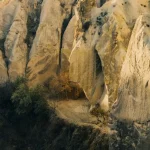
Many visitors treat Ban Gioc as a destination in itself — drive out, see the falls, drive back. That approach misses the best part of Cao Bang. The province contains some of the most dramatic karst topography in Vietnam: dark limestone peaks rising from flat valley floors, rivers cutting through gorges, and small Tay and Nung minority villages that have remained largely unchanged in their daily routines.
The Geopark Loop is an informal name for the route that connects several key sites beyond Ban Gioc. Key stops include:
- Thang Hen Lake Cluster — a series of 36 interconnected lakes in Tra Linh District, surrounded by karst cliffs. The access road is rough but passable on a motorbike. Best visited in the morning when mist sits in the valleys between the peaks.
- Pac Bo Historical Site — where Ho Chi Minh lived in a cave after returning to Vietnam in 1941. The site has historical weight and a serene river setting, though the political commentary is heavy if you’re not interested in Vietnamese revolutionary history.
- Ma Phuc Pass — a winding mountain road with open views over the karst plateau. The road surface was significantly improved in late 2025 as part of the provincial road upgrade project, making it accessible to regular cars rather than just high-clearance vehicles.
- Phuc Sen Village — a Nung An village known for hand-forged knives and traditional metalworking. You can watch smiths work at open-air forges, and the knives sold here are genuinely functional, not tourist replicas.
Renting a motorbike in Cao Bang town (from around 150,000–200,000 VND / 6–8.50 USD per day) and doing this loop over two days gives you the most flexibility. The roads through the karst highlands have almost no traffic outside of market days.
Where to Eat in Cao Bang
Cao Bang has a distinct food culture shaped by its Tay and Nung communities, and the provincial capital is small enough that the best eating happens in a handful of reliable spots rather than being spread across dozens of restaurants.
Banh cuon Cao Bang is the dish to know. Unlike the steamed rice rolls you’d find in Hanoi, the local version is thicker, served with a broth-based dipping sauce rather than nuoc cham, and often topped with crispy fried shallots and sliced Vietnamese sausage. The morning market near Cao Bang central market (Cho Cao Bang, on Ngo Quyen Street) has several stalls open from 6:00 to 10:00 that serve it fresh — the steam rising off the trays and the soft, slightly tacky texture of the rice sheets are the markers of a good batch.
Lam rice (com lam) — glutinous rice cooked inside bamboo tubes over open flame — is sold by roadside vendors on the route to Ban Gioc. Peel back the charred bamboo and the rice inside has absorbed a subtle smoky sweetness that pairs well with grilled pork or sesame salt.
For a sit-down meal, Quan Com Ga Thuy Nguyen on Xuan Truong Street serves solid local chicken rice and congee. Nha Hang Thanh Loan near the Kim Dong Bridge is reliable for Tay-style claypot dishes and fried river fish. Expect to pay 60,000–120,000 VND (2.50–5 USD) per dish at either place.
Day Trip or Overnight?
Honest answer: Ban Gioc alone can be done as a very long day trip from Cao Bang town (70 kilometres round trip), but you cannot do Cao Bang Province justice as a day trip from Hanoi. The capital is 272 kilometres away by road — that’s four to five hours each way on a good day. Anyone telling you this is manageable in a single day is selling a very exhausting itinerary.
If you’re coming from Hanoi, a minimum of two nights in Cao Bang town allows you to reach Ban Gioc and Nguom Ngao on day one, and explore one or two Geopark loop sites on day two before heading back. Three nights opens up the full loop, including Thang Hen and the minority villages, without feeling rushed.
If you’re already based in Lang Son (about 130 kilometres to the south), a long day trip to Ban Gioc is feasible by private car or motorbike, though the final stretch of road demands your full attention.
Getting to Cao Bang in 2026
There is no airport in Cao Bang, and no train line. The only way in is by road.
By sleeper bus from Hanoi: Several operators run overnight services from Hanoi’s Gia Lam bus station and My Dinh bus station to Cao Bang town. Journey time is five to six hours. Operators including Hoang Long and Hung Thanh run departures around 22:00–23:00, arriving early morning. Fares run around 200,000–280,000 VND (8.50–12 USD) for a sleeper berth. Book at least a day ahead during weekends and public holidays.
By private car or self-driven motorbike: The main route follows National Highway 3 (QL3) north from Hanoi through Thai Nguyen and Bac Kan. The road quality improved substantially after the Thai Nguyen–Bac Kan expressway section opened in stages through 2024–2025, cutting the Hanoi–Cao Bang drive to approximately four hours for the first two-thirds of the journey. The final 80 kilometres into Cao Bang town are still single-lane mountain road — scenic but slow.
New in 2026: A direct Hanoi–Cao Bang limousine van service (9-seater) launched in early 2026 through several operators, offering door-to-door pickup from Hanoi’s Old Quarter. It’s more expensive at around 350,000–400,000 VND (15–17 USD) per seat, but significantly more comfortable than the bus and faster point-to-point than renting a private car.
2026 Budget Reality
Cao Bang is one of northern Vietnam’s more affordable provinces precisely because tourism infrastructure is still developing. Accommodation options in the provincial capital have expanded since 2024, but it has not yet developed the boutique hotel market you’d see in Sapa or Ninh Binh.
- Budget: Guesthouses in Cao Bang town from 180,000–300,000 VND per night (7.50–12.50 USD). Basic rooms, often family-run, usually include wifi and a fan or basic air conditioning. Meals from market stalls at 30,000–60,000 VND (1.25–2.50 USD). Motorbike rental 150,000–200,000 VND per day.
- Mid-range: Newer local hotels with en-suite bathrooms and air conditioning from 400,000–650,000 VND per night (17–27 USD). Think clean, functional rooms — not design hotels. Restaurant meals at 80,000–150,000 VND per dish.
- Comfortable: The Cao Bang Serene Hotel and a handful of newer riverside guesthouses in the 700,000–1,100,000 VND range (30–47 USD) offer the most polished experience currently available in the province. There are no international hotel brands here as of 2026.
Estimated daily spend: A realistic two-day trip including accommodation, food, motorbike rental, and entry fees runs approximately 1,200,000–2,000,000 VND per person (50–85 USD) depending on your comfort level, not including transport from Hanoi.
Frequently Asked Questions
Is Cao Bang safe for solo travelers?
Yes. Cao Bang is a quiet, low-crime province. Petty theft is rare. The main risks are practical: the mountain roads require caution on a motorbike, especially after rain when surfaces become slippery. Solo travelers should inform their guesthouse of their planned route before heading into the more remote parts of the Geopark loop.
Do I need a visa or special permit to visit Ban Gioc Waterfall?
Most foreign visitors to Vietnam in 2026 enter on an e-visa valid for 90 days, which covers a visit to Ban Gioc. The waterfall sits in a border zone, and you will pass a checkpoint requiring your passport. No additional border zone permit is required for the viewing area and raft ride. Do not attempt to cross to the Chinese side — it is not permitted without a Chinese visa and formal border crossing.
What is the best time of year to visit Cao Bang?
September to November offers the best combination of high water volume at Ban Gioc and improving weather after peak monsoon. March to May is the second-best window — dry, mild temperatures, and lower tourist numbers. Mid-December to February brings cold fog that reduces visibility and can make roads slippery. July and August bring the heaviest rain and occasional road closures from landslides.
Can I visit Cao Bang without renting a motorbike?
Yes, but with limitations. Hired cars with drivers can be arranged from Cao Bang town for around 1,200,000–1,800,000 VND per day (50–77 USD) and cover Ban Gioc and Nguom Ngao comfortably. The Thang Hen lakes and some Geopark routes are harder to reach by car due to narrow access roads. Xe om (motorbike taxi) drivers in Cao Bang town also offer full-day hire, which suits travelers who don’t want to ride themselves.
Is there reliable mobile internet coverage in Cao Bang?
Coverage in Cao Bang town and along the main highway to Ban Gioc is generally adequate with Viettel or Vietnamobile SIM cards — the most reliable networks in border regions. Signal drops in the karst valleys and inside caves, as expected. Download offline maps of the province before you leave town. Google Maps coverage for the Geopark loop roads has improved since 2024 but still shows gaps in the most remote sections.
📷 Featured image by Vincent Yap on Unsplash.