On this page
- Understanding Vietnam’s Three Distinct Regions
- Northern Vietnam: Cool Mountains and Cultural Heritage
- Central Vietnam: Imperial Cities and Coastal Beauty
- Southern Vietnam: Tropical Energy and Mekong Adventures
- Sample Itineraries by Duration
- Transportation Between Regions in 2026
- When to Visit Each Region
- Budget Planning Across the Three Regions
- Frequently Asked Questions
💰 Click here to see Vietnam Budget Breakdown
💰 Prices updated: October, 2026. Budget figures are estimates — always verify before travel.
Exchange Rate: $1 USD = ₫25,964.41
Daily Budget (per person)
Shoestring: ₫650,000 – ₫1,550,000 ($25.03 – $59.70)
Mid-range: ₫1,800,000 – ₫3,900,000 ($69.33 – $150.21)
Comfortable: ₫5,200,000 – ₫9,100,000 ($200.27 – $350.48)
Accommodation (per night)
Hostel/guesthouse: ₫120,000 – ₫350,000 ($4.62 – $13.48)
Mid-range hotel: ₫780,000 – ₫1,850,000 ($30.04 – $71.25)
Food (per meal)
Budget meal: ₫60,000.00 ($2.31)
Mid-range meal: ₫250,000.00 ($9.63)
Upscale meal: ₫800,000.00 ($30.81)
Transport
Single metro/bus trip: ₫10,000.00 ($0.39)
Monthly transport pass: ₫300,000.00 ($11.55)
Planning a Vietnam trip in 2026 means navigating a country that’s longer than the distance from London to Rome, with three dramatically different regions each offering distinct climates, cultures, and experiences. Many travelers underestimate just how diverse Vietnam is, assuming they can “see it all” in a week. The reality is that Vietnam’s 1,650-kilometer length encompasses everything from misty mountains where ethnic minorities still follow ancient traditions, to imperial cities frozen in time, to tropical deltas where life flows with the rhythms of the Mekong River.
Understanding Vietnam’s Three Distinct Regions
Vietnam divides naturally into three regions that locals call Bac Bo (North), Trung Bo (Central), and Nam Bo (South). These aren’t just geographical divisions — they represent three different worlds shaped by distinct histories, climates, and cultural influences.
The North centers around Hanoi and extends to the Chinese border, encompassing the Red River Delta and the dramatic mountains of the northwest. Here, you’ll find Vietnam’s political heart, its most traditional culture, and landscapes that inspired countless poems. The cooler climate and Confucian influence from China create a more reserved, formal atmosphere compared to the rest of the country.
Central Vietnam stretches from Thanh Hoa Province down to Binh Thuan, with the ancient imperial capital of Hue at its heart. This region bears the heaviest scars of the American War, but it’s also where Vietnamese culture reached its artistic peak under the Nguyen Dynasty. The narrow coastal strip between mountains and sea creates unique microclimates and some of Vietnam’s most stunning beaches.
The South radiates out from Ho Chi Minh City (still called Saigon by many locals) across the vast Mekong Delta. French colonial influence runs deepest here, mixing with Khmer traditions and creating Vietnam’s most entrepreneurial, fast-paced culture. The tropical climate and fertile delta soil make this region Vietnam’s rice bowl and economic powerhouse.

Northern Vietnam: Cool Mountains and Cultural Heritage
Northern Vietnam offers Vietnam’s most authentic cultural experiences, where morning mist clings to terraced rice fields and the aroma of pho drifts from street corners at dawn. Hanoi remains the cultural and political center, its Old Quarter buzzing with the constant hum of motorbikes weaving between thousand-year-old temples and French colonial buildings.
The region’s crown jewel is Ha Long Bay, where 1,600 limestone karsts rise from emerald waters. In 2026, new eco-friendly cruise options have replaced many older vessels, offering better experiences while protecting UNESCO World Heritage waters. Book at least two days to fully appreciate the bay’s otherworldly beauty.
Sapa and the northern mountains showcase Vietnam’s ethnic diversity. The Hmong, Red Dao, and other hill tribes maintain traditional lifestyles in villages scattered across terraced mountainsides. The new expressway from Hanoi to Lao Cai, completed in late 2024, has cut travel time to just over three hours, making Sapa much more accessible for shorter visits.
Weather patterns make timing crucial in the north. December through February brings cool, drizzly conditions perfect for exploring Hanoi’s museums and temples, but mountain areas can be uncomfortably cold and foggy. March through May offers ideal conditions everywhere, with comfortable temperatures and clearer skies revealing mountain vistas.
Northern cuisine emphasizes subtlety and balance. Pho originated here, and Hanoi’s versions remain the gold standard — clear, aromatic broths perfected over generations. Bun cha, grilled pork with noodles and herbs, represents northern cooking at its finest. Street food culture thrives on tiny plastic stools where locals gather for meals that rarely cost more than 50,000 VND (2.10 USD).

Central Vietnam: Imperial Cities and Coastal Beauty
Central Vietnam combines Vietnam’s richest historical legacy with some of Asia’s most beautiful beaches. This narrow strip of land between the South China Sea and the Annamite Mountains packs incredible diversity into a relatively small area.
Hue served as Vietnam’s imperial capital for over 140 years, and its elaborate tombs, pagodas, and citadel reflect the sophisticated court culture of the Nguyen Dynasty. The Perfume River winds through the city, its banks lined with ancient temples where the sound of temple bells still marks the passing hours. Royal cuisine here represents Vietnamese cooking at its most refined, with dishes originally prepared for emperors.
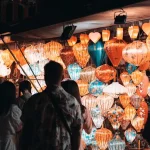
Hoi An preserves an entire ancient trading port, its yellow buildings and lantern-lit streets creating one of Asia’s most photogenic destinations. The UNESCO World Heritage town has managed tourism pressure well, with new regulations in 2025 limiting cruise ship arrivals and encouraging longer stays over day trips. The nearby My Khe Beach consistently ranks among the world’s best.
Da Nang has emerged as Central Vietnam’s modern hub, with an international airport connecting the region to major Asian cities. The city itself offers excellent beaches and serves as a base for exploring both Hoi An and the Marble Mountains. The Golden Bridge at Ba Na Hills, supported by giant stone hands, has become one of Vietnam’s most Instagrammed locations.
Central Vietnam’s weather follows distinct wet and dry seasons. The dry season from February to August offers perfect beach conditions, though temperatures can soar above 35°C in summer. The wet season from September to January brings heavy rains and occasional typhoons, but also fewer crowds and dramatically lower prices.
Central Vietnamese cuisine stands apart for its royal influences and spicy heat. Bun bo Hue, a spicy beef noodle soup, packs more punch than northern pho. Cao lau noodles in Hoi An use water from specific local wells, creating a unique texture impossible to replicate elsewhere. The region’s proximity to both mountains and sea means menus feature everything from fresh seafood to exotic mountain vegetables.

Southern Vietnam: Tropical Energy and Mekong Adventures
Southern Vietnam pulses with entrepreneurial energy, its tropical climate and fertile soil creating Vietnam’s economic powerhouse. Ho Chi Minh City dominates the region as Southeast Asia’s fastest-growing metropolis, while the Mekong Delta spreads out in all directions as a vast network of rivers, canals, and floating markets.
Ho Chi Minh City never sleeps. The sizzle of street food vendors working through the night mingles with the constant flow of motorbikes carrying everything from families of four to entire furniture sets. District 1 preserves French colonial architecture alongside gleaming modern skyscrapers, while the Cu Chi Tunnels just outside the city offer sobering insights into the American War.
The Mekong Delta represents a completely different pace of life. Rivers serve as highways, floating markets as shopping centers, and fruit orchards as both farms and tourist destinations. Can Tho, the delta’s largest city, offers the best access to authentic floating markets, especially Cai Rang, where vendors display their wares on long poles to advertise from a distance.
Phu Quoc Island has transformed from a sleepy fishing island into Vietnam’s premier beach destination. New resort developments in 2025 and 2026 have added luxury options, while the island’s fish sauce factories and pepper farms maintain traditional industries. The cable car to Hon Thom Island offers spectacular views over the Gulf of Thailand.
Southern Vietnam’s tropical climate means year-round warmth, but distinct wet and dry seasons affect travel planning. The dry season from November to April offers perfect conditions with minimal rainfall and comfortable humidity. The wet season from May to October brings afternoon thunderstorms but also lush green landscapes and fewer tourists.

Southern cuisine reflects the region’s abundance and cultural mixing. Dishes tend to be sweeter than in the north, with more herbs and raw vegetables accompanying meals. Banh mi sandwiches reached their current form here, combining French bread with Vietnamese ingredients. The region’s tropical fruits — dragon fruit, rambutan, durian — appear in everything from smoothies to elaborate desserts.
Sample Itineraries by Duration
One Week: Southern Focus
Fly into Ho Chi Minh City (3 days), including day trips to Cu Chi Tunnels and Mekong Delta. Transfer to Phu Quoc (3 days) for beaches and relaxation. This itinerary works year-round except during heavy rains (September-October).
Two Weeks: North and South
Start in Hanoi (3 days) with a Ha Long Bay overnight cruise. Fly to Ho Chi Minh City (3 days), explore the Mekong Delta (2 days), and end in Phu Quoc (3 days). Internal flights between Hanoi and Ho Chi Minh City take just over two hours, making this combination efficient.
Three Weeks: Grand Tour
Begin in Hanoi (4 days) including Ha Long Bay and Sapa. Take the Reunification Express train to Hue (2 days), continue to Hoi An (4 days) with nearby beach time. Fly to Ho Chi Minh City (4 days), explore the Mekong Delta (3 days), and conclude in Phu Quoc (4 days).
One Month: Deep Dive
This allows for slower travel and off-the-beaten-path destinations. Add northern mountain provinces like Ha Giang, central highlands around Da Lat, and remote Mekong areas like Chau Doc near the Cambodian border.
Transportation Between Regions in 2026
Getting between Vietnam’s regions has become significantly easier with infrastructure improvements completed in 2024 and 2025. The new North-South Expressway now connects all three regions with modern highways, cutting driving times by 30-40% compared to the old Highway 1.

Flying remains the fastest option between regions. Vietnam Airlines, VietJet, and Bamboo Airways operate frequent domestic flights. Hanoi to Ho Chi Minh City takes 2 hours 15 minutes, while Hanoi to Da Nang requires just 1 hour 20 minutes. Book domestic flights at least two weeks in advance for better prices — expect to pay 1,200,000-2,500,000 VND (50-105 USD) for economy seats.
The Reunification Express train offers a romantic but slow way to travel the length of Vietnam. The full journey from Hanoi to Ho Chi Minh City takes 30-35 hours, but you can break it up with stops in Hue and Da Nang. Soft sleeper berths cost around 1,800,000 VND (75 USD) for the full journey. Book through official railway websites or reputable agencies to avoid fake tickets.
Buses provide the most economical option. Luxury sleeper buses with reclining seats connect major cities overnight. Hanoi to Ho Chi Minh City takes 24-26 hours and costs 400,000-600,000 VND (17-25 USD) depending on the operator. The Sinh Tourist and Phuong Trang operate reliable services.
When to Visit Each Region
Vietnam’s length creates dramatically different weather patterns across the three regions, making timing crucial for a successful trip. Unlike countries where one season works everywhere, Vietnam requires regional planning.
Northern Vietnam experiences four distinct seasons. Spring (March-May) offers the most pleasant conditions with comfortable temperatures and minimal rainfall. Summer (June-August) can be hot and humid with occasional typhoons. Autumn (September-November) provides another excellent window with clear skies and cool temperatures. Winter (December-February) brings cool, often drizzly weather that some find atmospheric but others find dreary.

Central Vietnam divides into wet and dry seasons. The dry season (February-August) provides perfect beach weather but can become extremely hot in summer months. July and August see temperatures regularly exceeding 38°C. The wet season (September-January) brings heavy rains and potential typhoons, particularly October through December.
Southern Vietnam maintains tropical conditions year-round. The dry season (November-April) offers the most comfortable conditions with lower humidity and minimal rainfall. The wet season (May-October) features daily afternoon thunderstorms but remains warm. January through March provides the most pleasant conditions with comfortable temperatures and low humidity.
Best Overall Times:
- March-April: Excellent conditions in all three regions
- November-December: Good weather everywhere, though northern mountains can be cool
- January-February: Perfect in the south, acceptable in the north, variable in central areas
Budget Planning Across the Three Regions
Vietnam remains one of Asia’s best value destinations, but costs vary significantly between regions and have increased modestly since 2024 due to improved infrastructure and growing tourism.
Budget Travel (Backpacker Style)
- Accommodation: 300,000-500,000 VND (12-21 USD) per night for dorms or basic private rooms
- Meals: 150,000-250,000 VND (6-10 USD) per day eating street food and local restaurants
- Transportation: Local buses and trains, occasional domestic flights
- Daily total: 600,000-900,000 VND (25-38 USD) per person
Mid-Range Comfort
- Accommodation: 800,000-1,500,000 VND (33-63 USD) per night for 3-star hotels or boutique guesthouses
- Meals: 400,000-600,000 VND (17-25 USD) per day mixing street food with restaurant meals
- Transportation: Domestic flights, air-conditioned buses, taxi rides
- Daily total: 1,400,000-2,200,000 VND (58-92 USD) per person
Comfortable Luxury
- Accommodation: 2,000,000-5,000,000 VND (83-208 USD) per night for 4-5 star hotels and resorts
- Meals: 800,000-1,200,000 VND (33-50 USD) per day at quality restaurants
- Transportation: Domestic flights, private drivers, premium buses
- Daily total: 3,000,000-6,500,000 VND (125-271 USD) per person
Regional Cost Differences:
Northern Vietnam generally offers the lowest prices, particularly outside Hanoi. Central Vietnam sits in the middle range, with Hoi An commanding premium prices due to tourism demand. Southern Vietnam, especially Ho Chi Minh City and Phu Quoc, tends to be most expensive due to higher development levels and international tourism.

Frequently Asked Questions
How many regions can I realistically visit in two weeks?
Two regions work well for a two-week trip, allowing 5-7 days in each area. Three regions in two weeks means rushing and spending too much time traveling rather than experiencing destinations properly.
Which region should I visit if I only have one week?
Choose based on your priorities: North for culture and mountains, Central for history and beaches, South for cities and tropical experiences. Southern Vietnam offers the most variety in limited time.
Is it worth taking the train between regions?
The train provides scenic views and cultural experiences but requires significant time. Consider it for one segment (like Hanoi to Hue) rather than the full length unless you have ample time.
When should I avoid visiting certain regions?
Avoid Central Vietnam during peak wet season (October-December) due to floods and typhoons. Northern mountains in December-February can be uncomfortably cold and foggy for most travelers.
Do I need different clothing for each region?
Yes, pack layers for the north (especially mountains), light clothing for the south, and versatile options for central regions. Northern Vietnam in winter requires warm clothes that you won’t need elsewhere.
Explore more
The Ha Giang Loop: Is Vietnam’s Most Epic Motorcycle Adventure for You?
Dong Hoi: Gateway to Vietnam’s Phong Nha Caves and Beyond
Phu Quoc Beyond the Beaches: Exploring Pepper Farms, Temples & Waterfalls
Best Beaches in Phu Quoc: A Guide to Vietnam’s Island Paradise
A Local’s Guide to the Mekong Delta: Beyond the Tourist Traps
Phu Quoc on a Budget: How to Enjoy Vietnam’s Pearl Island Affordably
Ba Be National Park: Exploring Vietnam’s Largest Natural Lake
Phu Quoc Island: Is Vietnam’s Paradise Island Worth the Trip?
The Ha Giang Loop: Vietnam’s Most Epic Motorbike Adventure (Is it For You?)
Quy Nhon Travel Guide: Why This Coastal City is Vietnam’s Next Hidden Gem
📷 Featured image by Thanh Tran on Unsplash.