On this page
- What Makes Hung Kings Day 2026 Different from Previous Years
- The Legend Behind Vietnam’s Most Sacred Holiday
- Hung Kings Temple Festival: Your Complete Experience Guide
- Regional Celebrations Worth Traveling For
- Cultural Etiquette and Respectful Participation
- Budget Breakdown and Planning for Hung Kings Day 2026
- Frequently Asked Questions
Vietnam’s Hung Kings’ Commemoration Day on April 18, 2026 falls perfectly on a Friday, creating an extended weekend that promises larger crowds but also more vibrant celebrations than usual. With new high-speed rail connections to Phu Tho province and updated temple facilities completed in late 2025, this year offers the best access yet to Vietnam’s most spiritually significant national holiday.
What Makes Hung Kings Day 2026 Different from Previous Years
The completion of the Hanoi-Phu Tho express railway line in December 2025 has revolutionized access to the main festival site. What once required a challenging 2.5-hour bus journey from Hanoi now takes just 45 minutes by train, with departures every 30 minutes during festival days.
New digital systems launched in early 2026 allow visitors to pre-book temple entry slots, reducing wait times from the notorious 4-6 hours of previous years to under 90 minutes. The Vietnam National University’s cultural research team has also introduced multilingual audio guides available through QR codes at key temple sites.
Weather patterns have shifted slightly in recent years. April 2026 temperatures in northern Vietnam are expected to range 22-28°C, with afternoon humidity around 75%. The rainy season now typically starts later in May, making April an ideal month for outdoor festivities.
The Legend Behind Vietnam’s Most Sacred Holiday
The Hung Kings ruled the ancient kingdom of Van Lang from 2879-258 BCE, establishing the foundation of Vietnamese civilization. According to legend, King Lac Long Quan (Dragon Lord) and Queen Au Co (Mountain Fairy) gave birth to 100 sons. The eldest became the first Hung King, while his descendants ruled for 18 generations.
These mythical rulers taught Vietnamese people rice cultivation, the art of tattooing, and bronze casting techniques that archaeologists have verified at actual sites throughout the Red River Delta. The holiday honors not just these legendary kings but the ancestral spirits of all Vietnamese people.

The festival centers on the concept of “uống nước nhớ nguồn” (when drinking water, remember the source), emphasizing gratitude to ancestors. During ceremonies, families burn incense and offer traditional foods like banh chung (sticky rice cake) and banh day (white rice cake) that represent the earth and sky.
Unlike many Vietnamese holidays focused on individual family ancestors, Hung Kings Day celebrates collective national heritage. The aromatic clouds of incense drifting through temple courtyards create an atmosphere where personal prayers merge with communal remembrance.
Hung Kings Temple Festival: Your Complete Experience Guide
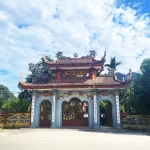
The main festival occurs at Hung Kings Temple on Nghia Linh Mountain in Phu Tho province, about 85 kilometers northwest of Hanoi. The temple complex includes three main structures built at different mountain levels, each serving distinct ceremonial purposes.
The Lower Temple (Den Ha) handles initial purification rituals. Visitors purchase incense, flowers, and traditional offerings from vendors whose families have served pilgrims for generations. The Middle Temple (Den Trung) houses artifacts and bronze drums used in royal ceremonies. The Upper Temple (Den Thuong) at the mountain’s peak provides the most sacred space for ancestor worship.
Festival activities begin three days before the official holiday. Traditional cheo opera performances, quan ho folk singing, and water puppet shows occur throughout the temple grounds. Local artisans demonstrate bronze casting, silk weaving, and bamboo craft techniques that connect directly to Hung Kings era traditions.
The ceremonial highlight happens at precisely 6:00 AM on April 18, when government officials and cultural leaders perform the national offering ceremony. The rhythmic beating of bronze drums echoes across the mountainside as thousands of pilgrims join in communal prayer.

Temple Access and Navigation
Take the new express train from Hanoi’s Long Bien Station to Phu Tho Station (45 minutes, 150,000 VND). Free shuttle buses run every 15 minutes from the train station to the temple base. Alternatively, motorcycle taxis charge 50,000 VND for the 12-kilometer journey.
Cable cars operate from the mountain base to the Middle Temple level (round trip 200,000 VND), though many visitors prefer the scenic 30-minute walk through ancient forest paths. The trail features rest stations every 500 meters with free tea and bottled water.
Regional Celebrations Worth Traveling For
While Phu Tho hosts the primary festival, meaningful celebrations occur throughout Vietnam’s northern provinces. Each location offers distinct cultural experiences without the massive crowds of the main site.
In Hanoi, the Temple of Literature becomes a focal point for academic ceremonies honoring educational traditions established during the Hung Kings era. Students in traditional ao dai gather at dawn to burn incense for academic success. The ceremony includes classical music performances and poetry readings in ancient Vietnamese.
Hai Phong’s Du Hang Pagoda hosts dragon boat races on the Cam River, recreating naval ceremonies from the Hung Kings period. Teams from fishing communities compete using boats decorated with traditional motifs. The races begin at 2:00 PM, with victory celebrations continuing past sunset.
In the mountainous Ha Giang province, ethnic minority communities perform unique variations of Hung Kings rituals. Hmong and Tay villages incorporate their own ancestral traditions, creating fusion ceremonies rarely seen elsewhere. These celebrations happen in village community centers, offering intimate cultural exchanges with local families.
Quang Ninh province’s Yen Tu Mountain hosts sunrise meditation sessions led by Buddhist monks who connect Hung Kings spirituality with contemporary mindfulness practices. The sessions begin at 5:30 AM, requiring headlamp-equipped hikes in darkness that reward participants with panoramic sunrise views over Ha Long Bay.

Cultural Etiquette and Respectful Participation
Hung Kings Day carries profound spiritual significance for Vietnamese families. Proper behavior demonstrates respect for both living participants and ancestral spirits being honored during ceremonies.
Dress conservatively in long pants or skirts that cover knees, and shirts covering shoulders and chest. Remove hats and sunglasses inside temple buildings. White or light-colored clothing is preferred, as it symbolizes purity and spiritual cleansing.
When burning incense, hold sticks with both hands while bowing three times before placing them in ceremonial urns. Never point incense sticks directly at people or Buddha statues. Light incense only from designated flame sources, not from lighters or matches.
Photography is permitted in most temple courtyards but forbidden inside sacred halls housing ancestral altars. Always ask permission before photographing people engaged in prayer or ceremony. Many families welcome respectful documentation of public festivities but prefer privacy during personal spiritual moments.
Food offerings should never be touched or moved by visitors. These items represent family connections to deceased relatives and carry deep emotional significance. Observe quietly as families arrange offerings, but maintain respectful distance from ceremonial areas.
Learning basic Vietnamese phrases enhances interactions with local participants. “Xin chào” (hello), “cảm ơn” (thank you), and “xin lỗi” (excuse me) demonstrate effort to engage respectfully with Vietnamese culture.
Budget Breakdown and Planning for Hung Kings Day 2026
Book accommodations immediately, as the April 18-20 weekend creates Vietnam’s highest domestic travel demand of the year. Hotels in Hanoi and Phu Tho typically increase rates 200-300% during festival period, with many requiring 3-night minimum stays.
Alternative lodging options include homestays in rural villages near temple sites. Families in Thanh Thuy and Tam Nong districts offer rooms for 400,000-600,000 VND per night, including traditional breakfast and transportation to festival sites.

Train tickets on the new Hanoi-Phu Tho line sell out weeks in advance. Purchase tickets online through vietnam-railway.vn starting March 1, 2026. Consider traveling on April 17 or 19 to avoid peak crowding on the holiday itself.
Budget travelers can experience meaningful Hung Kings Day celebrations for approximately 1,200,000-1,800,000 VND (50-75 USD) per day, while comfortable experiences range 2,500,000-4,000,000 VND (100-165 USD) daily.
April weather in northern Vietnam features warm afternoons (26-28°C) and cool mornings (18-22°C). Pack layers for temperature variation and lightweight rain jacket for brief afternoon showers. Comfortable walking shoes are essential for temple stairs and mountain paths.
Arrive at main temple sites before 7:00 AM to witness morning ceremonies and avoid afternoon crowds. Most meaningful spiritual activities occur between dawn and 10:00 AM when temple energy feels most concentrated.
Budget Level (1,200,000-1,800,000 VND daily)
- Homestay accommodation: 400,000-600,000 VND per night
- Local bus transportation: 50,000-100,000 VND
- Street food meals: 150,000-250,000 VND daily
- Temple offerings and incense: 100,000-200,000 VND
- Entrance fees and activities: 200,000-400,000 VND
Mid-Range Level (2,500,000-3,200,000 VND daily)
- Hotel accommodation: 1,200,000-1,800,000 VND per night
- Express train and taxi: 300,000-500,000 VND
- Restaurant meals: 400,000-600,000 VND daily
- Guided tour services: 800,000-1,200,000 VND
- Cultural activities and souvenirs: 300,000-500,000 VND
Comfortable Level (4,000,000-6,000,000 VND daily)
- Premium hotel: 2,500,000-3,500,000 VND per night
- Private car with driver: 1,500,000-2,500,000 VND
- Fine dining experiences: 800,000-1,200,000 VND daily
- Private cultural guide: 1,200,000-2,000,000 VND
- Premium activities and shopping: 500,000-1,000,000 VND
Frequently Asked Questions
Is Hung Kings Day only celebrated by Vietnamese people?
International visitors are welcome at all public celebrations and temple ceremonies. Many Vietnamese families enjoy sharing their cultural traditions with respectful foreign guests who show genuine interest in the spiritual significance of the holiday.
Can I visit the temples if I’m not Buddhist or Vietnamese?

Hung Kings temples welcome people of all backgrounds and beliefs. The celebration honors Vietnamese cultural heritage rather than specific religious doctrine, making it accessible to visitors seeking cultural understanding rather than religious conversion or participation.
How crowded do the main temple sites become during the festival?
Expect 200,000-300,000 visitors at Hung Kings Temple complex during the three-day festival period. New crowd management systems and advance booking reduce wait times, but patience remains essential. Early morning visits offer the best balance of spiritual atmosphere and manageable crowds.
What foods are traditionally offered and consumed during Hung Kings Day?
Traditional offerings include banh chung (square sticky rice cake), banh day (round white rice cake), seasonal fruits, and rice wine. These foods represent earth, sky, and harvest abundance. Visitors can purchase pre-prepared offering sets from temple vendors or local markets.
Are there any restrictions on photography during the ceremonies?
Photography is permitted in temple courtyards and during public performances. However, flash photography is prohibited inside sacred halls, and visitors should avoid photographing people during personal prayer moments. Always ask permission before photographing individuals, especially elderly participants and families making offerings.
Explore more
Vietnam’s Golden Bridge Gets a Rival: New ‘Dragon’s Breath Skywalk’ Opens in Sapa
Da Nang International Fireworks Festival 2026 Dates and Themes Revealed
Vietnam’s New 90-Day E-Visa Policy Now Live for Travelers