On this page
- Why Da Nang Rewards Those Who Look Past the Sand
- The Neighborhoods Tourists Skip (And Locals Love)
- Hidden Temples, Forgotten Pagodas & Off-Map Landmarks
- Where Da Nang Actually Eats: Markets, Alleys & Local Haunts
- Getting Around Like a Resident, Not a Tourist
- Secret Day Trips the Tour Buses Haven’t Ruined Yet
- After Dark Beyond the Beer Clubs
- Shopping the Real Da Nang: Lanes, Wet Markets & Craft Workshops
- 2026 Budget Reality: What Things Actually Cost Here
- Best Time to Come (And the Local Festivals Worth Timing Around)
- Street-Smart Survival Tips for Da Nang in 2026
- Frequently Asked Questions
💰 Click here to see Vietnam Budget Breakdown
💰 Prices updated: August, 2026. Budget figures are estimates — always verify before travel.
Exchange Rate: $1 USD = ₫26,080.50
Daily Budget (per person)
Shoestring: ₫782,415 – ₫1,304,025 ($30.00 – $50.00)
Mid-range: ₫2,086,440 – ₫3,912,075 ($80.00 – $150.00)
Comfortable: ₫5,216,100 – ₫9,128,175 ($200.00 – $350.00)
Accommodation (per night)
Hostel/guesthouse: ₫78,242 – ₫312,966 ($3.00 – $12.00)
Mid-range hotel: ₫521,610 – ₫1,825,635 ($20.00 – $70.00)
Food (per meal)
Budget meal: ₫50,000.00 ($1.92)
Mid-range meal: ₫150,000.00 ($5.75)
Upscale meal: ₫400,000.00 ($15.34)
Transport
Single metro/bus trip: ₫10,000.00 ($0.38)
Monthly transport pass: ₫500,000.00 ($19.17)
Why Da Nang Rewards Those Who Look Past the Sand
Most visitors to Da Nang spend their days rotating between My Khe Beach, a rooftop bar, and the Golden Bridge selfie queue. By 2026, that well-worn loop has become genuinely crowded — peak season mornings at the Dragon Bridge feel more like a theme park than a coastal city. But Da Nang has quietly developed a deeper identity that most short-stay tourists never find. The city has invested heavily in urban infrastructure, local arts, and community spaces over the past two years, and the reward for anyone willing to step off the beach promenade is a genuinely layered city worth understanding. This guide is built for that kind of traveler.
The Neighborhoods Tourists Skip (And Locals Love)
Da Nang’s tourist geography is oddly flat. Most visitors pin themselves to the strip along Vo Nguyen Giap — the beachfront boulevard — and never cross the Han River with any real intention. Here’s what they’re missing.
Hai Chau District: The Real Downtown Core
Hai Chau is where Da Nang actually runs its daily life. The streets around Bach Dang and Hung Vuong are lined with local pho shops that open at 5:30am, city offices, and old French-era buildings that haven’t been converted into boutique hotels yet. It’s dense, functional, and completely unpolished in the best way. Walk down Tran Phu in the early morning and you’ll catch the vegetable vendors rolling in from the wholesale markets, the sound of metal cart wheels on concrete mixing with the first espresso machines of the day.
Son Tra Peninsula: More Than Just the Monkey Mountain View
Tourists visit Son Tra for the Lady Buddha statue and the Instagram panorama from the top. Locals use the peninsula’s western shoreline for quiet fishing, early morning tai chi, and weekend family barbecues at the waterside parks near Tien Sa port. The road that loops around the base of the peninsula — particularly the northern stretch — passes through fishing villages that feel entirely separate from the resort city 10 kilometres away.
Hoa Vang District: Da Nang’s Rural Fringe
Most people don’t realise Da Nang municipality extends far inland into agricultural and mountain terrain. Hoa Vang district covers forested hills, rice paddies, and small farming communities. It’s administratively part of the city but feels like a different country. The villages around Nam O and the Cu De River corridor are increasingly visited by local cyclists and hikers but remain genuinely quiet on weekdays.

Hidden Temples, Forgotten Pagodas & Off-Map Landmarks
Da Nang’s spiritual geography is almost entirely ignored by standard itineraries, which tend to tick off the Lady Buddha and move on. The city has dozens of working pagodas, Cham-era relics, and neighbourhood shrines that receive zero tourist foot traffic.
The Cham Museum (Properly This Time)
The Museum of Cham Sculpture on Trung Nu Vuong is technically on tourist maps, but most visitors spend 20 minutes there and leave underwhelmed because they didn’t slow down. In 2025, the museum completed a new interpretive layout that reorganised the collection chronologically. Spend at least 90 minutes. The gallery of Tra Kieu altarpieces in the rear section is extraordinary — stone carving at a level of refinement that genuinely surprises people who weren’t expecting much.
Linh Ung Pagoda, Non Nuoc (The Quiet One)
Not to be confused with the giant Son Tra complex, the Linh Ung Pagoda at the foot of Marble Mountains in Non Nuoc village is smaller, older, and far less visited. Local worshippers come here on the 1st and 15th of each lunar month. The incense smoke sits heavy in the covered halls on those mornings — a thick, sweet fog that makes the gilded altar figures appear and disappear as you move through the space.
Nam O Village and Its Ancient Reef Shrine
Nam O, at the northern edge of Da Nang where the Cu De River meets the sea, has a reef shrine (miếu) that locals have maintained for centuries. The village is one of the oldest fishing settlements in the region. The shrine sits almost at the waterline, and at high tide the base is surrounded by shallow water. It’s visited by fishermen before they head out and by families on death anniversaries. Nobody is selling tickets.
Where Da Nang Actually Eats: Markets, Alleys & Local Haunts
The restaurant strip along the beach sells adequate food at inflated prices. The following places are where the city feeds itself.
Con Market and Its Surrounding Streets
Con Market (Chợ Cồn) on Ong Ich Khiem is Da Nang’s most important daily market and has been for generations. The food stalls inside the market building open before 6am and serve banh mi, bun bo Hue, and mi Quang until the breakfast crowd thins around 9am. The streets immediately surrounding the market — particularly Hung Vuong and Le Duan — have standalone noodle shops that run the same hours and are even cheaper than the market stalls inside.

My Khe Fish Market (The Pre-Dawn Version)
There is a wholesale fish market at the northern end of My Khe Beach that operates between 4am and 7am. It’s not a tourist attraction — it’s where Da Nang’s restaurant owners, grill house operators, and household cooks source their daily seafood. The air is cold and sharp with salt and fish at that hour. If you’re an early riser, this is worth the alarm. Several small breakfast stalls set up on the perimeter to feed the market workers.
Bac My An Market Area
The cluster of streets around Bac My An Market, particularly around Nguyen Van Thoai and Ho Xuan Huong, has developed into a genuine local food precinct over the past two years. It serves the growing population of Vietnamese professionals who live in the My An and Khue My wards — people who want good food quickly and aren’t interested in tourist-facing restaurants. The lunch options here between 11am and 1pm are outstanding and extremely affordable.
Getting Around Like a Resident, Not a Tourist
Da Nang is compact enough that understanding its transport options meaningfully changes the quality of your trip.
The 2026 Bus Network Update
Da Nang expanded its public bus routes in late 2025, adding three new lines that connect the airport precinct to the Son Tra peninsula, Hoa Vang district, and the Marble Mountains corridor. Single fares run 7,000–12,000 VND (roughly $0.30–$0.50 USD). The city’s bus app — Da Nang Bus — now has an English interface and real-time tracking. It’s genuinely usable in 2026 in a way it wasn’t two years ago.
Motorbike Rental Reality
Renting a semi-automatic motorbike costs 100,000–150,000 VND per day ($4–$6 USD) from local shops, and significantly more from hotel-facing rental outfits. The streets of Da Nang are relatively wide and well-signed compared to Hanoi or Ho Chi Minh City, making it one of the more approachable cities for riders with moderate experience. The Son Tra loop and the Hai Van Pass approach from the south side are the standout rides.

Grab and Its Alternatives
Grab remains dominant for on-demand transport. A cross-city Grab car trip typically costs 40,000–80,000 VND ($1.60–$3.20 USD). In 2025, the local ride-hailing app Xanh SM expanded its Da Nang coverage significantly, with electric vehicles that are often 10–15% cheaper than equivalent Grab rides during non-surge hours.
Secret Day Trips the Tour Buses Haven’t Ruined Yet
My Son Sanctuary via Motorcycle (Not Bus Tour)
My Son is 70 kilometres southwest of Da Nang — an easy 90-minute ride through mountain passes and river valleys. The difference between arriving on a motorcycle at 7:30am and arriving on a tour bus at 10am is significant. Early arrivals have the ruins to themselves in the mist and soft morning light. The bus tours arrive in convoy around 9:30am and the site becomes crowded quickly. If you ride, take Highway 14B through Duy Xuyen district for a genuinely beautiful approach road.
Cu De River by Kayak
The Cu De River runs along the northern edge of Da Nang municipality through Hoa Vang district. Several small local operators — not international tour companies — now offer half-day kayaking trips that put you on the water through mangrove sections and past farming villages. The cost is around 250,000–350,000 VND per person ($10–$14 USD) for a guided half-day. Book through guesthouses in the Hoa Bac commune area rather than beach hotel concierges.
Hai Van Pass to Lang Co Without a Group
The Hai Van Pass north of Da Nang is famous, but the standard approach — a tour van that stops for 10 minutes at the summit — wastes it entirely. Rent a motorbike, leave Da Nang by 7am, ride the pass at your own pace, and continue down to Lang Co lagoon for a seafood lunch at one of the shack restaurants on the water. Budget a full day. The drive back through the Hai Van tunnel takes 15 minutes.
Bana Hills Without the Cable Car Crowds
Ba Na Hills is a genuine mountain resort at 1,487 metres — cool, often cloud-wrapped, and completely different in temperature from coastal Da Nang. The tourist draw is the cable car and the Golden Bridge, which remain busy in 2026. The less-visited angle: the forested hiking trails on the mountain’s lower slopes are accessible from the Suoi Mo trailhead and require no cable car ticket. The French-built ruins on the upper plateau are also underexplored relative to the theme park section.

After Dark Beyond the Beer Clubs
Da Nang’s nightlife reputation is built around An Thuong — the street sometimes called “expat alley” — and the riverside bars on Bach Dang. Both have their place, but neither represents what the city actually does after dark.
The An Thuong Alley Scene vs. What’s Growing Around It
An Thuong 4 and 25 are the bar-dense streets, and they’re fine — cold beer, live sports, and a mix of expats and younger Vietnamese. But the streets parallel to An Thuong, particularly around Duong Dinh Nghe, have seen a cluster of Vietnamese-owned wine bars, specialty coffee spots, and small live music venues open since 2024. These close earlier (around midnight) but attract a very different, more local crowd.
Night Markets That Work
The Han River Night Market on Bach Dang operates Thursday through Sunday and has improved its quality control noticeably since 2024, with the city removing low-quality souvenir stalls and adding more food vendors. The Son Tra Night Market near the peninsula’s base is smaller and more authentically local, with seafood grills and cheaper beer prices than the riverfront.
Coffee Culture at Night
Da Nang has a serious late-night coffee culture — not café hopping, but sitting in one place for hours. The coffee shops on Hoang Dieu and Ly Tu Trong stay open until 11pm or midnight and fill up with groups of young Vietnamese who treat them as evening social spaces. Egg coffee, coconut coffee, and salt coffee are all widely available and genuinely excellent at the better spots.
Shopping the Real Da Nang: Lanes, Wet Markets & Craft Workshops
Da Nang is not a shopping destination in the same sense as Hoi An, but it has specific things worth buying from specific places.
Non Nuoc Stone Carving Village
The stone carving workshops at the base of Marble Mountains in Non Nuoc have been operating for generations. You can watch craftspeople carve marble and granite by hand into everything from small Buddha figures to full architectural elements. Prices are significantly lower than the souvenir shops on the tourist trail, and several workshops ship internationally. Small pieces run 100,000–500,000 VND ($4–$20 USD). Larger custom work is negotiated directly.
Con Market for Practical Shopping
For fabrics, dried goods, local spices, and everyday items at Vietnamese prices, Con Market remains the best option in the city. The fabric section on the upper floor is particularly good if you’re continuing to Hoi An and want to bring material for custom tailoring.

The Emerging Design District Around Hai Chau
Since 2024, a small cluster of independent design studios and concept stores has appeared on and around Tran Phu and Phan Chu Trinh streets in Hai Chau. These sell locally designed clothing, ceramics, prints, and homeware — mostly by Da Nang-based artists. It’s not a formal district yet, but it’s developing recognisable identity and is worth a few hours of wandering.
2026 Budget Reality: What Things Actually Cost Here
Da Nang sits between Hoi An’s inflated tourist prices and the cheaper provincial cities further north. Here’s what daily life costs in 2026.
Food and Drink
- Budget: Breakfast at Con Market or a street stall — 25,000–50,000 VND ($1–$2 USD). Bun bo or mi Quang lunch at a local shop — 40,000–60,000 VND ($1.60–$2.40 USD).
- Mid-range: Sit-down restaurant lunch or dinner with drinks — 150,000–300,000 VND ($6–$12 USD) per person.
- Comfortable: Seafood restaurant dinner near An Thuong or the riverfront — 400,000–800,000 VND ($16–$32 USD) per person including drinks.
Accommodation
- Budget: Clean guesthouse or hostel private room — 200,000–400,000 VND ($8–$16 USD) per night.
- Mid-range: 3-star hotel with pool near the beach — 700,000–1,200,000 VND ($28–$48 USD) per night.
- Comfortable: 4–5 star beachfront hotel — 2,000,000–5,000,000 VND ($80–$200 USD) per night.
Getting Around
- Airport to city centre by Grab car: 80,000–120,000 VND ($3.20–$4.80 USD)
- City bus single fare: 7,000–12,000 VND ($0.30–$0.50 USD)
- Daily motorbike rental: 100,000–150,000 VND ($4–$6 USD)
Attractions
- Museum of Cham Sculpture entry: 60,000 VND ($2.40 USD)
- Marble Mountains entry: 40,000 VND ($1.60 USD) — includes the elevator to the upper caves
- Ba Na Hills cable car and resort: 900,000–1,100,000 VND ($36–$44 USD)
Best Time to Come (And the Local Festivals Worth Timing Around)
Da Nang’s weather is genuinely seasonal and it matters for how you experience the city. The beach-focused tourist industry tends to paper over this reality.
The dry season runs roughly February through August, with the hottest months being June and July when temperatures hit 35–38°C and the beach is at maximum use. Shoulder months — February, March, and November — offer the best combination of manageable weather, lower hotel prices, and fewer crowds. The rainy season peaks October through December, with October being the wettest month by a significant margin. Flooding in low-lying areas of Hai Chau and along the Han River is possible during heavy rain events.
The Da Nang International Fireworks Festival has run annually for years and in 2026 returned to its full schedule after the scaled-back post-pandemic editions. It typically runs across multiple weekends in late April and May, with international teams competing over the Han River. Hotel prices spike sharply during fireworks weekends — book at least six to eight weeks ahead if you want reasonable rates.

The Quan The Am Festival at Marble Mountains in the third lunar month (usually March or April in the Gregorian calendar) is one of the most significant local religious festivals and draws Vietnamese pilgrims from across the central region. The atmosphere around Non Nuoc village and the mountains during this period is genuinely different from any other time of year.
Street-Smart Survival Tips for Da Nang in 2026
Da Nang is one of Vietnam’s safer cities for foreign visitors — it has lower rates of tourist-targeted scams than Ho Chi Minh City or parts of Hanoi’s Old Quarter. But some things are worth knowing before you arrive.
- E-visa validity: Vietnam’s 90-day e-visa for most nationalities remains in effect in 2026 and covers Da Nang without restriction. The e-visa portal updated its interface in early 2026 — processing time is 3 business days but apply at least a week before departure.
- SIM cards: Buy a Viettel or Vietnamobile SIM at the airport arrivals hall. A 30-day data-only SIM with 60GB runs approximately 150,000–200,000 VND ($6–$8 USD). You’ll need your passport.
- Water: Do not drink tap water. Bottled water is 5,000–10,000 VND ($0.20–$0.40 USD) at convenience stores. Most mid-range and above hotels provide filtered water refill stations.
- Sun intensity: Da Nang’s UV index between April and August regularly hits 11–12 (extreme). SPF 50+ and a reapplication schedule are not optional.
- Bargaining context: Fixed prices at convenience stores and restaurants — no bargaining. Markets and street vendors — gentle bargaining is appropriate but don’t push aggressively over small amounts.
- Language: English proficiency is noticeably better in Da Nang than in many Vietnamese cities of similar size, particularly among anyone working in hospitality. Google Translate’s camera function handles Vietnamese menus reliably.
- Tipping: Not obligatory but appreciated. At local restaurants, leaving the small change is standard. At upscale restaurants and hotels, 10% is appropriate if service charge isn’t already added to the bill.
Frequently Asked Questions
Is Da Nang worth visiting beyond the beaches?
Absolutely. The city has a working Cham sculpture museum, historic fishing villages, a legitimate food scene centred on Con Market and the Hai Chau district, mountain day trips, and a growing arts and design community. Travelers who spend time away from the beachfront strip consistently find Da Nang more interesting than they expected.

How many days do you need in Da Nang?
Three to four days is the minimum to see the city properly alongside one or two day trips. Five to seven days is comfortable if you want to explore Son Tra peninsula, ride the Hai Van Pass, visit My Son, and spend real time in the local food and market scene without rushing between stops.
Is Da Nang expensive compared to other Vietnamese cities?
Mid-range. More expensive than Hue or Hoi An’s local side, but significantly cheaper than Ho Chi Minh City or Hanoi for comparable quality accommodation. Food at local markets and non-tourist restaurants remains very affordable — a full breakfast runs under 50,000 VND ($2 USD) with coffee.
What’s the best way to get from Da Nang airport to the city?
Grab is the most reliable and transparent option — a ride to the beach hotel strip or Hai Chau district costs 80,000–120,000 VND ($3.20–$4.80 USD) and takes 15–25 minutes depending on traffic. Metered taxis at the official taxi rank are also legitimate. Avoid unmarked vehicles offering rides outside the arrivals hall.
Are there hidden beaches near Da Nang that aren’t crowded?
Yes. The small coves on the eastern side of Son Tra Peninsula — accessible by motorbike along the winding coastal road — are far less visited than My Khe. Bai But and Bai Tien Sa are the most accessible of these. They have no infrastructure, which is exactly the point. Go early in the morning on a weekday for the quietest experience.
Explore more
The 10 Best Bars in Da Nang for an Unforgettable Evening Out
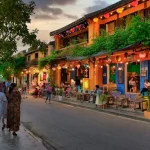
📷 Featured image by Barbara Maier on Unsplash.