On this page
- Eating Your Way Through Ho Chi Minh City in 2026
- The Dishes You Cannot Leave Without Eating
- The Best Street Food Alleys and Markets
- Breakfast in HCMC: The City Eats Early
- Bánh Mì & Bún Bò Huế: Two Pillars of HCMC Street Eating
- The Nhậu Culture: Eating While Drinking
- Eating by District: Where to Go Based on Where You Are
- Vegetarian and Vegan Eating in HCMC
- Sweet Things: Chè, Sinh Tố & Cà Phê
- What Eating in HCMC Actually Costs in 2026
- Practical Tips for Eating in HCMC
- Frequently Asked Questions
💰 Click here to see Vietnam Budget Breakdown
💰 Prices updated: August, 2026. Budget figures are estimates — always verify before travel.
Exchange Rate: $1 USD = ₫26,080.50
Daily Budget (per person)
Shoestring: ₫782,415 – ₫1,304,025 ($30.00 – $50.00)
Mid-range: ₫2,086,440 – ₫3,912,075 ($80.00 – $150.00)
Comfortable: ₫5,216,100 – ₫9,128,175 ($200.00 – $350.00)
Accommodation (per night)
Hostel/guesthouse: ₫78,242 – ₫312,966 ($3.00 – $12.00)
Mid-range hotel: ₫521,610 – ₫1,825,635 ($20.00 – $70.00)
Food (per meal)
Budget meal: ₫50,000.00 ($1.92)
Mid-range meal: ₫150,000.00 ($5.75)
Upscale meal: ₫400,000.00 ($15.34)
Transport
Single metro/bus trip: ₫10,000.00 ($0.38)
Monthly transport pass: ₫500,000.00 ($19.17)
Eating Your Way Through Ho Chi Minh City in 2026
Ho Chi Minh City has always been a food city, but 2026 has brought a new layer of complexity to its eating scene. Post-pandemic tourism fully rebounded by 2024, and since then the city’s street food corridors have grown denser, noisier, and more competitive — which means quality has gone up. New food markets have opened in Districts 1, 7, and Bình Thạnh, late-night eating culture has expanded, and the Grab Food delivery boom has pushed smaller stalls to sharpen their game just to survive. If you’re arriving with a serious appetite and a limited number of days, the challenge isn’t finding good food — it’s knowing where to focus.
The Dishes You Cannot Leave Without Eating
This is not a list of every Vietnamese dish. These are the specific things HCMC does better than anywhere else in the country, and the spots where the version you get will actually be memorable.
Hủ Tiếu Nam Vang
This Cambodian-influenced pork and seafood noodle soup is the soul food of Saigon. The broth is lighter and sweeter than phở, built on pork bones with dried squid and shrimp. The best version in the city is widely considered to be at Hủ Tiếu Nam Vang Thanh Xuân on Võ Văn Tần Street in District 3 — locals queue from 6am. The noodles arrive half-submerged in clear broth, topped with minced pork, prawns, and a quail egg, with a plate of fresh bean sprouts and lime on the side. The smell alone — sweet pork bone broth with a faint hit of dried seafood — stops you mid-stride.
Bánh Xèo
The sizzle of bánh xèo batter hitting a screaming-hot cast iron pan is one of the defining sounds of an HCMC evening. These crispy, turmeric-yellow rice crepes filled with pork, shrimp, and bean sprouts are meant to be torn apart, wrapped in mustard leaf or rice paper, and dipped in nước chấm. Bánh Xèo 46A in District 1 has been the benchmark since the 1980s and still delivers — expect to wait 20 minutes for a table after 6pm.
Cơm Tấm
Broken rice with grilled pork chop, a fried egg, shredded pork skin, and fermented pork roll — this is HCMC’s unofficial national breakfast. Cơm Tấm Bà Ghẻ near Bàn Cờ Market in District 3 opens at 6am and usually sells out by 9:30. The grilled pork arrives charred at the edges, slightly sweet from the marinade, served on a plate of steamed broken rice with a bowl of clear broth on the side.

Phở
HCMC phở is sweeter and more herb-heavy than the Hanoi style. Phở Lệ on Nguyễn Trãi in District 5 has been operating since 1983 and remains the standard. You get a generous bowl of clear beef broth, rice noodles, your choice of cut, and a plate of basil, sawtooth coriander, lime, and bean sprouts. The broth has a faint sweetness that the north would never allow — and it works.
The Best Street Food Alleys and Markets
HCMC’s food geography is distinct. Unlike Hanoi’s concentrated Old Quarter, Saigon’s best street food is spread across multiple districts, each with its own character.
Bến Thành Market Area (District 1)
The market itself is overpriced for tourists, but the streets surrounding it — especially the night market stalls that set up on Phan Bội Châu and Phan Chu Trinh Streets from 6pm — offer solid, fast food at fair prices. Grab grilled skewers, ốc (snails), and fresh spring rolls while standing at a plastic table.
Hẻm 76 Võ Văn Tần (District 3)
This narrow alley running off Võ Văn Tần becomes a packed food corridor every evening. You’ll find bánh tráng nướng (grilled rice paper loaded with toppings), bún bò Huế, and a rotating cast of small stalls. It’s cramped, loud, and completely worth it.
Nguyễn Trãi Street, District 5 (Cho Lớn)
The Chinatown district of Cho Lớn is arguably HCMC’s most underrated food zone. Nguyễn Trãi between Districts 5 and 6 hosts Chinese-Vietnamese bakeries, dim sum stalls open from 5am, and roast duck vendors who have been at the same spot for decades. The street smells like char siu pork and sesame oil all morning.
Võ Thị Sáu Night Market Area (District 1/3 border)
A newer concentrated food strip that has expanded significantly since 2024. Stalls here are more tourist-aware but prices remain reasonable. Good for sampling multiple things in one walk — grilled corn, bột chiên (fried rice cakes with egg), and chè (sweet dessert soups).

Breakfast in HCMC: The City Eats Early
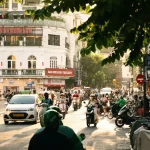
HCMC is at its most alive between 6am and 8:30am. Sidewalks that look bare at midnight are transformed into dense clusters of plastic stools, steaming pots, and regulars who have been coming to the same spot for 20 years. Eating breakfast like a local means being on the street before 8am.
Beyond cơm tấm, look for xôi (sticky rice) vendors who set up before dawn with insulated carts. The xôi gấc version — sticky rice colored deep red from gấc fruit, sometimes topped with mung bean paste and fried shallots — is rich, slightly sweet, and costs around 20,000–30,000 VND (roughly 80 cents to $1.20 USD). Cháo (rice congee) vendors in the alleys off Lê Hồng Phong in District 10 serve bowls with offal, century egg, or minced pork from 5:30am. A full bowl runs 35,000–50,000 VND ($1.40–$2 USD).
For a more sit-down morning, the Bình Dân style rice shops (humble, no-frills lunch counters) open their steam trays by 7am in Districts 3, 4, and 10 — point at whatever looks good, pay by the dish, and eat for 50,000–80,000 VND ($2–$3.20 USD) total.
Bánh Mì & Bún Bò Huế: Two Pillars of HCMC Street Eating
Bánh Mì
HCMC does bánh mì better than anywhere. The bread here is thin-crusted, airy inside, and still warm from the oven at most serious vendors. The standard filling — pâté, cold cuts, pickled daikon and carrot, fresh coriander, chili — costs between 25,000–45,000 VND ($1–$1.80 USD). Bánh Mì Huynh Hoa on Lê Thị Riêng Street in District 1 is the most famous, with lines forming by mid-morning. Their sandwiches are overstuffed to the point of structural collapse — meat-heavy, generously buttered, with a thick smear of pâté. Bánh Mì Phương (the one legitimized by food media globally) has a District 1 outpost now, but the queue moves fast.
Bún Bò Huế
This is the spicy, lemongrass-charged beef noodle soup from central Vietnam, and HCMC has adopted it completely. The round rice noodles, pork knuckle chunks, and blood cake swimming in a brick-red broth with a citrus-lemongrass scent make it a bolder, more aggressive bowl than phở. Bún Bò Huế Gia Hội on Đinh Tiên Hoàng in Bình Thạnh has the reputation — open from 6am, sold out by 10am most days.

The Nhậu Culture: Eating While Drinking
In HCMC, drinking without eating is almost considered bad form. The quan nhậu — an informal drinking restaurant — is where office workers, friends, and families gather from 5pm to late. The food is specifically designed to pair with beer or rice wine: salty, sour, fatty, and deeply flavored.
Look for ốc (snail) restaurants along Hoàng Diệu in District 4 and the stretch of Vĩnh Khánh — a street nicknamed “Snail Street” — for whelks, clams, and cockles cooked in lemongrass, tamarind, butter, or chili salt. You crack shells at the table, sip bia hơi (draft beer), and the noise level rises steadily as the evening goes on. A full spread for two with drinks runs 200,000–350,000 VND ($8–$14 USD).
For a more structured nhậu experience, the area around Bùi Viện Walking Street in District 1 has quan nhậu mixed in with tourist bars — look for the places packed with Vietnamese customers rather than backpackers for better food. Nhậu spots in Gò Vấp and Phú Nhuận districts are more local, cheaper, and noisier in the best possible way.
Eating by District: Where to Go Based on Where You Are
District 1 (Central)
The most tourist-dense area but still has genuine street food if you leave the main drag. Bùi Viện Street for evening snacks and drinks. Cô Giang and Cô Bắc Streets for local breakfast spots. Lê Thị Riêng for bánh mì.
District 3
The sweet spot for travelers who want local food without fighting tourist crowds. Võ Văn Tần and Nam Kỳ Khởi Nghĩa have excellent coffee shops and small eateries. Bàn Cờ Market area for cơm tấm and bún. This is where many expats living in HCMC eat daily.
District 4
A 10-minute ride from District 1 but a different world. Vĩnh Khánh Street is the seafood and snail hub. Small alleys off Xóm Chiếu Street have noodle stalls and grilled meat vendors that open until 2am.
District 5 (Cho Lớn / Chinatown)
The best dim sum, roast meats, and Chinese-Vietnamese hybrid food in the city. Triệu Quang Phục Street is lined with bakeries. Phùng Hưng has roast duck and char siu from stalls that have operated for 40+ years.

Bình Thạnh & Phú Nhuận
Increasingly popular residential districts with a strong local food scene. Phan Xích Long Street in Phú Nhuận is the city’s best coffee and dessert strip. Bình Thạnh has excellent bún bò Huế, cơm tấm, and bánh canh stalls.
Vegetarian and Vegan Eating in HCMC
Vietnam has a deep tradition of Buddhist vegetarian cooking — called cơm chay or đồ chay — and HCMC is well set up for plant-based eaters. On the 1st and 15th days of the lunar month, even non-vegetarian restaurants often offer chay options. The city’s chay restaurant scene has expanded considerably since 2024, with several dedicated plant-based spots opening in Districts 1, 3, and Bình Thạnh.
Zen Garden in District 1 (on Trương Định) has been a long-standing benchmark for upscale Vietnamese vegetarian cooking. For budget chay, the lunch counters near Vĩnh Nghiêm Pagoda in District 3 serve full vegetarian plates for 30,000–50,000 VND ($1.20–$2 USD). Hum Vegetarian Café on Nguyễn Thượng Hiền offers a mid-range sit-down option with a proper menu.
For street-level chay, look for vendors with a green sign featuring the word “Chay” — they’re concentrated near Buddhist temples and pagodas, particularly around Điện Biên Phủ in Bình Thạnh.
Sweet Things: Chè, Sinh Tố & Cà Phê
Chè
Vietnamese sweet soup desserts served hot or cold with ingredients like mung bean, coconut milk, taro, black-eyed peas, and grass jelly. The chè stalls along Pasteur Street in District 1 and the alley market at Bến Thành’s side streets offer 15–20 varieties at 20,000–40,000 VND ($0.80–$1.60 USD) per cup. In warm weather — which is always — opt for a cold chè thập cẩm (mixed sweet soup over ice).
Sinh Tố (Smoothies)
HCMC’s fresh fruit smoothies are thick, sweet, and made to order. Avocado with condensed milk, soursop, sapodilla, jackfruit, and dragon fruit are year-round staples. The smoothie vendors on Hoàng Sa along the canal in District 1/3 are good for an afternoon stop. Prices run 30,000–55,000 VND ($1.20–$2.20 USD).
Cà Phê
HCMC takes its coffee culture seriously in a very different way from Hanoi. The drip coffee here tends to be stronger, darker, and served with condensed milk (cà phê sữa đá) over a glass packed with ice. Phan Xích Long Street in Phú Nhuận is ground zero for specialty cafés in 2026 — a 500-metre stretch with at least 15 independent coffee shops, ranging from third-wave single-origin roasters to mid-century Vietnamese aesthetic spots where the filter drip takes 8 minutes and the condensed milk arrives in a tiny ceramic jar on the side.

What Eating in HCMC Actually Costs in 2026
Food costs have risen moderately since 2023 due to inflation and increased ingredient costs, but HCMC remains exceptionally affordable by global standards.
- Budget (street stalls, market food, local eateries): 40,000–80,000 VND per meal ($1.60–$3.20 USD). A full day of eating at this level — breakfast, lunch, dinner, coffee — costs 150,000–250,000 VND ($6–$10 USD).
- Mid-range (sit-down local restaurants, clean nhậu spots, good seafood): 100,000–250,000 VND per meal ($4–$10 USD). A full day runs 400,000–700,000 VND ($16–$28 USD) including drinks.
- Comfortable (craft beer bars, modern Vietnamese restaurants, rooftop dining): 300,000–700,000 VND per meal ($12–$28 USD). A proper dinner for two with wine at a well-regarded restaurant in District 1 or Thảo Điền can reach 1,200,000–2,000,000 VND ($48–$80 USD).
Beer costs: A can of local beer (333, Saigon, Tiger) at a street stall runs 15,000–25,000 VND ($0.60–$1 USD). At a craft beer bar, expect 60,000–120,000 VND ($2.40–$4.80 USD) per pint.
Practical Tips for Eating in HCMC
- Timing matters: The best street food vendors sell out. For breakfast stalls, 6:30–8am is the window. For lunch counters (cơm bình dân), go between 11am and 12:30pm. Late means leftovers.
- Plastic stools are a signal: If a sidewalk stall has low plastic stools and is full of locals, that’s almost always a quality indicator. The furniture is irrelevant; the queue is everything.
- Allergy communication: Download a card in Vietnamese listing your allergens. Shellfish (tôm, mực, sò), peanuts (đậu phộng), and gluten (lúa mì) are the most common concerns. Even with a card, cross-contamination is real in busy kitchen environments.
- Tap water: Never drink it directly. All reputable eateries use filtered or bottled water for cooking, but stick to bottled water or đá cục (block ice from certified factories) which is generally safe in commercial establishments.
- Hygiene signals: Look for vendors who handle cash with a separate hand from food, keep their prep surfaces wiped down, and use tongs. A busy stall with high turnover is safer than a quiet one where food sits.
- Ordering at small stalls: Most local stalls have one or two dishes — they don’t need a menu. Walk up, hold up fingers for how many bowls, and sit down. The food comes to you.
- Paying: Cash (VND) is king at street level. Some mid-range restaurants accept cards in 2026, but always carry small bills. 500,000 VND notes cause friction at small stalls — break them at convenience stores.

Frequently Asked Questions
What is the most famous dish of Ho Chi Minh City?
Cơm tấm (broken rice with grilled pork chop) is the dish most closely associated with HCMC — it’s eaten at all hours and found on nearly every street. Hủ tiếu Nam Vang is a close second, particularly beloved for breakfast. Both are distinctly Saigonese and differ noticeably from northern Vietnamese food.
Is street food safe to eat in Ho Chi Minh City?
Generally yes, especially at busy stalls with high turnover. The risks are low when you eat where locals eat. Avoid food that’s been sitting uncovered for long periods. Stick to bottled water and be cautious with raw salads at unknown vendors. Most visitors eat street food every day without any problems.
How much should I budget for food per day in HCMC?
At the budget street food level, 200,000–300,000 VND ($8–$12 USD) covers all three meals plus coffee and a drink. Mid-range eating — sit-down spots and the occasional beer — runs 500,000–900,000 VND ($20–$36 USD) per day. These figures have risen slightly since 2024 but remain very affordable by international standards.
Where is the best area to eat in Ho Chi Minh City?
District 3 offers the best balance of authentic local food and accessibility for visitors. District 5 (Cho Lớn) is best for Chinese-Vietnamese food and morning dim sum. District 4 leads for seafood and late-night snails. For variety in one walk, the streets around Bến Thành and Cô Giang in District 1 are efficient starting points.
Are there good vegetarian or vegan options in HCMC?
Yes — HCMC has a strong Buddhist vegetarian tradition called cơm chay. Dedicated chay restaurants are common throughout the city, and many stalls near pagodas offer full plant-based meals for under 50,000 VND ($2 USD). The scene has expanded since 2024, with several modern vegan cafés opening in Districts 1, 3, and Bình Thạnh catering to both locals and travelers.
📷 Featured image by Hoach Le Dinh on Unsplash.