On this page
- What Makes Hoi An’s Food Scene Different
- Cao Lau: The Dish That Cannot Be Replicated Elsewhere
- White Rose Dumplings & Fried Wontons: Hoi An’s Two Signature Small Bites
- Banh Mi Hoi An: A Different Animal from Saigon
- Com Ga: Hoi An’s Chicken Rice and the Locals’ Daily Meal
- Street Food Alleys & Markets: The Specific Addresses That Matter
- Seafood in Hoi An: Fresh Catch Without the Tourist Markup
- Breakfast & Coffee: Where Hoi An Starts Its Day
- Cooking Classes & Food Tours in 2026
- What Food Actually Costs in Hoi An in 2026
- Practical Eating Tips for Hoi An
- Frequently Asked Questions
💰 Click here to see Vietnam Budget Breakdown
💰 Prices updated: August, 2026. Budget figures are estimates — always verify before travel.
Exchange Rate: $1 USD = ₫26,080.50
Daily Budget (per person)
Shoestring: ₫782,415 – ₫1,304,025 ($30.00 – $50.00)
Mid-range: ₫2,086,440 – ₫3,912,075 ($80.00 – $150.00)
Comfortable: ₫5,216,100 – ₫9,128,175 ($200.00 – $350.00)
Accommodation (per night)
Hostel/guesthouse: ₫78,242 – ₫312,966 ($3.00 – $12.00)
Mid-range hotel: ₫521,610 – ₫1,825,635 ($20.00 – $70.00)
Food (per meal)
Budget meal: ₫50,000.00 ($1.92)
Mid-range meal: ₫150,000.00 ($5.75)
Upscale meal: ₫400,000.00 ($15.34)
Transport
Single metro/bus trip: ₫10,000.00 ($0.38)
Monthly transport pass: ₫500,000.00 ($19.17)
Hoi An has been on the food map for years, but by 2026 the gap between where tourists eat and where locals eat has widened noticeably. The Ancient Town is ringed with restaurants charging 200,000–400,000 VND for dishes you can find two streets away for a quarter of the price. This guide cuts through that — pointing you to specific streets, stalls, and markets rather than vague recommendations — so you spend your money on flavour, not ambience markup.
What Makes Hoi An’s Food Scene Different
Hoi An occupies a strange and fortunate position in Vietnamese cuisine. It’s too far south to claim Hanoi’s austere northern traditions and too far north to be swept into Saigon’s bold, sweet flavours. What developed here instead is something intensely local — a handful of dishes that exist almost nowhere else in Vietnam, built on Chinese merchant influences, Japanese trader legacies, and the Central Vietnamese love of umami-heavy fermented sauces.
The town is small enough that food geography matters. Stalls on Nguyen Thai Hoc Street cater largely to tourists. Cross the Thu Bon River to Cam Nam Island, or push a few blocks back from the lantern-lit centre, and prices drop while quality often rises. The best food in Hoi An has always been hiding in plain sight — you just need to know which streets to walk.
In 2026, a small cluster of young Vietnamese chefs have also opened modern spots around the An Bang Beach area, reinterpreting local ingredients without chasing fusion trends. These sit alongside the street stalls that haven’t changed their recipes in three decades. Both are worth your time.
Cao Lau: The Dish That Cannot Be Replicated Elsewhere
Cao Lau is Hoi An’s most famous dish, and the mythology around it is mostly true. The thick, chewy noodles are made with water drawn from a specific ancient well — Ba Le Well — and treated with ash from trees on the Cham Islands. The result is a noodle with a slightly smoky, mineral edge that no amount of culinary tourism in Hanoi or Ho Chi Minh City can reproduce. The dish is topped with slices of char-grilled pork, crunchy rice crackers, bean sprouts, and fresh herbs, dressed in a dark soy-adjacent broth that barely qualifies as a soup — more of a dressing.
The difference between authentic and tourist-grade Cao Lau comes down to the noodle. Inferior versions use standard rice noodles. Authentic Cao Lau noodles are dense, slightly grey-yellow, and chewy almost like Japanese udon. If your bowl arrives looking pale and thin, it’s not the real thing.

Where to Find Real Cao Lau
- Cao Lau Thanh (26 Thai Phien Street): A cramped shophouse that’s been running for decades. The pork is better charred here than anywhere else in town. Arrive before 11:00 AM — they routinely sell out by noon.
- Trung Bac Restaurant (87 Tran Phu Street): One of the few spots inside the Ancient Town that serves the genuine article. Slightly pricier at 45,000 VND (~$1.80 USD) but consistent.
- Ba Be Market stalls (Tran Phu Street morning market): Three or four stall operators set up between 6:00–10:00 AM. The oldest woman running the corner stall — recognizable by her bamboo basket of fresh herbs — has been serving here since the 1990s.
White Rose Dumplings & Fried Wontons: Hoi An’s Two Signature Small Bites
Banh Vac — called White Rose Dumplings by most foreigners — are translucent steamed rice-paper parcels shaped to resemble open roses. The filling is a delicate shrimp paste seasoned with shallots and a touch of fish sauce, and the whole thing is topped with crispy fried shallots and served with a slightly sweet dipping sauce. They look almost too pretty to eat and vanish in two bites.
What most visitors don’t know is that virtually every White Rose Dumpling served in Hoi An comes from a single family — the Truong family in Cam Pho village — who supply their product exclusively and have maintained control of the recipe for generations. You’re eating the same dumplings whether you order them at a budget stall or a mid-range restaurant; the difference is only markup.
Fried wontons (Banh Vac Chien) are the crunchier sibling — crispy little cups topped with tomato, shrimp, and herbs. Both are best eaten at:
- White Rose Restaurant (533 Hai Ba Trung Street): The original supplier’s own restaurant. You pay slightly more here (50,000 VND per plate, ~$2 USD) but the dumplings are freshest, made on-site every morning.
- Quan Hoai (riverside stalls along Bach Dang Street): Multiple vendors sell both dishes riverside. The setting adds nothing to the flavour but the dumplings are the real thing at 35,000–40,000 VND (~$1.40–1.60 USD) per serve.

Banh Mi Hoi An: A Different Animal from Saigon
Vietnam’s banh mi rivalry between Hoi An and Saigon is genuine. Hoi An’s version uses a slightly softer, shorter baguette with a thinner crust — it tears differently and holds more filling without crumbling. The fillings lean toward a specific combination: housemade pâté, cold cuts, a fried egg option, cucumber, pickled carrot and daikon, and a generous handful of fresh coriander and chilli. The sauce is usually a lightly sweetened soy-mayo hybrid.
Banh Mi Phuong on Phan Chau Trinh Street is the most famous stall in Hoi An — Anthony Bourdain visited, and it’s been busy every hour of every day since. The bread is genuinely excellent, the pâté is rich, and the assembly speed is worth watching. Expect to wait 10–15 minutes during peak hours (7:00–9:00 AM and 11:00 AM–1:00 PM). At 35,000–50,000 VND (~$1.40–2 USD), it’s still good value despite its fame.
Banh Mi Phuong’s neighbour, Banh Mi Ba Lan, runs a quieter operation with a slightly spicier chilli paste. Less famous, equally good, and never has a queue. Worth knowing if you want breakfast without the crowd.
Com Ga: Hoi An’s Chicken Rice and the Locals’ Daily Meal
Com Ga Hoi An looks simple — poached chicken served over turmeric-tinted rice cooked in chicken broth, topped with shredded herbs, fried shallots, and a sharp ginger dipping sauce. But the turmeric rice is the detail that matters: it’s fragrant in a way that plain steamed rice never is, and the chicken poaching broth gets recycled into the cooking liquid, creating a layered flavour that takes patience to develop.
This is what many locals eat for lunch six days a week. It’s filling, cheap, and deeply satisfying — the Hoi An equivalent of a working lunch.
Best Com Ga Spots
- Com Ga Ba Buoi (22 Phan Chau Trinh Street): The most well-known com ga spot in town. Portions are generous, the broth dipping soup is refillable, and lunch service runs 10:30 AM–2:00 PM. Around 50,000 VND (~$2 USD) per bowl.
- Com Ga A Hai (6 Nguyen Hue Street): Slightly cheaper at 40,000 VND, darker shophouse, plastic stools, and tables that get cleared every 20 minutes. Lines of local office workers give it away.
Street Food Alleys & Markets: The Specific Addresses That Matter
Hoi An’s food geography is compact enough to cover on foot. These are the locations worth building your itinerary around:

Hoi An Central Market (Cho Hoi An)
Located at the end of Tran Phu Street near the Thu Bon River, this is the most concentrated eating spot in town. The covered wet market upstairs has a full food court operating from 6:00 AM to 2:00 PM. Stalls serve Cao Lau, Mi Quang (a turmeric-broth noodle soup common across Quang Nam province), banh bao vac, and fresh fruit smoothies. Prices are fixed and cheap — most dishes run 25,000–45,000 VND (~$1–1.80 USD). This is where you should eat breakfast at least once.
Nguyen Hoang Street Evening Strip
From around 5:00 PM, this street near Cam Nam bridge comes alive with portable grills, small plastic tables, and the smell of grilling meats and seafood. It’s local, loud, and excellent. Order grilled corn with shrimp paste butter, nem lui (lemongrass pork skewers), and fresh spring rolls. Budget 100,000–150,000 VND (~$4–6 USD) per person for a full spread.
An Hoi Night Market
The Night Market on An Hoi Peninsula (across the Japanese Covered Bridge) is unavoidably touristy but still worth one visit for the sensory experience alone — the smoke from charcoal grills drifts across the bridge, lanterns cast orange light over rows of stalls, and the Thu Bon River reflects the whole scene. Food quality is inconsistent, but the grilled squid and banh xeo (sizzling rice pancakes) are usually reliable. Prices are 20–30% higher than market stalls. Go once, eat sparingly, and experience it for what it is.
Seafood in Hoi An: Fresh Catch Without the Tourist Markup
Hoi An sits 30 kilometres from the coast, and the Cham Islands marine reserve means the surrounding waters are well-stocked. Cua Dai Beach and An Bang Beach both have seafood restaurants lining their respective strips, but pricing varies wildly.
The cleaner approach: head to the fish market near Hoi An Central Market early morning (5:00–7:00 AM) and watch what local restaurant buyers are selecting. The same fish sold here for 60,000–100,000 VND per kilogram (~$2.40–4 USD) appears on tourist menus at 3–4 times the price.
For eating without cooking yourself:
- Seafood restaurants on Cam Nam Island: Cross the small footbridge from the Ancient Town and you’re on an island that’s half residential, half local-facing restaurant strip. Grilled fish, steamed clams, and garlic butter prawns served at tables right on the river. Order by weight and check the price before it goes on the grill — a standard practice everywhere.
- An Bang Beach restaurant row: More casual than Cua Dai, with plastic chairs in the sand and better value. A plate of grilled whole snapper with rice runs around 150,000–200,000 VND (~$6–8 USD) at the non-resort-facing stalls.

Breakfast & Coffee: Where Hoi An Starts Its Day
The rhythm of Hoi An’s morning food scene starts before most tourists are awake. By 6:00 AM, market stalls are packed with locals eating Cao Lau and Mi Quang before work. The coffee culture runs parallel — strong and specific.
Vietnamese coffee in Hoi An defaults to robusta beans brewed through a phin filter, served over ice with condensed milk (ca phe sua da) or black and strong enough to make your eyes water (ca phe den). The Ancient Town has been steadily filling with specialty coffee shops since 2023, but the local favourite remains ca phe vot — a method where coarsely ground coffee is brewed in a cloth sock filter suspended over a pot of near-boiling water. The result is smoother than phin, slightly sweet, and served in small glasses.
Morning Coffee Worth Seeking
- Reaching Out Tea House (131 Tran Phu Street): A silent café staffed entirely by hearing-impaired staff. You order by pointing at cards. The coffee is excellent, the garden is quiet, and the ethos of the place is worth the slightly higher price (40,000–55,000 VND, ~$1.60–2.20 USD per cup).
- Morning Glory Coffee (Phan Chau Trinh Street strip): Multiple cafés line this block with good phin coffee and views onto the street. Best for people-watching while waiting for Banh Mi Phuong’s morning rush to die down.
- Thanh Cao Lau / market stalls: Several Cao Lau stalls serve ca phe vot alongside their noodle bowls. This is the most local breakfast pairing in Hoi An and costs under 50,000 VND (~$2 USD) total.
Cooking Classes & Food Tours in 2026
Hoi An has more cooking schools per square kilometre than almost any other city in Southeast Asia. The quality range is significant. The tourist-oriented classes that begin with a market “tour” (a staged walk through one wing of the central market) and end with a three-course meal you’ve technically cooked are fine for a first-time visitor but teach little about actual Vietnamese technique.
The better options in 2026:
- Red Bridge Cooking School (4km from Ancient Town by boat): Classes start with an actual herb and vegetable garden tour at their riverside facility. The journey by sampan down the Thu Bon River is part of the experience. Half-day sessions cost around 850,000–1,100,000 VND (~$34–44 USD). Book directly through their website to avoid agency commissions.
- Morning Glory Cooking School (106 Nguyen Thai Hoc Street): Run by chef Trinh Diem Vy, one of Vietnam’s most respected food writers. The market tour is genuinely educational — she’s been working with the same vendors for 20 years and the conversations about produce selection are worth the class price alone. Around 950,000 VND (~$38 USD).
- Street food walks run by Hoi An Food Tour operators: Several small operators (Hoi An Local Food Tour, Flavor of Hoi An) run evening walks that cover 6–8 tasting stops across the non-tourist parts of town. These have become more structured since 2024, with fixed routes and better English-speaking guides. Expect 600,000–800,000 VND (~$24–32 USD) per person, all food included.

What Food Actually Costs in Hoi An in 2026
Food inflation has been moderate in Hoi An — roughly 8–12% since 2024, mostly driven by tourism demand in the Ancient Town core. Street food and market prices outside the tourist belt have stayed relatively stable.
Budget Tier (eating at markets and local stalls)
- Breakfast (Cao Lau or banh mi + coffee): 40,000–65,000 VND (~$1.60–2.60 USD)
- Lunch (com ga or Mi Quang at market): 35,000–55,000 VND (~$1.40–2.20 USD)
- Dinner (street stalls on Nguyen Hoang, full spread): 100,000–150,000 VND (~$4–6 USD)
- Daily food budget: 200,000–300,000 VND (~$8–12 USD)
Mid-Range Tier (local restaurants, one cooking class)
- Breakfast at a café: 60,000–100,000 VND (~$2.40–4 USD)
- Lunch at a proper restaurant (inside Ancient Town): 120,000–200,000 VND (~$4.80–8 USD)
- Dinner with seafood: 250,000–400,000 VND (~$10–16 USD)
- Daily food budget: 500,000–700,000 VND (~$20–28 USD)
Comfortable/Splurge Tier (resort dining, cooking class, wine)
- Dinner at a riverside restaurant with drinks: 500,000–900,000 VND (~$20–36 USD)
- Cooking class: 850,000–1,100,000 VND (~$34–44 USD)
- Daily food budget: 1,200,000–2,000,000 VND (~$48–80 USD)
Practical Eating Tips for Hoi An
Timing matters more than anything. Most authentic stalls — particularly Cao Lau, com ga, and banh mi spots — run out of their best product by noon. If you want the real experience, schedule your significant meals before 11:30 AM.
The two-street rule. Walk two streets back from any tourist-facing restaurant strip and prices drop by 30–50%. Nguyen Thai Hoc and the immediate riverside are priced for foreign visitors. Phan Chau Trinh, Hoang Dieu, and the market vicinity are priced for locals.
Water. Don’t drink tap water. Bottled water is available everywhere at 5,000–10,000 VND (~$0.20–0.40 USD). Most reputable cooking classes and food tours provide filtered water throughout. Ice at established restaurants is generally fine — made from filtered water — but avoid ice from smaller street carts if you have a sensitive stomach.

Vegetarian and vegan options. Hoi An’s Buddhist community means vegetarian food (an chay) is genuinely available and not an afterthought. The 1st and 15th of each lunar month see many local stalls switch entirely to meat-free menus — an interesting time to eat if you’re around.
Bargaining at food stalls. You don’t bargain over food prices at stalls or markets. Prices are fixed. If you feel a price is too high, simply walk to the next stall. Public negotiation over a 10,000 VND difference is considered rude and rarely ends well for anyone.
Food hygiene. The central market and busy street stalls have high turnover, which generally means fresher food. Avoid anything with meat that’s been sitting out in heat for more than two hours. The practical rule: if it’s busy, it’s probably safe. Empty stalls with pre-cooked food sitting in direct sun are the ones to skip.
Frequently Asked Questions
What is the most famous food in Hoi An?
Cao Lau is the dish most closely associated with Hoi An — thick noodles made with well water and ash from the Cham Islands, topped with char-grilled pork and crispy rice crackers. White Rose Dumplings (Banh Vac) run a close second. Both dishes are essentially impossible to replicate authentically outside the town.
Is Hoi An expensive for food compared to other Vietnamese cities?
Inside the Ancient Town, yes — noticeably more expensive than Hanoi or Da Nang. A bowl of pho that costs 40,000 VND in Hanoi might run 80,000–120,000 VND in tourist-facing Hoi An restaurants. Step two streets back, and prices normalize. Street food and market meals remain affordable at 35,000–65,000 VND per dish in 2026.
Where do locals eat in Hoi An?
Hoi An Central Market is the single best answer — specifically the upstairs food court for breakfast and lunch. Com Ga A Hai on Nguyen Hue Street and the evening street food strip on Nguyen Hoang near Cam Nam bridge are where you’ll find local workers eating, not tourists on hotel recommendations.
Can you eat well in Hoi An as a vegetarian?
Yes, better than in most Vietnamese cities. Hoi An has a significant Buddhist population, and an chay (vegetarian) restaurants are common. On the 1st and 15th day of each lunar month, many stalls serve fully vegetarian menus. White Rose Dumplings and most com chay (vegetarian rice) dishes are naturally meat-free and widely available at the central market.
What time should I visit Hoi An’s food markets and stalls?
6:00–10:00 AM for the best market and street food experience — this is when product is freshest and the authentic stalls are fully stocked. Most Cao Lau and com ga stalls sell out by noon. The evening street food scene kicks off around 5:00 PM and runs until 9:00–10:00 PM. The Night Market is best visited between 6:00–8:00 PM before it gets overcrowded.
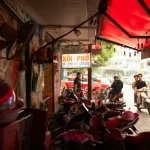
📷 Featured image by Tuân Nguyễn Minh on Unsplash.