On this page
- Hanoi Street Food in 2026: Where to Start
- Where to Eat Pho in Hanoi
- Bun Cha and Bun Bo Nam Bo — The Lunch Shift
- Banh Mi, Banh Cuon, and the Morning Snack Circuit
- Hoan Kiem and the Old Quarter — The High-Density Eating Zone
- West Lake and Tay Ho — Where Hanoians Actually Eat
- Night Markets and After-Dark Street Food
- 2026 Budget Reality: What Street Food Costs in Hanoi
- Frequently Asked Questions
💰 Click here to see Vietnam Budget Breakdown
💰 Prices updated: August, 2026. Budget figures are estimates — always verify before travel.
Exchange Rate: $1 USD = ₫26,080.50
Daily Budget (per person)
Shoestring: ₫782,415 – ₫1,304,025 ($30.00 – $50.00)
Mid-range: ₫2,086,440 – ₫3,912,075 ($80.00 – $150.00)
Comfortable: ₫5,216,100 – ₫9,128,175 ($200.00 – $350.00)
Accommodation (per night)
Hostel/guesthouse: ₫78,242 – ₫312,966 ($3.00 – $12.00)
Mid-range hotel: ₫521,610 – ₫1,825,635 ($20.00 – $70.00)
Food (per meal)
Budget meal: ₫50,000.00 ($1.92)
Mid-range meal: ₫150,000.00 ($5.75)
Upscale meal: ₫400,000.00 ($15.34)
Transport
Single metro/bus trip: ₫10,000.00 ($0.38)
Monthly transport pass: ₫500,000.00 ($19.17)
Hanoi Street Food in 2026: Where to Start
Hanoi‘s street food scene is not hard to find — it’s hard to navigate. Every travel blog recommends the same three spots, most of which now seat tour groups by the busload. Meanwhile, the city’s genuinely good street food has quietly spread across dozens of alleys, morning markets, and neighbourhood corners that most visitors never reach. This guide skips the heritage lesson and gets straight to the addresses, streets, and areas where the eating is actually worth your time in 2026.
Where to Eat Pho in Hanoi
Hanoi pho is distinct — a cleaner, less sweet broth than the southern style, with flat rice noodles and a smaller pile of accompaniments. The broth simmers for hours overnight, and the best bowls are gone by 9am. This is not a myth. Show up at 10am to a serious pho shop and the pot will be empty or watered down.
The highest concentration of genuinely good pho is in the Hoan Kiem and Hai Ba Trung districts. Pho Thin on Lo Duc Street (Hai Ba Trung district) is famous for its stir-fried beef, but the queue is manageable if you arrive before 7:30am. The technique here — charring the beef quickly in a hot wok before it hits the bowl — produces a slightly smoky depth that sits apart from every other bowl in the city.
For a less crowded experience, the cluster of pho shops along Bat Dan Street in the Old Quarter operates from around 6am. These are small, plastic-stool joints where the menu is essentially one thing: pho. The broth has a faint star anise warmth that hits as soon as you sit down.
In 2026, some pho shops have started offering QR-code menus and digital payment, particularly those near tourist zones. Cash is still faster and preferred at the smaller spots.
Bun Cha and Bun Bo Nam Bo — The Lunch Shift
Pho owns the morning. Bun cha owns lunch. This grilled pork and vermicelli dish is a Hanoi original — fatty pork patties and sliced pork belly grilled over charcoal, served in a bowl of sweet-savoury dipping broth alongside a plate of fresh herbs and cold noodles. The charcoal smoke drifts across the pavement and you’ll smell a bun cha shop before you see it.
Hang Manh Street and Le Van Huu Street (Hai Ba Trung) both have well-established bun cha spots that local office workers fill every day between 11am and 1pm. These are not tourist destinations — they’re functional lunch spots where the food is consistent because the clientele demands it.

Bun bo Nam Bo — stir-fried beef over dry vermicelli with bean sprouts, peanuts, and fried shallots — is another lunchtime staple that’s easy to overlook. It’s a drier, more textured dish than bun cha. The original shop on Hang Dieu Street in the Old Quarter has been running for decades. A bowl here costs around 60,000–70,000 VND (approximately USD 2.40–2.80) and takes about three minutes to arrive.
Banh Mi, Banh Cuon, and the Morning Snack Circuit
Hanoi’s banh mi is not Hoi An’s banh mi. The bread is crustier, the filling more restrained — often just pate, butter, and pickled vegetables without the elaborate layers common further south. Banh Mi 25 on Hang Ca Street is genuinely good and has been consistent for years. A banh mi here costs around 35,000–50,000 VND (USD 1.40–2.00) depending on filling, and the bread comes warm.
Banh cuon — steamed rice rolls filled with minced pork and mushroom, served with cha lua (Vietnamese sausage) and a light dipping fish sauce — is the overlooked morning dish most visitors miss entirely. The rolls are impossibly thin, made fresh by pouring batter over a steaming drum and peeling the cooked sheet off in one motion. Watching this process at a street stall is worth slowing down for.
Thanh Noi Street near Quan Thanh Temple and parts of Ngo Si Lien Street in Dong Da district have reliable banh cuon stalls operating from around 6:30am. These areas see far fewer tourists than the Old Quarter but the food quality is just as high.
Hoan Kiem and the Old Quarter — The High-Density Eating Zone
The Old Quarter is chaotic, tourist-heavy, and — in the right streets — still has excellent food. The key is knowing which streets to target and which to walk through quickly.
Hang Be Market (a few minutes east of Hoan Kiem Lake) is a morning wet market where locals shop for produce. The stalls around the outer edges of the market sell bun oc (snail noodle soup), chao (rice porridge), and banh goi (fried pastry dumplings). This is not a sit-down experience — you take a stool at the stall edge and eat while vendors restock around you.

Dinh Liet Street runs parallel to the lake and has a string of com binh dan (everyday rice) shops that serve from around 10:30am. These are the type of places where you point at whatever is in the tray — braised pork belly, morning glory with garlic, tofu in tomato sauce — and pay a flat rate of around 40,000–60,000 VND (USD 1.60–2.40) per plate. No menu, no fuss.
West Lake and Tay Ho — Where Hanoians Actually Eat
Tay Ho district, which wraps around the southern and western edges of West Lake, is where a lot of Hanoi’s middle-class locals live and eat. The food here reflects that — slightly more space, fewer tourists, and restaurants that survive on repeat customers rather than passing foot traffic.
Quang An Street and the lanes running off it have good banh tom (shrimp cakes fried with sweet potato), a dish strongly associated with West Lake. The cakes come out of the oil with a shatteringly crisp exterior and a soft, slightly sweet interior. You eat them wrapped in lettuce with herbs and dip them in fish sauce with chilli.
Xuan Dieu Street is the main dining drag in Tay Ho and has a mix of upscale Vietnamese restaurants and casual street-level spots. Further around the lake, near the Phu Tay Ho Temple area, local com ca kho to (clay pot fish rice) stalls operate mostly on weekends and draw Hanoians who come to make offerings and stay to eat lunch. These spots are rarely on any tourist itinerary.
Night Markets and After-Dark Street Food
The Hoan Kiem Night Market (operating Friday to Sunday on Hang Dao and surrounding streets) is well-known and worth one visit, but it skews heavily toward souvenirs. The food stalls are on the northern end of the market, toward Dong Xuan Market, and that’s where most of the actual eating happens after 7pm.
For a more local after-dark scene, the area around To Hien Thanh Street in Hai Ba Trung district turns into an informal eating strip on weekend evenings. Stalls set up selling bun dau mam tom — cold vermicelli, fried tofu, boiled pork, and fermented shrimp paste that smells aggressively funky and tastes extraordinary once you commit to it.

Bia hoi corners — Hanoi’s outdoor draft beer culture — typically come with free snacks or a rotating menu of small plates. The most famous junction is at Luong Ngoc Quyen and Dinh Liet in the Old Quarter, but by 2026 this spot has become largely a tourist photo stop. The more active bia hoi scene runs along Tue Tinh Street and around Nguyen Cong Tru Street, where the crowd is younger and local.
2026 Budget Reality: What Street Food Costs in Hanoi
Hanoi street food prices have increased modestly since 2024, largely due to higher ingredient costs and increased urban rents pushing some vendors to slightly higher price points. Here’s what to expect:
- Budget tier (street stalls, plastic stools): 30,000–70,000 VND per dish (USD 1.20–2.80). This covers pho, banh mi, banh cuon, bun cha, and com binh dan plates.
- Mid-range tier (sit-down local restaurants, fans and walls): 80,000–150,000 VND per person (USD 3.20–6.00). Includes a main dish, rice, and a drink.
- Comfortable tier (air-conditioned Vietnamese restaurants, some English menus): 200,000–400,000 VND per person (USD 8.00–16.00). Still firmly local food, just in a more comfortable environment.
A street food crawl — pho for breakfast, bun cha for lunch, a few snacks, and bia hoi in the evening — typically costs between 150,000 and 250,000 VND total (USD 6.00–10.00) per person if you avoid tourist-facing pricing. Always check that prices are displayed or agree before ordering at stalls that don’t have visible menus.
Frequently Asked Questions
What is the best street food to eat in Hanoi for first-time visitors?
Start with pho for breakfast, bun cha for lunch, and banh mi as a snack. These three cover the range of Hanoi’s street food identity. Add banh cuon if you’re up before 8am. All four are widely available, affordable, and give a clear sense of how Hanoian food differs from the rest of Vietnam.
Is Hanoi street food safe to eat in 2026?
Generally yes, as long as you eat where locals eat and the stall has visible turnover. Hot food cooked to order carries minimal risk. Avoid pre-cut fruit left sitting at room temperature. Bottled water is cheap and widely available. Stick to well-trafficked stalls and you’ll almost certainly be fine.
Which area of Hanoi has the most street food?
The Old Quarter (Hoan Kiem district) has the highest density, particularly around Hang Be Market, Bat Dan Street, and the streets near Dong Xuan Market. Hai Ba Trung district offers excellent local eating with fewer tourists. Tay Ho is the best area for a more relaxed, neighbourhood-style street food experience.

When is the best time of day for street food in Hanoi?
Early morning (6:00–8:30am) is prime time — pho, banh cuon, and chao are at their freshest. Lunch runs from 11am to 1pm for bun cha and com binh dan. Evenings from 6pm onward suit bun dau mam tom and bia hoi culture. Many stalls close between 2pm and 5pm.
How much should I budget for a full day of street food in Hanoi?
A full day of eating — breakfast, lunch, snacks, and dinner — at street stall prices costs between 150,000 and 300,000 VND (USD 6.00–12.00) per person. If you mix in one sit-down restaurant meal, budget around 400,000–500,000 VND (USD 16.00–20.00) for the day, which still represents exceptional value.
Explore more
Hanoi Shopping Guide: Your Ultimate List of Markets, Malls & Must-Buys
Where to Stay in Hanoi: The Ultimate Neighborhood Guide
Hanoi Nightlife: The Ultimate Guide to Best Bars, Clubs & Ta Hien Beer Street
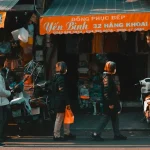
📷 Featured image by Adrià Sánchez Roqué on Unsplash.