On this page
- August in Vietnam: The Real Conditions on the Ground
- Northern Vietnam’s Monsoon Table: What’s Fresh in August
- Cooking Classes Worth Crossing the Country For
- Central Vietnam’s Food Culture: The Soul of Vietnamese Cuisine
- Street Food After Dark: The August Night Market Circuit
- 2026 Budget Reality: What Food and Cultural Experiences Cost Now
- Cultural Immersion Beyond the Plate: Temples, Festivals, and Living Traditions
- Frequently Asked Questions
August in Vietnam: The Real Conditions on the Ground
August 2026 is peak rainy season across much of Vietnam, and if you’ve been reading travel blogs that breeze past that fact, you’re going to land unprepared. The north and centre get hit hardest — Hanoi averages around 30°C with heavy afternoon downpours, while Hoi An can see stretches of grey, wet days that catch first-timers off guard. But here’s what those blogs miss: the rain is exactly why August is one of the most rewarding months to eat and explore Vietnamese culture. Markets overflow with produce that only appears mid-summer. Locals are home, not on holiday. And the tourist crowds that clog Sapa and Ha Long Bay in spring have thinned considerably. If you came for culinary depth and genuine cultural contact, not beach weather, August delivers.
Northern Vietnam’s Monsoon Table: What’s Fresh in August
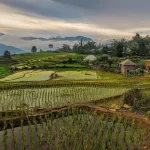
The wet season transforms what’s available at Hanoi’s markets in ways that no menu photograph prepares you for. August is when rau muống (water morning glory) is at its most tender, pulled from flooded paddies and stir-fried with fermented tofu or garlic until it collapses into something silky and slightly bitter. You’ll smell it cooking from halfway down the alley.
It’s also prime season for nhãn — longan fruit from Hung Yen province, just east of Hanoi. Vendors sell them in enormous bunches, still on the branch, at Dong Xuan Market for around 30,000–50,000 VND per kilogram (roughly USD 1.20–2). The flesh is cool, almost floral, and eating a bag of them while sheltering from a downpour under a market awning is one of those small August moments that sticks.
In the highlands around Son La and Dien Bien, plum and peach season peaks in late July and runs into early August. Small roadside stalls sell bags of tart green plums that locals eat dipped in salt and chili — a combination that sounds wrong and tastes completely right.
- Bún ốc (snail noodle soup) becomes a Hanoian obsession in wet weather — the sour, tomato-rich broth warming you after a drenching.
- Cá kho tộ (clay pot braised fish) appears more frequently on home-style restaurant menus, slow-cooked until the sauce is almost caramelised.
- Fresh tofu from Moc market stalls, still warm, sold by the block — August heat and humidity makes the soft variety especially popular.
Cooking Classes Worth Crossing the Country For
Cooking classes have matured significantly across Vietnam’s main culinary hubs. The low-effort tourist version — you stir a pre-measured bowl while a guide narrates — still exists everywhere. But in 2026, there’s a clear tier above that, and it’s worth seeking out.
In Hoi An, the best experiences start before the class does, at the morning market in the old town. A good instructor walks you through ingredient selection — explaining why the herbs on one stall are superior to those on the next, how to pick a ripe tamarind pod, why the shrimp paste from this region smells different from Hanoi’s version. By the time you cook, you understand the dish rather than just following steps.
In Hanoi, home-kitchen style classes run by local families in the Old Quarter give you a genuinely different frame. You’re cooking in someone’s actual kitchen, on equipment that’s seen decades of daily use, learning to make bún chả or chả cá Lã Vọng with the kind of casual commentary that no scripted class replicates.
In Ho Chi Minh City, the focus tends toward southern technique — the sweeter profiles, the heavier use of fresh herbs, the coconut milk in places northerners would use water. Classes centred on bánh xèo are particularly satisfying. The moment the batter hits the hot pan — that violent, spitting sizzle — and the instructor tells you to resist the urge to stir: that’s a lesson in patience that extends well beyond cooking.
Central Vietnam’s Food Culture: The Soul of Vietnamese Cuisine
Many food historians — and most Vietnamese grandmothers — will tell you that Hue is where Vietnamese cooking reached its peak of refinement. The city served as the imperial capital for over a century, and its cuisine reflects that: dozens of small dishes, elaborate presentation, intense flavours built through labour rather than shortcut. In August, the city sits under warm, occasionally wet skies, and its restaurant lanes fill with steam from clay pots.
Bún bò Hue is the dish visitors know, but eating it at a local table at 7am — the broth dark and lemongrass-fierce, slices of pork and beef arranged just so — is different from eating a tourist approximation at noon. Order it early. The broth is best in the first two hours of service before it’s been diluted by constant topping up.
Hue’s bánh khoái (the central version of the crispy rice pancake) is smaller and crispier than its southern cousin bánh xèo, served with a thick peanut and liver dipping sauce that’s unique to this region. Finding it means walking away from the obvious restaurant streets and into the lanes near Dong Ba Market.
Further south, Da Nang offers a rawer, less polished food scene that suits the August traveller perfectly. Mì Quảng — the wide turmeric-yellow noodle dish served with a small amount of rich broth, piled with herbs, peanuts, and a rice cracker — is Da Nang’s daily staple. Eating a bowl for 30,000 VND (about USD 1.20) at a plastic-stool table while rain hammers the awning overhead is as authentic as Vietnamese food travel gets.
Street Food After Dark: The August Night Market Circuit
Rain doesn’t shut down Vietnamese street food — it relocates it slightly and adds atmosphere. The key night markets operating through August each have a distinct character.
Hanoi’s Dong Xuan Night Market (weekends, running through the Old Quarter streets) leans heavily on grilled skewers, fried snacks, and sweet drinks. It’s crowded and loud and completely worth an hour of your time, though serious eaters use it as an aperitif before heading to the quieter lanes nearby for a proper meal.
Hoi An Ancient Town Night Market operates every night along the river, with lanterns reflected in the water and smoke rising from grills. It’s more curated than Hanoi’s — partly because of its UNESCO setting — but the bánh mì stalls here are genuinely excellent, the bread slightly crispier than what you find up north due to different flour blends and baking traditions.
Ho Chi Minh City’s Ben Thanh Night Market surrounds the famous market building after dark. Southern-style snacks dominate: bánh tráng trộn (rice paper salad tossed with dried shrimp, quail eggs, and green mango), chè (sweet dessert soups served cold), and fresh sugarcane juice pressed to order. The combination of heat, humidity, noise, and competing aromas makes this one of the most sensory-rich evenings you can have in Vietnam in August.
2026 Budget Reality: What Food and Cultural Experiences Cost Now
Vietnam remains genuinely affordable for food travel in 2026, though prices in tourist-heavy areas have risen meaningfully compared to pre-2024 levels. Here’s an honest breakdown:
Food Costs Per Day
- Budget: 150,000–250,000 VND (USD 6–10) — street food only, local restaurants, market breakfasts. Completely achievable and often the most delicious option.
- Mid-range: 400,000–700,000 VND (USD 16–28) — a mix of sit-down local restaurants, one nicer meal, fresh juice stops, and market snacking.
- Comfortable: 1,000,000–2,000,000 VND (USD 40–80) — includes one upscale restaurant per day, wine or beer with dinner, and premium ingredients from specialty shops.
Cooking Class Prices
- Budget group class (6+ people, no market visit): 350,000–500,000 VND (USD 14–20)
- Mid-range class with market visit (4–6 people): 700,000–1,200,000 VND (USD 28–48)
- Private home kitchen experience: 1,500,000–2,500,000 VND (USD 60–100) per person
Cultural Entry and Experience Fees
- Hue Imperial Citadel: 200,000 VND (USD 8) per adult — one of Vietnam’s most significant historical sites and worth every dong.
- Most communal temples and pagodas: free entry, though a small donation box is present and appropriate.
- Traditional craft village workshops (lacquerware, silk, conical hat making near Hue): typically 100,000–300,000 VND (USD 4–12) including a hands-on component.
Cultural Immersion Beyond the Plate: Temples, Festivals, and Living Traditions
August carries significant cultural weight in Vietnam’s Buddhist calendar. The Vu Lan festival (Hungry Ghost Festival) falls in the seventh lunar month, which overlaps with August in the solar calendar. This is one of the most important Buddhist observances in Vietnam — families burn paper offerings, visit pagodas, and honour deceased ancestors. At major pagodas in Hanoi and Ho Chi Minh City, the atmosphere on these evenings is quietly extraordinary: incense smoke thick in the air, monks chanting, candlelight flickering across elaborately dressed altars.
For visitors, this is a period to observe respectfully rather than photograph aggressively. Dress conservatively when entering pagodas — shoulders and knees covered — and follow the lead of those around you in terms of noise level and proximity to the altar.
In craft villages outside Hue, August’s slower tourist season means artisans are more accessible than at peak times. A visit to the conical hat villages near Kim Long, where women sit in open-fronted workshops stitching palm leaves to bamboo frames, offers a quieter, less performative experience than the same visit in January. The hats — nón lá — have a translucent quality when held to the light, the silhouette of leaves visible through the layered palm. It’s the kind of detail you only notice when someone hands you one to examine up close.
Water puppet performances, available in Hanoi and Hoi An year-round, hold particular cultural resonance in August because the flooded-paddy imagery in many traditional scripts mirrors exactly what’s happening in the rice fields outside the city. Watching a performance with that context sharpens what might otherwise feel like pleasant but opaque folk entertainment.
Frequently Asked Questions
Is August a good time to visit Vietnam for food travel?
Yes — August is one of the best months for food travel precisely because it’s not peak tourist season. Markets are fully stocked with mid-summer produce, local restaurants run at their normal pace without tourist-adjusted menus, and cooking class availability is easier to arrange on shorter notice outside of Hoi An, where demand stays high year-round.
What should I eat first when I arrive in Vietnam in August?
Go straight to a local market or street stall and eat whatever is drawing the biggest local crowd. In August, that’s likely to be a noodle soup, a bowl of seasonal fruit, or a grilled skewer. Hunger and curiosity are better guides than a list. Save the restaurant research for your second day once you’ve calibrated your palate.
How do I find authentic cooking classes in 2026 and avoid tourist traps?
Look for classes capped at six or fewer participants, taught in a home kitchen or with a genuine market visit included. Read recent reviews focused on what the instructor actually taught, not just whether the food tasted good. A class where you leave understanding why a dish works — not just how to replicate steps — is the standard to aim for.
Is it safe to eat street food in August when it’s hot and humid?
Yes, with basic common sense. Eat at stalls with high turnover — a busy stall means food isn’t sitting out long. Stick to cooked food over raw where possible, especially early in your trip while your stomach adjusts. Freshly grilled, freshly fried, and freshly boiled are all reliable. Carry stomach remedies just in case, but don’t let fear override the experience.
What cultural events or festivals happen in Vietnam in August?
The most significant is Vu Lan (Hungry Ghost Festival), observed at Buddhist pagodas across the country during the seventh lunar month. Dates shift annually — check the lunar calendar for 2026 specifically. Beyond that, August doesn’t carry the density of major public festivals that February or April do, which actually makes it easier to engage with everyday local culture without navigating large crowds or temporary venue closures.
Explore more
Vietnam’s August Weather: Where to Find Sunshine and Dry Days in 2026
Embracing Vietnam’s August Rhythms: Monsoon Season Experiences
Vietnam’s Coastal Gems: Sun-Drenched Beaches for Your July 2026 Trip
📷 Featured image by Matt Brown on Unsplash.