💰 Click here to see Vietnam Budget Breakdown
💰 Prices updated: October, 2026. Budget figures are estimates — always verify before travel.
Exchange Rate: $1 USD = ₫25,964.41
Daily Budget (per person)
Shoestring: ₫650,000 – ₫1,550,000 ($25.03 – $59.70)
Mid-range: ₫1,800,000 – ₫3,900,000 ($69.33 – $150.21)
Comfortable: ₫5,200,000 – ₫9,100,000 ($200.27 – $350.48)
Accommodation (per night)
Hostel/guesthouse: ₫120,000 – ₫350,000 ($4.62 – $13.48)
Mid-range hotel: ₫780,000 – ₫1,850,000 ($30.04 – $71.25)
Food (per meal)
Budget meal: ₫60,000.00 ($2.31)
Mid-range meal: ₫250,000.00 ($9.63)
Upscale meal: ₫800,000.00 ($30.81)
Transport
Single metro/bus trip: ₫10,000.00 ($0.39)
Monthly transport pass: ₫300,000.00 ($11.55)
Spain is a hard act to follow. You’ve done the tapas crawls, the cathedral circuits, the Airbnb with the tiled floors and the noisy plaza below. Now you’re back home and already thinking about the next trip. Da Nang is the kind of city that shows up on a lot of “emerging destination” lists but rarely gets a proper explanation of why it works so well for someone coming from a European travel mindset. In 2026, with direct flight connections expanding across Southeast Asia and Vietnam’s e-visa now a simple 90-day single entry anyone can grab online in under 10 minutes, the logistics barrier is essentially gone. What’s left is just the question of whether the city itself delivers. It does.
My Son Sanctuary and the Cham Legacy
About 70 kilometres southwest of Da Nang, the My Son Sanctuary sits in a jungle valley ringed by low mountains. These are Hindu temple towers built by the Cham Kingdom between the 4th and 14th centuries — a civilisation that most Western travellers know almost nothing about, which makes the visit genuinely surprising rather than just photogenic.
Walking between the brick towers in the early morning, you hear nothing but birds and the rustle of the canopy above. The red-orange brickwork has a texture almost like dried clay, rough against your fingertips, and the carved stone figures of Shiva, Vishnu, and dancing apsaras feel completely distinct from anything you’d encounter in European heritage sites or even Angkor Wat. This isn’t a cleaned-up, roped-off ruin. Some of the damage from the Vietnam War is still visible — bomb craters remain at one end of the valley — and that context is part of the experience.
The best approach in 2026 is to hire a driver from Da Nang rather than joining a group tour bus. A return trip with a private car costs roughly 400,000–600,000 VND (USD 16–24) and gives you flexibility to arrive at 8am when the site opens and the light is good, leaving before the tour groups arrive around 9:30am. The site entry fee is 150,000 VND (about USD 6) per adult.
The Neighborhoods Worth Exploring on Foot
Da Nang doesn’t have a single “old quarter” the way Hanoi or Hoi An does, and that’s actually a feature, not a flaw. The city is spread across both banks of the Han River and has distinct pockets that feel completely different from each other.
An Thuong
An Thuong is the area most foreign visitors end up gravitating toward, a grid of low-rise streets about five minutes’ walk from My Khe beach. It has a relaxed, slightly bohemian quality — independent coffee shops, small guesthouses painted in pale blues and yellows, and a mix of Vietnamese families and long-stay travellers eating at plastic-stool restaurants on the footpath. In the evening, the street lights come on early and the whole neighbourhood has a lived-in warmth that feels nothing like a resort strip. It’s genuinely walkable and compact enough that you can cover most of it in an afternoon.
Han Market Area and the East Bank
On the west side of the Han River, the area around Han Market and Bach Dang Street has a more urban energy. This is where Da Nang feels like an actual Vietnamese city rather than a beach destination. The market itself is a two-storey covered building where vendors sell everything from fresh produce and dried goods to fabric and tourist-grade souvenirs on the upper floor. The surrounding streets are lined with pho shops, banh mi carts, and small hardware stores that make it clear people actually live and work here. The Dragon Bridge is nearby, and while it’s heavily photographed, the riverfront walkway along Bach Dang at dusk — when the sky goes pink over the water and the bridge lights start to glow — is worth the short walk.

Son Tra Peninsula
Son Tra rises steeply just north of the city center and is one of Da Nang’s stranger contrasts. A narrow road winds up through dense jungle to the Lady Buddha statue, which at 67 metres is genuinely enormous and visible from most of the city. Higher up, the forest is home to red-shanked douc langurs — a primate species with vivid orange, black, and white colouring that looks almost too theatrical to be real. The peninsula also has a handful of quiet rocky beaches on its northern side that most visitors never find. Rent a motorbike for half a day (around 120,000–150,000 VND / USD 5–6) and explore the coastline road that wraps around the headland.
Beach Life Without the Crowds
My Khe Beach is the headline act — a 30-kilometre stretch of white sand that faces east, catching the morning light cleanly. What it actually feels like is quite different from what the promotional images suggest. In the early morning, around 5:30–7am, the beach belongs to Vietnamese locals: older men doing tai chi in groups, women walking in sun visors and long-sleeved shirts, vendors pushing mobile carts selling bánh mì and iced coffee. The water is warm, clear, and gently sloped, making it genuinely easy to swim in without the undertow problems you get further south.
By mid-morning the beach fills up, but it never reaches the shoulder-to-shoulder density of, say, Barcelona’s Barceloneta in August. There are sunbed rental operations along most of the strip, typically charging 50,000–80,000 VND (USD 2–3) for a chair, and beach vendors will bring cold coconuts and fresh fruit directly to you.

For more seclusion, Non Nuoc Beach at the southern end of the strip — near the Marble Mountains — is quieter and feels less developed. The sand here is slightly coarser but the water is just as good, and the backdrop of the Marble Mountains rising from flat ground behind you creates an unusual landscape that doesn’t look like anywhere else on the Vietnamese coast.
The Food Scene: Where to Eat and What to Order
Da Nang’s food scene rewards people who are willing to eat where they’re pointed rather than where a hotel concierge suggests. The streets around Hoang Dieu and Tran Phu in the city center have dense clusters of local eating spots that operate almost entirely for Vietnamese customers, and the price difference compared to tourist-facing restaurants is significant.
My Quang Street (Hoang Dieu): My quang noodles are Da Nang’s signature dish and this street has a dozen variations within a few blocks. Bowls cost 35,000–50,000 VND (about USD 1.50–2) and are served with a heap of fresh herbs, a prawn cracker wafer, and slices of pork or shrimp in a turmeric-yellow broth that’s drier than a standard Vietnamese soup — more like a dressed noodle dish.
Banh Xeo at K74/75 Hoang Dieu: The sizzle of rice-flour batter hitting the curve of a seasoned wok, the cloud of steam as the lid goes down — bánh xèo at Da Nang’s street-level spots is louder and messier than the restaurant version. You wrap pieces of the crispy crepe in mustard leaf and rice paper, dip it in fish sauce, and eat with your hands.

Con Market (Cho Con): For the most concentrated food experience in one place, the covered food hall at Con Market on Ong Ich Khiem Street runs from early morning until mid-afternoon. Vendors here specialize in single dishes — one stall does only bun bo Hue, another only com ga (chicken rice), another only a rotating menu of vegetarian dishes. The lunch crowd is intense, hot, and wonderful.
In the evenings, the An Thuong area has a reliable cluster of mid-range Vietnamese restaurants that cater to a mix of locals and visitors. Beer is cheap — a local bia hoi draught runs 10,000–15,000 VND (under USD 1) — and most places stay open until 11pm.
Getting Around Da Nang in 2026
Da Nang International Airport is compact and efficient — most arrivals clear immigration and collect luggage within 30–40 minutes. As of 2026, the airport has expanded its terminal to handle the increased traffic from new direct routes including connections via Singapore, Bangkok, and Taipei that feed international travellers who aren’t flying directly from their home countries. There is still no direct metro or train link to the city center, but the airport is close enough (about 3 kilometres) that a Grab car to most central accommodation costs 60,000–90,000 VND (USD 2.50–3.50).
Within the city, Grab remains the dominant ride-hailing app and works reliably. For shorter trips and flexibility, motorbike rental is genuinely practical in Da Nang in a way it isn’t in Hanoi — the roads are wider, traffic is lighter, and the city has invested in improved road markings and roundabout logic over the past two years. Many guesthouses can arrange rentals directly; otherwise XE Om (motorbike taxi) drivers outside Con Market or near the beach are easy to flag down.
The Da Nang–Hoi An connection is one of the most-used short routes in Vietnam. In 2026, a shared shuttle bus service runs between the two cities every 30–40 minutes during daylight hours from a stop on Le Duan Street, costing 60,000 VND (about USD 2.40) per person for the 30-kilometre, roughly 45-minute ride. This makes staying in Da Nang and day-tripping to Hoi An completely straightforward.

2026 Budget Reality
Da Nang sits comfortably between Hoi An’s inflated boutique prices and Hanoi’s chaotic budget range. Here’s what to realistically expect in 2026:
Accommodation
- Budget: Clean guesthouses and hostels in An Thuong or near the beach — 250,000–400,000 VND per night (USD 10–16)
- Mid-range: 3-star hotels with pool access, often beachfront — 800,000–1,500,000 VND per night (USD 32–60)
- Comfortable: Boutique beach resorts or internationally branded hotels — 2,000,000–4,500,000 VND per night (USD 80–180)
Food
- Budget: Local stalls and market food — 30,000–80,000 VND per meal (USD 1.20–3.20)
- Mid-range: Sit-down Vietnamese or international restaurants — 150,000–350,000 VND per person (USD 6–14)
- Comfortable: Beachfront dining, wine included — 500,000–1,200,000 VND per person (USD 20–48)
Daily Total Estimate
- Budget traveller: 500,000–800,000 VND/day (USD 20–32)
- Mid-range traveller: 1,500,000–2,500,000 VND/day (USD 60–100)
- Comfortable traveller: 4,000,000–7,000,000 VND/day (USD 160–280)
One thing that surprises many visitors: Da Nang’s beachfront resort hotels frequently drop their rates significantly outside of peak season (June–August and the Tet period in late January/February). Booking in April or October can land you a four-star beach hotel at mid-range prices.
Frequently Asked Questions
Do I need a visa to visit Vietnam from Europe or the US in 2026?
Most European and US passport holders can apply for Vietnam’s e-visa online, which grants a single entry for up to 90 days. The process takes under 10 minutes and approval typically comes within three business days. The fee is approximately USD 25. Always check the official Vietnam Immigration portal for the latest requirements before travelling.
How many days should I spend in Da Nang?

Three to five days works well as a standalone visit. That’s enough time to explore the city’s main neighbourhoods, make a day trip to My Son Sanctuary, spend a couple of mornings at the beach, and take a half-day trip to Hoi An. Longer stays reward slower travellers who want to explore Son Tra Peninsula and the Marble Mountains properly.
What is the best time of year to visit Da Nang?
February through May is the most reliable window — dry, warm (around 26–32°C), and less crowded than the June–August peak. October and November bring the rainy season, with occasional heavy downpours and rougher sea conditions. December and January are cooler but still pleasant at around 22–25°C on clear days.
Is Da Nang safe for solo travellers?
Da Nang consistently ranks as one of Vietnam’s safest cities for solo travellers, including women travelling alone. The main practical risks are the same as any Southeast Asian city: watch your belongings on busy streets, use Grab rather than unmarked taxis, and be cautious on rented motorbikes. Petty theft exists but serious crime targeting tourists is rare.
How does Da Nang compare to Hoi An as a base?
Da Nang offers better beach access, lower prices, and a more authentic urban feel. Hoi An has more charm, a walkable ancient town, and a denser concentration of restaurants and boutiques. Many visitors split their time, using Da Nang as a base and visiting Hoi An as a day trip. The 45-minute connection makes both viable.
Explore more
Your Guide to the Best Shopping in Da Nang: Markets, Malls & Must-Buy Souvenirs
Where to Go Out in Da Nang? Your Ultimate Guide to Nightlife & After-Dark Fun
Where to Eat in Da Nang? Your Ultimate Guide to Restaurants, Street Food & Local Delights
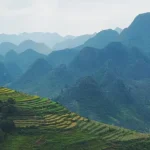
📷 Featured image by Truong Tuyet Ly on Unsplash.