On this page
- The Central Highlands in 2026 — What’s Changed and Why Now
- Buon Ma Thuot: Vietnam’s Coffee Capital
- Dalat: Cool Air, French Echoes, and a Food Scene That Punches Above Its Weight
- Kon Tum and Pleiku: The Raw, Less-Traveled North
- Coffee Culture Deep Dive — From Robusta Farms to Third-Wave Cafés
- Ethnic Minority Villages and Cultural Experiences
- Adventure and Outdoor Activities
- Getting to the Central Highlands
- Getting Around Once You’re There
- 2026 Budget Reality — What Things Actually Cost
- Day Trip or Overnight? How to Plan Your Highlands Visit
- Frequently Asked Questions
💰 Click here to see Vietnam Budget Breakdown
💰 Prices updated: October, 2026. Budget figures are estimates — always verify before travel.
Exchange Rate: $1 USD = ₫25,964.41
Daily Budget (per person)
Shoestring: ₫650,000 – ₫1,550,000 ($25.03 – $59.70)
Mid-range: ₫1,800,000 – ₫3,900,000 ($69.33 – $150.21)
Comfortable: ₫5,200,000 – ₫9,100,000 ($200.27 – $350.48)
Accommodation (per night)
Hostel/guesthouse: ₫120,000 – ₫350,000 ($4.62 – $13.48)
Mid-range hotel: ₫780,000 – ₫1,850,000 ($30.04 – $71.25)
Food (per meal)
Budget meal: ₫60,000.00 ($2.31)
Mid-range meal: ₫250,000.00 ($9.63)
Upscale meal: ₫800,000.00 ($30.81)
Transport
Single metro/bus trip: ₫10,000.00 ($0.39)
Monthly transport pass: ₫300,000.00 ($11.55)
The Central Highlands in 2026 — What’s Changed and Why Now
For years, the Central Highlands sat in the shadow of Vietnam’s coastal highlights. Travelers rushed from Hoi An to Nha Trang, barely glancing inland. That’s shifting fast in 2026. A combination of upgraded roads, new direct flights into Buon Ma Thuot and Pleiku, and a booming specialty coffee scene has put the highlands on the radar of travelers who want something beyond beach chairs and street food tours. The challenge now is that some parts — particularly Dalat — have swung from hidden gem to overtouristed, while others remain genuinely raw and uncrowded. This guide separates the two.
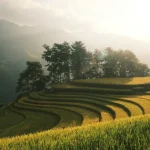
The Central Highlands spans five provinces: Kon Tum, Gia Lai, Dak Lak, Dak Nong, and Lam Dong. The terrain shifts from rolling basalt plateaus and dense pine forests to roaring waterfalls and red-dirt roads cutting through coffee and pepper plantations. Temperatures here are cooler than coastal Vietnam — Dalat hovers around 15–22°C year-round, while Buon Ma Thuot sits at a comfortable 24–28°C. It’s a different Vietnam, and that’s exactly the point.
Buon Ma Thuot: Vietnam’s Coffee Capital
Buon Ma Thuot is not a pretty city in the postcard sense. It’s a working provincial capital with wide, dusty boulevards, a chaotic central market, and coffee — everywhere, always, unavoidably. The air near the roasting warehouses on the eastern edge of town carries a deep, smoky-sweet smell that hits you before you even see the buildings. This is where roughly 40% of Vietnam’s coffee is processed, and walking through the industrial coffee zones feels like stepping behind the curtain of something the world depends on but rarely sees.
The city itself has a few standout sights. The Dak Lak Museum covers highland ethnic minority history with solid collections of Ede and Mnong artifacts. The Victory Monument roundabout is historically significant — this is where North Vietnamese tanks rolled in on March 10, 1975, marking the beginning of the final campaign of the war. Most visitors spend two days here, which is enough to absorb the city and use it as a base for surrounding areas.
Dalat: Cool Air, French Echoes, and a Food Scene That Punches Above Its Weight
Dalat sits at 1,500 metres above sea level in Lam Dong Province, and the elevation gives it a personality unlike anywhere else in Vietnam. The architecture still carries French colonial bones — the train station, the Governor’s Palace, the pale yellow Domaine de Marie church — and the surrounding hills are thick with pine trees and strawberry farms. On a foggy morning, when cloud rolls through the valley and the smell of wood smoke drifts from guesthouses along Xuan Huong Lake, it’s genuinely atmospheric.
The food scene here has evolved significantly since 2024. Dalat has always had good produce — the cool climate grows things the south can’t: artichokes, avocados, strawberries, excellent greens. But a newer wave of restaurants is now combining that local produce with serious cooking. Look for bánh mì bơ (bread with avocado and butter) at morning markets, lẩu gà lá é (chicken hotpot with local herbs), and the Dalat-specific bánh tráng nướng — a crispy grilled rice paper loaded with egg, spring onion, and dried shrimp that street vendors sell after dark near Hoa Binh Square.
The downside: weekend crowds from Ho Chi Minh City have made Dalat’s center hectic. Book accommodation for Thursday or Sunday arrival if possible, and stay at least two nights to escape into the surrounding hills on a motorbike.
Kon Tum and Pleiku: The Raw, Less-Traveled North
These two cities rarely make it into short itineraries, and that’s both their weakness and their appeal. Pleiku, the capital of Gia Lai Province, is a straightforward highland town — functional, quiet, and surrounded by the volcanic Bien Ho Lake (also called T’Nung Lake by the Jarai people). The lake sits in the crater of an ancient volcano about 7 kilometres from the city center. On a still morning, the surface is mirror-flat and surrounded by dense forest. There are almost no other tourists.
Kon Tum is arguably the most compelling city in the northern highlands. It has a genuine old town built around a French-era wooden church — the Kon Tum Seminary, with its distinctive Bahnar architectural flourishes — and the Kon Tum bridge over the Dak Bla River, from which you can watch bamboo-rafting villagers cross in the late afternoon. The surrounding villages, particularly Kon Kơ Tu, are among the most accessible examples of Bahnar communal life in the country, with traditional rông (communal longhouses) still actively used.
Coffee Culture Deep Dive — From Robusta Farms to Third-Wave Cafés
Vietnam is the world’s second-largest coffee producer, and the Central Highlands grow almost all of it. The dominant variety here is Robusta — heartier, more bitter, higher caffeine — which is the backbone of the iconic Vietnamese iced coffee (cà phê đá) that has conquered the world. But the story has moved on.
Since around 2022, a wave of specialty coffee operations has taken root across the highlands. In Buon Ma Thuot, roasters like Mê Trang and independent micro-roasters have pushed into Arabica and even rare Liberica (cà phê mít) production. By 2026, several farms around Di Linh and Lak Lake are running direct-to-consumer operations with proper cupping infrastructure — the kind of setup you’d find in Portland or Melbourne, planted in red basalt soil.
In Dalat, the third-wave scene has proper traction. Cafés in the Truc Lam area and along Nguyen Van Troi Street serve single-origin pour-overs with flavor notes that actually hold up under scrutiny. The crossover between local farming knowledge and international café culture here is genuine — not performative.
If you want the full experience: start your morning at a traditional cà phê vợt (sock coffee) stall where hot water is filtered through a cloth sock into a pre-sweetened condensed milk base, then spend an afternoon at a specialty cupping session. The contrast tells you everything about where Vietnamese coffee has been and where it’s going.
Ethnic Minority Villages and Cultural Experiences
The Central Highlands are home to a significant population of ethnic minority groups — the Ede, Bahnar, Jarai, Mnong, Koho, and others — each with distinct languages, weaving traditions, architecture, and spiritual practices. This is genuinely sensitive territory for tourism, and it’s worth being deliberate about how you engage.
The best experiences tend to happen through community-managed programs or guesthouses run by minority families themselves. In the Buon Ma Thuot area, Buon Jun village near Lak Lake has a long history of receiving visitors through a local tourism cooperative — elephant welfare has improved significantly since a 2023 provincial ruling banned riding, and mahout-accompanied walking encounters are now the standard. Near Kon Tum, the villages along the Dak Bla River are accessible by bicycle and genuinely welcoming to respectful visitors.
Dress modestly when visiting villages, ask before photographing people, and if you attend any ceremony or enter a rông house, follow your host’s lead on protocol. Buying directly from village weavers — rather than from resellers in Dalat’s tourist markets — makes a concrete difference to local income.
Adventure and Outdoor Activities
- Motorbike routes: The stretch from Buon Ma Thuot to Dalat via Highway 27 is one of Vietnam’s great riding roads — roughly 200 kilometres of curves through coffee plantations, pepper farms, and pine forests. Allow a full day or split it into two. The new expressway sections completed in 2025 have made parts of this safer for inexperienced riders, though the mountain curves still demand attention.
- Waterfalls: Dray Nur and Dray Sap waterfalls near Buon Ma Thuot are connected by a trail along the Krong Ana River. During rainy season (May–October), the volume is dramatic — the roar of Dray Nur across the gorge is something you feel in your chest before you see it. Dalat has its own waterfall circuit (Datanla, Pongour), though these are more developed and busier.
- Trekking: Chu Yang Sin National Park south of Buon Ma Thuot offers multi-day treks to the highest peak in the region (2,442m). Permits and a local guide are required — arrange this through the park management office or reputable Buon Ma Thuot operators at least 48 hours in advance.
- Mountain biking: Dalat has a growing mountain biking scene, with trails ranging from beginner-friendly to technically demanding. Several operators near Xuan Huong Lake rent bikes and lead guided rides into the surrounding hills.
Getting to the Central Highlands
Access has genuinely improved since 2024.
By Air
Buon Ma Thuot (BMV) receives direct flights from Hanoi, Ho Chi Minh City, and Da Nang. Vietnam Airlines and VietJet both serve this route, with flights typically taking 1–1.5 hours from the south. Pleiku (PXU) also has regular connections from Hanoi and HCMC. Dalat (DLI / Lien Khuong Airport) is the busiest gateway to the highlands, with multiple daily flights from HCMC (about 1 hour) and connections from Hanoi.
By Bus
Open-tour sleeper buses connect HCMC to Dalat in 6–7 hours and to Buon Ma Thuot in 8–9 hours. From Da Nang, buses to Kon Tum take around 5–6 hours. Fung Trang, Phuong Trang (FUTA), and Kumho Samco are the most reliable operators in 2026. Tickets range from 150,000–300,000 VND (USD 6–12) depending on the route and bus type.
By Car or Motorbike
The Ho Chi Minh Road (Highway 14) connects the highlands north to south and is a genuine pleasure to drive — less truck traffic than the coast, far more scenery. The new expressway spur completed in late 2025 between Buon Ma Thuot and the coast (toward Nha Trang direction) has cut driving time by about 90 minutes.
Getting Around Once You’re There
The highlands are not walkable between destinations — distances between cities are substantial, and the terrain makes cycling between provinces impractical for most travelers.
- Motorbike rental: The most practical choice. Automatic scooters rent for 120,000–180,000 VND (USD 5–7) per day in Dalat and Buon Ma Thuot. Semiautomatic trail bikes are available for the rougher routes toward national parks.
- Grab: Works reliably in Dalat and Buon Ma Thuot as of 2026. Less consistent in Pleiku and Kon Tum — have your guesthouse call local taxis as backup.
- Hired car with driver: For families or groups covering multiple provinces, a hired car (600,000–900,000 VND / USD 24–36 per day) makes financial and logistical sense.
2026 Budget Reality — What Things Actually Cost
The highlands remain significantly cheaper than Vietnam’s major tourist cities, though Dalat has crept upward in recent years due to domestic tourism pressure.
Accommodation
- Budget: Hostel dorms or basic guesthouses — 150,000–250,000 VND (USD 6–10) per night
- Mid-range: Clean hotels or boutique guesthouses — 400,000–700,000 VND (USD 16–28) per night
- Comfortable: Dalat’s better hotels and highland lodges — 900,000–1,800,000 VND (USD 36–72) per night
Food
- Street food / local restaurants: 35,000–80,000 VND (USD 1.40–3.20) per meal
- Mid-range restaurant: 120,000–250,000 VND (USD 5–10) per person
- Specialty coffee: 45,000–90,000 VND (USD 1.80–3.60) per cup at quality cafés
Activities
- Waterfall entry fees: 20,000–50,000 VND (USD 0.80–2)
- Farm/coffee tours: 200,000–400,000 VND (USD 8–16)
- National park trekking (with guide): 500,000–1,200,000 VND (USD 20–48) per day
A practical daily budget for the highlands runs around 600,000–900,000 VND (USD 24–36) covering mid-range accommodation, local food, and one activity.
Day Trip or Overnight? How to Plan Your Highlands Visit
This question mostly applies to Dalat, which sits close enough to HCMC (roughly 300km) to attract one-day visitors. A day trip to Dalat is possible but genuinely insufficient — you’ll spend much of it in transit and see the surface of a place that rewards slower exploration. If you have the time, three nights in Dalat lets you take a day ride into the surrounding countryside and still have an evening to properly eat your way through the night market.
Buon Ma Thuot, Pleiku, and Kon Tum are not practical day trips from anywhere major. Plan a minimum of two nights in Buon Ma Thuot to do the coffee farms and Lak Lake justice. For a proper highlands circuit — Dalat, Buon Ma Thuot, Kon Tum — allow at least seven to nine days. This is a region that rewards a loop rather than an in-and-out.
The ideal entry point depends on your direction of travel: fly into Dalat from HCMC, work your way north through the highlands by road, and exit via Pleiku or Kon Tum toward Da Nang or Hoi An. This gives you a natural progression from the most polished to the most raw.
Frequently Asked Questions
What is the best time of year to visit Vietnam’s Central Highlands?
The dry season runs from November to April and is the most comfortable time to visit. Roads are passable, waterfalls are still impressive, and outdoor activities are easy to manage. The coffee harvest (typically November–January in Dak Lak) adds another dimension to a visit during this window. Rainy season brings dramatic waterfalls but muddy trails and occasional road closures.
Is the Central Highlands safe for solo travelers and women traveling alone?
Yes, generally. The highlands are among the quieter, lower-crime regions of Vietnam. Solo women travelers report feeling comfortable in Dalat and Buon Ma Thuot. Stick to well-lit areas at night in smaller towns, and use Grab rather than street-hailed motorbike taxis in places you don’t know well. Standard precautions apply as they would anywhere.
Do I need a special permit to visit ethnic minority villages in the Central Highlands?
Some restricted areas near Kon Tum and the Cambodian border zone require a travel permit, which your guesthouse or local operator can arrange. Most villages accessible to tourists — including those near Lak Lake and along the Dak Bla River — do not require special permits as of 2026, but this can change. Check current rules with a local operator before planning village visits in border-adjacent areas.
Can I rent a motorbike in the Central Highlands without an international driving license?
Technically, Vietnamese law requires a valid license for motorbikes above 50cc. In practice, rental shops in Dalat and Buon Ma Thuot typically rent without checking licenses. That said, your travel insurance may be voided if you’re involved in an accident without proper documentation. For peace of mind, carry your home country license and ensure your insurance policy covers motorbike use explicitly.
What kind of coffee should I try in the Central Highlands that I can’t get elsewhere?
Seek out cà phê mít (Liberica coffee), which is grown in small quantities around Buon Ma Thuot and has a distinctly floral, slightly woody flavor unlike Arabica or Robusta. Also try traditional cà phê vợt — sock-filtered coffee — at old-school stalls in Buon Ma Thuot. These are experiences tied specifically to this region and increasingly hard to find even in major Vietnamese cities.
📷 Featured image by Euan Cameron on Unsplash.