On this page
- What Ha Long Bay Actually Is (and Why 2026 Is a Good Year to Visit)
- Choosing the Right Cruise — The Decision That Makes or Breaks Your Trip
- Top Experiences on the Water
- Ha Long City as Your Base
- Food and Drink on the Bay
- Getting to Ha Long Bay
- Day Trips and Extensions Worth Adding
- Evenings on the Cruise
- Shopping in Ha Long
- Best Time to Visit Ha Long Bay
- Practical Tips for First-Time Visitors
- Budget Breakdown — What Ha Long Bay Actually Costs in 2026
- Frequently Asked Questions
💰 Click here to see Vietnam Budget Breakdown
💰 Prices updated: October, 2026. Budget figures are estimates — always verify before travel.
Exchange Rate: $1 USD = ₫25,964.41
Daily Budget (per person)
Shoestring: ₫650,000 – ₫1,550,000 ($25.03 – $59.70)
Mid-range: ₫1,800,000 – ₫3,900,000 ($69.33 – $150.21)
Comfortable: ₫5,200,000 – ₫9,100,000 ($200.27 – $350.48)
Accommodation (per night)
Hostel/guesthouse: ₫120,000 – ₫350,000 ($4.62 – $13.48)
Mid-range hotel: ₫780,000 – ₫1,850,000 ($30.04 – $71.25)
Food (per meal)
Budget meal: ₫60,000.00 ($2.31)
Mid-range meal: ₫250,000.00 ($9.63)
Upscale meal: ₫800,000.00 ($30.81)
Transport
Single metro/bus trip: ₫10,000.00 ($0.39)
Monthly transport pass: ₫300,000.00 ($11.55)
Ha Long Bay had a problem in 2024: too many boats, too little regulation, and too many travelers leaving disappointed. In 2026, that picture has shifted. Vietnam’s government capped the number of overnight cruise licenses operating in the core UNESCO zone, and new environmental inspection rules mean the floating garbage and fuel-slicked water that once blighted photos are far less common. The result is a bay that actually looks like the postcards again — though only if you book smart. This guide cuts through the noise and tells you exactly what to do, what to skip, and what to expect.
What Ha Long Bay Actually Is (and Why 2026 Is a Good Year to Visit)
Ha Long Bay sits in Quang Ninh Province, about 170 kilometres east of Hanoi. It covers roughly 1,553 square kilometres of the Gulf of Tonkin and contains somewhere between 1,600 and 2,000 limestone karst islands and islets, depending on who’s counting. UNESCO gave it World Heritage status twice — first for scenery in 1994, then for geological and biological significance in 2000. That double recognition matters because it drives the conservation rules that are slowly cleaning the bay up.
The karsts themselves are the main event. Some rise vertically 100 metres from the water, draped in jungle right down to the waterline. On an overcast morning, when mist sits between the pillars and the water goes glassy and grey-green, it is genuinely one of the most striking landscapes in Southeast Asia. The sizzle of a freshly caught squid hitting the grill on a junk boat deck, the smell of salt and rain on warm limestone — these are the sensory moments that make Ha Long worth the effort.
Choosing the Right Cruise — The Decision That Makes or Breaks Your Trip
Your entire Ha Long Bay experience hinges on which cruise you book. This is not a place where you can turn up and figure it out on the day. The boats range from rusting day-tripper barges to genuinely beautiful wooden junks with private balconies and onboard spas. Getting this wrong is the most common reason people come back unimpressed.
Day Cruise vs Overnight Cruise
A day cruise gets you on the water and past some karsts, but you’ll spend most of your time surrounded by other day boats and won’t reach the quieter corners of the bay. An overnight cruise — minimum two days, one night — is the baseline for a real experience. Three days, two nights is the sweet spot for most first-timers.

Cruise Tiers
- Budget junks: These carry 20–40 passengers, have basic cabins, and stick to the busy central zone. Food is serviceable, activities are rushed. Expect to pay 1,500,000–2,500,000 VND (roughly USD 58–97) per person per night all-inclusive.
- Mid-range cruises: Smaller boats (12–20 passengers), better food, more time at anchor. Prices run 3,000,000–5,500,000 VND (USD 116–213) per person per night. This is where most independent travelers land.
- Luxury and boutique cruises: 4–16 passengers, private balconies, quality Vietnamese cuisine, curated itineraries into Lan Ha or Bai Tu Long Bay. From 6,500,000 VND (USD 252) per person per night upward.
Where the Boat Goes Matters More Than the Boat Itself
Budget cruises stay in Ha Long Bay’s central zone, which is busier. Mid-range and luxury operators increasingly route through Lan Ha Bay (accessible from Cat Ba Island) or Bai Tu Long Bay to the northeast. Both are less congested, equally beautiful, and still within the broader UNESCO area. Ask your operator exactly which zone they cover before booking.
Top Experiences on the Water
The bay is not just a floating hotel. The activities are the point — though not every cruise handles them equally well.
Kayaking Through the Karsts
Most mid-range and luxury cruises include kayaking. Paddle into a sea cave called a hang at low tide and you emerge into a flooded lagoon completely enclosed by limestone — no engine noise, no other boats, just birdsong and the drip of water from cave ceilings above you. Ti Top Island and the Bo Nau cave area are popular spots, but ask your operator about less-visited lagoons on the eastern side of the bay.
Sung Sot Cave (Surprise Cave)
This is the bay’s most visited cave, and for good reason — it is enormous, with two connected chambers that take about 45 minutes to walk through. LED lighting was upgraded in 2024 and doesn’t overwhelm the natural formations the way older colored lights did. Go early in the morning before the day-trip boats arrive. The 150,000 VND (USD 5.80) entrance fee is usually included in cruise packages.
Floating Villages
Cua Van is the most accessible of Ha Long’s traditional fishing villages, where families live year-round on connected wooden platforms. Since 2022, residents have been gradually relocated to shore housing — what remains is a smaller community that still fishes and still welcomes visitors. A rowing boat tour through the stilted homes takes about 40 minutes and costs around 100,000 VND (USD 3.90) if arranged through your cruise.

Sunrise on Deck
Wake up at 5:30 a.m. and stand on the bow. The karsts materialize out of darkness one by one as the sky turns from black to deep orange. This is the moment that justifies the trip, and it costs nothing beyond getting out of bed early.
Ha Long City as Your Base
Most travelers pass through Ha Long City (formerly called Hon Gai) without paying much attention to it. It’s a working port town, not a tourist destination in the traditional sense, but it has improved significantly since the seafront promenade redevelopment completed in 2023. The Bai Chay area, on the western side of the bay bridge, is where most hotels and tour operators cluster. It’s fine for one night before or after your cruise — walkable, functional, and cheap.
Don’t confuse Ha Long City with the bay itself. The city waterfront faces the inner harbor, not the open karst scenery. You won’t see the dramatic limestone pillars from your hotel window unless you book a boat or take a speedboat tour out into the bay.
Food and Drink on the Bay
Cruise food has improved noticeably across all price tiers. Even budget operators now serve fresh seafood rather than the frozen-then-reheated protein that used to be the norm.
What You’ll Eat on the Cruise
Expect shared Vietnamese meals: grilled clams with scallion oil, steamed prawns, squid stir-fried with lemongrass, morning glory with garlic, and a rotating soup. Most cruises serve three meals a day, and the quality of the cooking correlates directly with the price tier. Vegetarian options exist on every cruise but need to be requested at booking, not on the boat.
Drinking on Board
Alcohol is almost never included. Beers run 50,000–100,000 VND (USD 1.90–3.90) depending on the cruise tier. Soft drinks and bottled water are usually included. Bring a refillable bottle — the better cruises now have filtered water stations rather than single-use plastic, which is both better for the bay and better for your budget.
Eating in Ha Long City
For the night before your cruise, head to the covered seafood market on Vuon Dao Street in Bai Chay. Choose your seafood live from tanks, pay by weight, and the vendors cook it on the spot. A full meal for two with clams, a crab, morning glory, and rice will run about 400,000–600,000 VND (USD 15–23). The area around Nguyen Van Cu Street has cheaper pho and banh mi stalls that open from 6 a.m.

Getting to Ha Long Bay
From Hanoi
The Hanoi–Ha Long Expressway makes this the easiest it has ever been. Limousine bus services (reclining seats, air-con, on-time departures) leave from My Dinh bus station and from pickup points in the Old Quarter. Journey time is 2.5–3 hours. Operators like Hung Thanh, Duc Duong, and several cruise companies offer direct bus-to-pier transfers. Cost: 200,000–350,000 VND (USD 7.80–13.50) one way. Grab car from Hanoi is also an option — around 900,000–1,200,000 VND (USD 35–47) for the full private journey.
From Cat Ba Island
If you’re combining Ha Long with Cat Ba Island, speedboats connect Cat Ba Town to Tuan Chau Marina in Ha Long City in about 45 minutes. Several cruise operators now offer Cat Ba embarkation as an alternative start point for Lan Ha Bay itineraries.
Flying In
Van Don International Airport (VDO) is 50 kilometres from Ha Long City. VietJet and Bamboo Airways run routes from Ho Chi Minh City and Da Nang. A taxi from Van Don to Ha Long City costs around 350,000–450,000 VND (USD 13.50–17.40). This is the smart option if you’re coming from the south and don’t want to transit through Hanoi.
Day Trips and Extensions Worth Adding
Cat Ba Island
A full day or overnight on Cat Ba gives you access to Cat Ba National Park, a UNESCO-listed biodiversity hotspot. Hike to the summit of Hospital Cave for views across Lan Ha Bay, or rent a motorbike (120,000 VND/day, USD 4.65) and explore the island’s southern beaches. Cat Ba Town has a real local life that Ha Long City lacks — the restaurants along the harbor front are excellent and genuinely cheap.
Bai Tu Long Bay
Northeast of the main Ha Long zone, Bai Tu Long is less visited and arguably more beautiful in places. Fewer cruise permits operate here, which means fewer boats at anchor in the evenings. If your budget allows, a 3-day cruise that loops through both Ha Long and Bai Tu Long is the premium option for first-timers who want the full picture.

Yen Tu Mountain
About 60 kilometres southwest of Ha Long City, Yen Tu is the site of a medieval Vietnamese Buddhist complex built into a forested mountain. A cable car covers most of the ascent; the final stretch is on foot through ancient trees. It’s a full-day trip from Ha Long and works best if you have an extra night in the city on either end of your cruise.
Evenings on the Cruise
Ha Long Bay after dark has its own rhythm. Budget cruises tend to anchor together in clusters — 20, 30 boats side by side — which can feel anticlimactic. Better operators anchor away from the pack in quieter corners of the bay.
Most cruises organize an optional squid fishing session after dinner. The crew hangs LED lights over the side of the boat to attract squid to the surface; you drop a line with a lure and pull them up. It’s basic fishing, but the crew usually grills whatever you catch on the spot, and eating fresh squid you caught yourself at 10 p.m. under a sky full of stars is a memory that sticks.
Cooking classes, sundowner cocktail hours, and board game nights are common on mid-range and luxury boats. Don’t expect anything resembling a bar scene — Ha Long Bay evenings are quiet, social, and early. Most passengers are in bed by 10:30 p.m.
Shopping in Ha Long
On the water, vendors on small wooden boats pull up alongside cruises selling fruit, snacks, and drinks. Prices are higher than shore prices, but the experience is charming. A bag of fresh lychees in season costs around 30,000–50,000 VND (USD 1.15–1.95).
In Ha Long City, the Quang Ninh Museum Shop on Le Thanh Tong Street sells decent locally-made ceramics, lacquerware, and Quang Ninh coal-carved ornaments — the carved coal sculptures are genuinely unique to this region and make interesting, lightweight gifts. The night market near Bai Chay Bridge operates from around 6 p.m. and has the usual mix of clothing, souvenirs, and dried seafood. Dried squid and shrimp paste are popular local products; vacuum-sealed packs travel well.
Avoid buying coral or shells — it’s illegal, and customs officers at Noi Bai Airport in Hanoi actively check for them.
Best Time to Visit Ha Long Bay
Ha Long Bay has weather nuances that catch first-timers off guard. The bay sits at 21°N latitude, which means it gets a genuine winter.

October to April — The Preferred Window
October through December brings cooler, clear air and calm seas. January and February can be cold (14–18°C on the water) and misty — the mist is atmospheric in photos but means you may be cold on deck without a jacket. March and April are arguably the best months: warm enough to swim (around 22–25°C), clear skies, and seas calm enough for kayaking without drama.
May to September — Hot, Humid, and Typhoon Season
Summer brings heat (30–35°C), higher humidity, and the risk of typhoons from July to September. The Vietnamese government suspends cruise operations when typhoon warnings are in effect — this is non-negotiable and happens with little notice. If you visit in summer, book a refundable or rebookable cruise. The flip side: summer has the clearest water for swimming and snorkeling.
Tet (Lunar New Year)
In 2026, Tet falls in late January. The bay is packed during this period and prices spike significantly. Book months in advance or avoid entirely unless Tet itself is what you want to experience.
Practical Tips for First-Time Visitors
- Seasickness: Even calm days produce gentle swell when the boat is moving. If you’re susceptible, take motion sickness tablets the night before departure, not just on the morning. Dramamine and Bonine are available at pharmacies throughout Ha Long City for around 20,000–40,000 VND (USD 0.80–1.55).
- Booking scams: Avoid booking Ha Long cruises through street touts in Hanoi’s Old Quarter. Use the cruise company’s own website or a vetted aggregator like Klook or GetYourGuide. Prices are transparent and refund policies are written down.
- What to pack: Light layers for evenings on the water, water shoes for cave visits (the limestone is sharp and slippery), biodegradable sunscreen (standard chemical sunscreens are damaging the karst ecosystem and several cruise operators now ban them), and a dry bag for your phone during kayaking.
- Cash: Most cruises are cashless for pre-booked inclusions but cash-only for onboard extras like alcohol and spa treatments. Bring 500,000–1,000,000 VND (USD 19.40–38.80) in small bills for a 2-night cruise.
- Safety: Life jackets are mandatory on kayaks and during tender boat transfers. Reputable operators enforce this. If a crew member tries to wave off your life jacket, put it on anyway.
Budget Breakdown — What Ha Long Bay Actually Costs in 2026
Prices below are per person for a 2-day, 1-night cruise including meals, basic activities, and transport from Hanoi.
- Budget tier: 2,500,000–4,000,000 VND (USD 97–155). Shared cabin, 20–40 passenger boat, core Ha Long zone, basic food and activities.
- Mid-range tier: 5,000,000–9,000,000 VND (USD 194–349). Private cabin, 12–20 passenger boat, better itinerary, quality meals, kayaking and cave visits included.
- Luxury/boutique tier: 10,000,000–20,000,000 VND (USD 388–776). Small-group boat, private balcony cabin, Lan Ha or Bai Tu Long routing, spa services, premium cuisine.

For a 3-day, 2-night cruise, multiply the per-night costs and expect a slight per-night discount on the third day from most operators.
On top of cruise costs, budget for:
- Hanoi–Ha Long bus transfer: 200,000–350,000 VND (USD 7.80–13.50) each way
- Ha Long City accommodation (if needed): 300,000–800,000 VND (USD 11.60–31) per night
- Onboard extras (alcohol, spa, squid fishing bait): 200,000–500,000 VND (USD 7.80–19.40) total
- Entrance fees (if not included): Sung Sot Cave 150,000 VND (USD 5.80), bay entrance fee 340,000 VND (USD 13.20) per person — usually included in the cruise price but verify this before booking
Frequently Asked Questions
Do I need to book a Ha Long Bay cruise in advance?
Yes, especially for mid-range and luxury cruises. Good boats fill up weeks ahead during peak season (October–April) and during Vietnamese public holidays. Budget boats are easier to book last-minute, but the best cabins go first. Two to four weeks advance booking is a safe baseline for most travelers.
Is Ha Long Bay safe for solo travelers?
Generally yes. Cruise operators group solo travelers with other guests on shared itineraries, so you won’t be alone on the water. The main safety considerations are water safety during kayaking and cave visits, both of which reputable operators manage with proper equipment and crew supervision. Solo female travelers report feeling comfortable on reputable mid-range cruises.
How do I know if a cruise company is legitimate?
Check for a valid Quang Ninh tourism license number (displayed on the boat and on paperwork). Read recent reviews on TripAdvisor or Google dated within the last three months — Ha Long cruise quality can shift quickly depending on management changes. Avoid any operator that can’t provide a written itinerary with specific caves, activities, and meal information before you pay.
Can I visit Ha Long Bay without doing an overnight cruise?
You can, but a day cruise from Ha Long City gives you only 4–5 hours on the water and rarely reaches the most scenic zones. If budget is the issue, a one-night cruise is far better value than a day trip. The bay at anchor after sunset, and the morning light on the karsts before other boats wake up, are genuinely what make the experience worthwhile.
What is the difference between Ha Long Bay, Lan Ha Bay, and Bai Tu Long Bay?
All three are part of the same geological karst system in Quang Ninh Province, but they are administratively separate areas. Ha Long Bay is the UNESCO core zone and the most visited. Lan Ha Bay adjoins Cat Ba Island to the south and has fewer boats. Bai Tu Long Bay lies to the northeast and is the least developed of the three — quieter, more remote, and increasingly sought after by travelers who’ve already done Ha Long.
Explore more
How to Get to Ha Long Bay from Hanoi: Your Ultimate Transport Guide
15 Best Restaurants in Ha Long Bay You Can’t Miss
Choosing the Best Ha Long Bay Cruise: A First-Timer’s Essential Guide
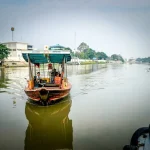
📷 Featured image by Ben Koorengevel on Unsplash.