On this page
- Do You Actually Have the Right License?
- Choosing the Right Bike for Your Trip
- How to Rent a Motorbike Step by Step
- What It Actually Costs in 2026
- Inspecting the Bike Before You Ride Off
- Road Rules, Safety, and Surviving Vietnamese Traffic
- What Has Changed Since 2024
- When Renting a Motorbike Isn’t the Right Call
- Frequently Asked Questions
Vietnam’s motorbike culture is one of the great draws of the country — the freedom to pull over at a roadside stall, take a mountain switchback at your own pace, or disappear down a dirt track that no tour bus will ever see. But in 2026, a growing number of travelers are getting stopped by police on the Hai Van Pass or the Ha Giang Loop and discovering too late that their license paperwork doesn’t hold up. The rules haven’t changed dramatically, but enforcement has — and that gap between what travelers assume and what traffic police now actually check has become expensive. This guide covers everything you need before you pick up a key.
Do You Actually Have the Right License?
This is where most travelers get it wrong. Vietnam does not recognize a standard foreign driving license on its own. The only document that gives a foreigner legal standing to ride a motorbike in Vietnam is either a Vietnamese driving license (impractical for tourists) or an International Driving Permit (IDP) issued under the 1968 Vienna Convention on Road Traffic, carried alongside your valid national license.
Not every IDP qualifies. Your home country must be a signatory to the 1968 Convention — not the 1949 Geneva Convention, which many countries use. Check before you travel. If your IDP was issued against the 1949 convention, it is not recognized in Vietnam.
The second critical detail: your IDP must specifically include Category A authorization, which covers motorcycles. An IDP that only covers cars (Category B) does not give you the right to ride a motorbike, regardless of what a rental shop tells you.
Engine size matters too. For any motorbike with an engine of 50cc and above — which covers virtually every rental bike in Vietnam — you need a valid Category A IDP. Technically, scooters under 50cc require no license, but these are almost impossible to find for rent and far too slow for any meaningful travel. The Honda Waves, Airbades, and Exciter 150s you will actually be renting all fall into the 50cc-and-above category.

The legal riding age for motorbikes 50cc and above is 18 years old. Rental shops will ask for your passport, and age verification is standard.
One more thing that many travelers overlook entirely: travel insurance. The vast majority of travel insurance policies include a clause stating that motorbike accidents are only covered if the rider holds the legally required license for the country in which the incident occurs. Ride without a valid Category A IDP in Vietnam and you are effectively uninsured, regardless of what your policy documents say about covering motorbike travel in general.
Choosing the Right Bike for Your Trip
The rental market in Vietnam broadly splits into three categories, and picking the wrong one for your trip makes everything harder than it needs to be.
Automatic Scooters
Models like the Honda Airblade, Honda Vision, and Yamaha Nouvo run on automatic transmissions with engine sizes typically between 110cc and 150cc. If you have never ridden a motorbike before or mostly plan to stay in cities and coastal towns, this is the practical choice. They are easy to handle, widely available, and mechanics can service them anywhere. The trade-off is that they can feel underpowered on steep mountain roads.
Semi-Automatic Bikes
The Honda Wave and Honda Future are the workhorses of rural Vietnam. Gears are changed with a foot lever, but there is no clutch lever to manage — making them simpler than full manuals but giving you more control than automatics. They are fuel-efficient, mechanically straightforward, and handle rough roads better than scooters. Engine sizes run 100cc to 125cc. Ideal for multi-day routes through the countryside where you want confidence without complexity.

Manual and Touring Bikes
The Honda Winner, Yamaha Exciter, and larger trail bikes like the Honda XR150 and CRF series sit in the 125cc to 250cc range. These are for experienced riders who are comfortable with a clutch and planning serious distances — the Ha Giang Loop, the Ho Chi Minh Road, or long north-to-south legs. They handle mountain terrain well, carry luggage more comfortably, and feel more planted on highway speeds. But if something breaks in a remote area, finding a mechanic familiar with less common models takes longer.
Well-known rental companies operating across multiple cities — including Style Motorbikes (stylemotorbikes.com) and Flamingo Motorbikes (flamingomotorbikes.com) — offer online booking and one-way rental options, which means you can pick up in Hanoi and drop off in Ho Chi Minh City without retracing your route. This flexibility is worth paying slightly more for.
How to Rent a Motorbike Step by Step
The process is fairly consistent across reputable shops, but knowing what to expect prevents you from being rushed into skipping important steps.
- Research your shop beforehand. Look for recent Google or TripAdvisor reviews that specifically mention bike maintenance and how the shop handled problems. Avoid shops that refuse to let you inspect the bike properly or push you to sign quickly.
- Bring your documents. You need your passport, your national driving license, and your IDP. Most shops will want to hold either your passport or a cash deposit — ideally negotiate for the cash deposit to avoid handing over your passport.
- Confirm the deposit amount. Expect to leave between 1,000,000 VND and 5,000,000 VND (roughly 40 USD to 200 USD) depending on the bike’s value. More expensive bikes require larger deposits.
- Receive and review the rental contract. Read the damage policy carefully. Clarify who pays for punctures, engine issues caused by normal use, and accident damage. Understand whether basic third-party insurance is included (it usually is) and what it covers.
- Get the Blue Card copy. This is the vehicle registration certificate — legally, it must accompany the bike at all times. The rental shop provides a copy. Keep it with you whenever you ride. Police will ask for it.
- Confirm the fuel and helmet arrangement. Most shops expect you to return the bike with the same fuel level you received it. A helmet should be included in the rental price — if it is not, negotiate or find another shop.

What It Actually Costs in 2026
Using a projected exchange rate of approximately 25,000 VND to 1 USD for 2026, here is what to budget:
Daily Rental Rates
- Automatic scooters (110cc–150cc): 120,000–250,000 VND per day (approx. 4.80–10 USD). Prices are higher in Hanoi and Ho Chi Minh City than in smaller towns.
- Semi-automatic (100cc–125cc): 100,000–200,000 VND per day (approx. 4–8 USD).
- Manual and touring bikes (150cc–250cc): 250,000–600,000 VND per day (approx. 10–24 USD). Well-maintained newer models sit at the top of that range.
Weekly and monthly rentals typically come with a 10–20% discount off the daily rate. If you are planning a trip of more than five days on the same bike, ask about a longer-term rate upfront.
Fuel
Petrol in 2026 runs at approximately 25,000–30,000 VND per liter (about 1.00–1.20 USD). A standard scooter tank holds 4–5 liters, so a full tank costs roughly 100,000–150,000 VND (4–6 USD). Petrol stations are plentiful on main roads; on remote routes, small roadside stalls sell fuel from glass bottles — pricier but functional in a pinch.

Fines
This is the budget line that surprises people. Riding without a valid license or IDP (Category A) can result in fines of 1,000,000–4,000,000 VND (40–160 USD) and potential vehicle confiscation. Not wearing a helmet attracts separate fines. Speeding and traffic violations also carry penalties. None of these are theoretical — enforcement in 2026 is active, particularly in tourist-heavy areas.
Payment
Most rental shops operate in cash (VND). Some larger companies accept Visa or Mastercard but add a surcharge of 2–3%. Bring VND for the deposit and daily payments.
Inspecting the Bike Before You Ride Off
This step takes ten minutes and protects you from paying for damage you did not cause. Do not skip it because a rental agent is hovering or the shop looks professional.
Walk around the entire bike and photograph every panel, the undercarriage, the rims, and both mirrors. Take a short video that captures existing scratches or dents clearly. Send it to yourself with a timestamp — this is your evidence if the shop claims new damage on return.
- Brakes: Test both front and rear. They should engage firmly without grinding.
- Lights: Check the headlight on both high and low beam, the taillight, both brake lights, and both turn signals.
- Horn and mirrors: Both mirrors should be present, adjustable, and crack-free.
- Tires: Look for adequate tread depth and check that both tires are properly inflated. Soft tires on a mountain road are dangerous.
- Fuel gauge: Note the level and photograph it.
- Test ride: Take the bike around the block. Listen for engine irregularities, feel for pulling in the steering, and check that gears (if present) shift cleanly.

The smell of a well-maintained engine is clean and sharp. A bike that smells of burning oil or runs roughly at idle is one to walk away from — something that will strand you at the base of a mountain pass three days later.
Road Rules, Safety, and Surviving Vietnamese Traffic
Vietnamese traffic operates on a logic that is genuinely different from what most Western or East Asian riders are used to. Vehicles merge, weave, and slow without signaling. Horns are used constantly — but as a courtesy warning, not aggression. The flow is dense but generally self-regulating at lower speeds.
The fundamental rule is: drive defensively and predictably. Signal your own intentions early, hold your line, and do not make sudden moves. Attempting to fight the flow rather than read it is where accidents happen.
Specific rules that matter in practice:
- Helmets are mandatory for both the rider and any passenger. This is enforced.
- Avoid riding after dark in rural areas. Unlit roads, unmarked obstacles, livestock crossing, and vehicles with failing lights make nighttime riding genuinely hazardous. Plan your legs to arrive before sunset.
- Watch the road surface constantly. Vietnam’s roads range from smooth coastal highways to potholed mountain tracks. A smooth-looking section can turn into loose gravel around a blind corner.
- If stopped by police, stay calm and polite. Present your license, IDP, and Blue Card copy. If you are asked to pay a fine on the spot, you are entitled to request an official ticket. Do not hand over your original passport for a routine traffic stop unless instructed to do so for a serious legal matter.
Save these emergency numbers in your phone: Police — 113, Fire — 114, Ambulance — 115. Carry a basic first aid kit, especially if you are heading into remote highland areas where the nearest clinic could be an hour away.

What Has Changed Since 2024
The biggest shift is enforcement. Prior to 2024, it was widely understood that police in tourist areas largely overlooked foreign riders who lacked proper IDPs. That approach has changed significantly. By 2026, police checkpoints are more frequent on popular routes like the Hai Van Pass, the Ha Giang Loop, and the road from Da Lat to Mui Ne. Officers carry recording devices — dashcams and bodycams — which makes informal resolutions increasingly rare.
Two other shifts are worth noting. First, electric motorbikes are now available for rent in Hanoi and Ho Chi Minh City, reflecting Vietnam’s push toward lower urban emissions. Daily rental costs are comparable to petrol scooters. The catch is charging infrastructure outside of cities — it is not reliable enough yet for long-distance routes, so electric bikes are best suited to city exploration or short coastal trips.
Second, larger rental companies are moving toward digital contracts and GPS tracking on their bikes. This is useful if a bike is stolen, but read the tracking terms before you sign — some companies retain location data throughout your rental period.
The availability of tourist police in key areas has also increased. They are there partly to assist tourists and partly to enforce regulations. Do not assume a friendly approach means you can bypass documentation requirements.
When Renting a Motorbike Isn’t the Right Call
Motorbike rental makes sense for certain trips and certain riders. It does not make sense for everyone, and recognizing that early saves both money and stress.
If you do not hold a valid Category A IDP, renting a motorbike in 2026 puts you at genuine financial and legal risk. In that situation, Vietnam’s alternatives are genuinely good.
Grab and Be (grab.com/vn and be.com.vn) cover all major cities and most tourist towns. A 3–5 km motorbike taxi ride costs 25,000–50,000 VND (about 1–2 USD). Car rides are slightly more. Both apps accept Visa, Mastercard, and local e-wallets. For city movement and short hops, they are faster and cheaper than renting your own bike once you account for parking and fuel.

Vietnam Railways (dsvn.vn) connects the entire country on the Reunification Express line. Soft sleeper berths from Hanoi to Da Nang run 800,000–1,200,000 VND (32–48 USD) for roughly 16 hours of travel. Ho Chi Minh City to Nha Trang on a soft sleeper costs 550,000–800,000 VND (22–32 USD) for about 8 hours. Book through dsvn.vn in advance, especially for sleeper berths during peak travel periods.
Sleeper buses from operators like Futa Bus Lines (Phương Trang) cover routes the train does not reach. Hanoi to Sapa runs 250,000–400,000 VND (10–16 USD). Ho Chi Minh City to Mui Ne costs 180,000–300,000 VND (7.20–12 USD). The reclining bunk beds on overnight buses make them genuinely comfortable for long legs.
Domestic flights on Vietjet Air, Vietnam Airlines, Bamboo Airways, or Pacific Airlines connect Hanoi, Ho Chi Minh City, Da Nang, Hue, Nha Trang, and Phu Quoc. Budget fares on popular routes like Ho Chi Minh City to Hanoi can drop to 800,000–2,000,000 VND (32–80 USD) when booked ahead.
For many travelers, the best approach is a hybrid: use Grab or Be for city movement, take a train or flight for the long north-south stretches, and rent a motorbike only for specific legs — like the Ha Giang Loop or the coastal road near Hoi An — where the riding itself is the point and the paperwork is in order.
Frequently Asked Questions
Can I rent a motorbike in Vietnam without an International Driving Permit?
Legally, no — not for any bike 50cc and above, which covers virtually all rental motorbikes. Riding without a valid IDP (Category A under the 1968 Vienna Convention) exposes you to fines of 1,000,000–4,000,000 VND, potential vehicle confiscation, and invalidated travel insurance. Enforcement has tightened significantly since 2024.

Should I let the rental shop hold my passport as a deposit?
It is better to offer a cash deposit of 1,000,000–5,000,000 VND instead. Many reputable shops will accept this. Handing over your passport creates problems if there is a dispute, and Vietnamese law does not require you to surrender it for a private rental agreement. Always keep a certified copy of your passport on you when riding.
What type of motorbike is best for beginners in Vietnam?
An automatic scooter — like the Honda Airblade or Honda Vision — is the easiest starting point. No gears to manage, widely serviced everywhere, and sufficient power for city travel and short coastal routes. Avoid manual bikes until you have experience with Vietnamese traffic conditions, which are genuinely different from most other countries.
Is it safe to ride a motorbike on the Ha Giang Loop as a first-time rider in Vietnam?
The Ha Giang Loop involves steep mountain roads, sharp switchbacks, and significant drops without guardrails. It is not suitable for beginner riders or those unfamiliar with manual or semi-automatic bikes. Experienced riders with proper documentation find it one of Vietnam’s most rewarding routes. Beginners should consider joining an organized tour with a local driver instead.
What should I do if I have an accident while riding a rented motorbike in Vietnam?
Call 113 (police) or 115 (ambulance) immediately if there are injuries. Do not move the bike until police arrive and document the scene. Contact your travel insurer as soon as possible — your coverage depends entirely on whether you held a valid Category A IDP at the time of the incident. Notify the rental shop promptly and refer to your rental contract for the damage reporting process.
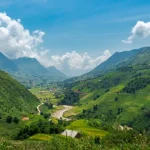
📷 Featured image by Nelson Wong on Unsplash.