On this page
- What Phu Quoc Actually Looks Like in 2026
- The Beaches: Which Ones Are Still Worth It
- The North: Jungle, Pepper Farms, and the Prison Museum
- Phu Quoc’s Food Scene: What to Eat and Where to Find It
- Getting to Phu Quoc in 2026
- Getting Around the Island
- 2026 Budget Reality: What It Actually Costs
- Day Trip or Overnight? How Long Do You Actually Need?
- Practical Tips: What’s Changed Since 2024
- Frequently Asked Questions
💰 Click here to see Vietnam Budget Breakdown
💰 Prices updated: October, 2026. Budget figures are estimates — always verify before travel.
Exchange Rate: $1 USD = ₫25,964.41
Daily Budget (per person)
Shoestring: ₫650,000 – ₫1,550,000 ($25.03 – $59.70)
Mid-range: ₫1,800,000 – ₫3,900,000 ($69.33 – $150.21)
Comfortable: ₫5,200,000 – ₫9,100,000 ($200.27 – $350.48)
Accommodation (per night)
Hostel/guesthouse: ₫120,000 – ₫350,000 ($4.62 – $13.48)
Mid-range hotel: ₫780,000 – ₫1,850,000 ($30.04 – $71.25)
Food (per meal)
Budget meal: ₫60,000.00 ($2.31)
Mid-range meal: ₫250,000.00 ($9.63)
Upscale meal: ₫800,000.00 ($30.81)
Transport
Single metro/bus trip: ₫10,000.00 ($0.39)
Monthly transport pass: ₫300,000.00 ($11.55)
Phu Quoc’s reputation has taken a beating in travel forums over the past few years. Overconstruction, polluted beaches, and resort prices that rival Bali left many visitors disappointed. In 2026, the honest answer is more nuanced — parts of the island are genuinely beautiful, parts are a construction site, and knowing the difference before you go saves you from a wasted trip. This guide cuts through the Instagram version and tells you what you’re actually getting.
What Phu Quoc Actually Looks Like in 2026
Phu Quoc is Vietnam’s largest island, sitting in the Gulf of Thailand about 45 kilometres off the Cambodian coast. It received special economic zone status years ago, and the development that followed has permanently changed its southern and western coastlines. The Vinpearl and Sun Group mega-resorts that dominate the south are essentially self-contained theme park districts — if that’s your style, they deliver. If you came for a quiet fishing village, that version of Phu Quoc exists only in The North now.
What the island still offers genuinely well: clear water on its eastern and northern coasts, dense national park jungle covering about 50% of the island’s interior, fresh seafood at prices lower than any mainland beach town, and a slow pace that still separates it from the mainland grind. The sunsets over the west coast remain spectacular — the sky turns a deep amber over the Gulf of Thailand in a way that makes you understand why people keep coming back.
The island is about 50 kilometres long and 25 kilometres wide at its widest point. Getting from one end to the other takes 45–60 minutes by motorbike. Understanding the island’s geography — south resort zone, central town, north national park — is the most useful piece of orientation you can have before arriving.
The Beaches: Which Ones Are Still Worth It
Not all beaches on Phu Quoc are equal in 2026, and several popular ones from five years ago are now either overdeveloped or suffering from seasonal seaweed and debris.
Long Beach (Bai Truong)
The longest beach on the island runs down the west coast for about 20 kilometres. The northern section, near Duong Dong town, still has stretches where you can lay a towel without fighting for space. The southern section is almost entirely resort frontage. Water clarity here is decent from November to April; the wet season (May to October) brings murky water and sometimes jellyfish.
Sao Beach (Bai Sao)
On the southeast coast, Sao Beach has white sand and turquoise water that genuinely looks like the photos. The catch: it gets crowded by mid-morning, parking is chaotic, and beach vendors work the stretch aggressively. Go before 8am or after 3pm and it’s a different experience. The water is calmer here than on the west coast and stays clearer through more of the year.
Ganh Dau Beach
At the northern tip of the island, this quieter beach is the one most visitors skip. The road to get there passes through pepper plantations and small villages. The beach itself is undeveloped — no sunbeds, one or two basic food stalls. You can see Cambodia on clear days. This is the Phu Quoc that still feels like an island rather than a resort complex.
Ong Lang Beach
A mid-west coast option with a mix of small boutique resorts and genuinely swimmable water. Less crowded than Long Beach, more accessible than Ganh Dau. A solid choice for people staying in mid-range accommodation away from the south.
The North: Jungle, Pepper Farms, and the Prison Museum
The northern third of Phu Quoc is dominated by Phu Quoc National Park, and it’s where the island earns back credibility as a destination with genuine character rather than just sun-and-resort infrastructure.
The national park covers around 31,000 hectares and contains hiking trails, streams, and wildlife including langurs and sea eagles. The trails are not heavily maintained — expect uneven terrain, mud in wet season, and signage that disappears mid-route. Hiring a local guide (arrange through your accommodation) makes a full-day jungle walk considerably more rewarding.
Phu Quoc’s pepper farms are a legitimate cultural experience, not a tourist gimmick. The island’s red soil and humidity produce a pepper with a distinct heat and floral note — restaurants in Europe and Japan import it specifically. Several farms near the village of Duong To welcome visitors, and buying a small bag directly from the farm costs a fraction of what you’d pay in Hanoi or Ho Chi Minh City.
The Coconut Tree Prison (Nha Tu Cay Dua) is a sobering but historically significant site. During the Vietnam War and later, tens of thousands of prisoners were held here under brutal conditions. The museum is confronting and presented without sentimentality. It’s not a comfortable visit, but it provides context for Phu Quoc beyond beaches and seafood.
Phu Quoc’s Food Scene: What to Eat and Where to Find It
Phu Quoc has a distinct food identity that separates it from mainland Vietnamese cuisine, and most visitors eat at resort buffets without discovering any of it — which is a genuine shame.
The island is famous for three things culinarily: fish sauce (nuoc mam), sea urchin (nhim bien), and the local sim wine made from wild myrtle berries. The fish sauce produced here — particularly from the Hung Thanh factory, which offers free tours — is considered among the best in Southeast Asia, with a depth and salinity that pre-bottled supermarket versions never replicate.
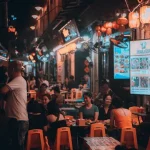
At the Dinh Cau Night Market near the harbour in Duong Dong town, the evening air carries the smell of charcoal grills and brine — grilled scallops with spring onion and peanut oil, whole fish roasted over open coals, and plastic stools crammed together along the waterfront. It’s the most authentic eating experience on the island and costs a fraction of resort dining. Come hungry around 6–7pm when it’s at full pace.
For sit-down meals, the area around Duong Dong market has a cluster of local restaurants where a full seafood meal — grilled prawns, a clay pot fish dish, morning glory stir-fry, and rice — runs about 200,000–350,000 VND (roughly USD 8–14) per person. Avoid the English-menu tourist traps along the main resort strip, where the same dishes cost three to four times more and the seafood is noticeably less fresh.
Ham Ninh fishing village on the east coast serves crab directly off the boats. The crabs arrive still moving, and the village restaurants steam them simply with salt and ginger. It’s a 25-kilometre ride from Duong Dong but frequently cited by repeat visitors as the meal they remember most.
Getting to Phu Quoc in 2026
Phu Quoc International Airport (PQC) receives direct flights from Hanoi, Ho Chi Minh City, Da Nang, and several regional hubs. Flight time from Ho Chi Minh City is about 55 minutes; from Hanoi, around 2 hours. In 2026, VietJet, Bamboo Airways, and Vietnam Airlines all operate multiple daily flights on the Saigon–Phu Quoc route. Prices vary significantly by season — book at least 3–4 weeks ahead for the November–April peak.
Since 2025, Air Asia and a handful of regional carriers have added direct routes from Kuala Lumpur, Bangkok, and Singapore, reducing the need to route through Ho Chi Minh City if you’re coming from elsewhere in Southeast Asia. Check current schedules as route availability changes seasonally.
The ferry option from Ha Tien (a small town on the mainland Mekong Delta coast) remains operational and takes about 1 hour 15 minutes. Superdong and Phu Quoc Express operate multiple crossings daily. The ferry route is useful if you’re combining Phu Quoc with a Mekong Delta itinerary. From Ho Chi Minh City to Ha Tien takes around 4–5 hours by bus, making the total journey a half-day commitment compared to the one-hour flight.
Getting Around the Island
Renting a motorbike is the standard and most practical option. Daily rates in 2026 run 150,000–200,000 VND (USD 6–8) for a basic automatic scooter. Fuel up at any of the small petrol stations along the main road — the north of the island has fewer stations, so fill your tank before heading toward Ganh Dau or deep into the national park.
Grab (the regional ride-hailing app) operates on Phu Quoc and is reliable in Duong Dong town and the main resort areas. For more remote spots — northern beaches, ham ninh village — you’ll either need your own motorbike or negotiate with a local xe om (motorbike taxi) driver. Fixed-price day tours by car or van (arranged through most hotels) are a comfortable option for families or those not confident on motorbikes, typically running 600,000–900,000 VND (USD 24–36) for a full-day island circuit.
2026 Budget Reality: What It Actually Costs
Phu Quoc is more expensive than Vietnam’s mainland beach destinations but cheaper than Bali, Koh Samui, or Langkawi at equivalent quality levels.
- Budget tier: Dorm beds in Duong Dong town run 200,000–280,000 VND (USD 8–11) per night. Budget guesthouses with private rooms start around 400,000–550,000 VND (USD 16–22). Eating at local markets and street stalls, spending 150,000–250,000 VND (USD 6–10) per day on food is realistic.
- Mid-range tier: A 3-star boutique resort on Ong Lang or northern Long Beach costs 900,000–1,600,000 VND (USD 36–64) per night for a double room with breakfast. Meals at mid-range seafood restaurants run 300,000–500,000 VND (USD 12–20) per person. Total daily spend of 1,500,000–2,500,000 VND (USD 60–100) per person is typical.
- Comfortable tier: 4-star beachfront properties on Long Beach or Sao Beach start around 2,500,000–4,000,000 VND (USD 100–160) per night. The large resort complexes (Vinpearl, InterContinental) run considerably higher — 5,000,000 VND and above (USD 200+). At this level, daily spend including activities can reach 5,000,000–8,000,000 VND (USD 200–320) per person.
Snorkelling day trips to surrounding islands (An Thoi archipelago in the south) cost 350,000–550,000 VND (USD 14–22) through local operators. Cable car access to Hon Thom Island (the world’s longest non-stop cable car) is an additional 750,000 VND (USD 30) per person — worth it once for the view, skip the theme park at the bottom.
Day Trip or Overnight? How Long Do You Actually Need?
Phu Quoc is not a day trip destination — the flight time alone makes it impractical. A minimum of two nights gives you a beach day, a food and market evening, and one excursion (jungle, snorkelling, or northern circuit). That’s the floor for a worthwhile visit.
Three to four nights is the sweet spot for most travellers. It allows you to properly explore both the south resort areas and the more authentic north, eat your way through the Dinh Cau Night Market more than once, do a half-day snorkelling trip, and decompress from the pace of mainland Vietnam without stretching your budget unnecessarily.
Seven nights or more suits those using Phu Quoc as a recovery destination — post-trek, post-motorbike tour, or simply treating it as a beach holiday anchor rather than a sightseeing destination. The island has enough character to sustain a week if you’re genuinely resting rather than ticking off sites.
If you’re on a tight Vietnam itinerary with only one beach destination slot, Phu Quoc competes directly with Da Nang/Hoi An (better food and cultural depth) and Nha Trang (more budget-friendly, more active). Choose Phu Quoc if clear water, island seclusion, and excellent seafood are your priorities. Choose the other two if cultural mix or nightlife matters more.
Practical Tips: What’s Changed Since 2024
Phu Quoc’s e-visa situation aligns with Vietnam’s national policy — in 2026, most passport holders can obtain a 90-day e-visa online through the official immigration portal before arrival. The previous visa exemption arrangements for Phu Quoc’s special economic zone (which once allowed 30-day visa-free stays) were folded into the national e-visa system in 2024. Don’t rely on old information about separate Phu Quoc visa rules.
Water quality on the west coast has improved in 2026 following stricter wastewater enforcement introduced in late 2024. Several sections of Long Beach that were visibly polluted two years ago have measurably cleaner water now, though the improvement is uneven. East coast beaches remain the safest bet for swimming clarity year-round.
The road network in the north of the island was significantly upgraded in 2025 — the route to Ganh Dau Beach is now fully paved and easier to navigate on a scooter. Previously potholed northern roads that discouraged independent exploration are now more accessible.
Mobile connectivity across the island is reliable on Viettel and Mobifone networks. A local SIM card at the airport costs around 150,000–200,000 VND (USD 6–8) for 30 days of data. The resort zones have strong WiFi; the national park interior does not — plan offline maps before heading north.
Frequently Asked Questions
Is Phu Quoc worth visiting in 2026?
Yes, but with clear expectations. The island’s overdeveloped south is genuinely disappointing if you expected a quiet paradise, but the northern coast, national park, and food scene remain excellent. Travellers who research which parts of the island to prioritise consistently leave satisfied. Those who book a south-zone resort and stay within it often feel it was overpriced and generic.
What is the best time of year to visit Phu Quoc?
November through April is dry season and offers the best beach conditions — calm water, low humidity, and reliable sunshine. May through October is wet season; heavy rain falls in short intense bursts rather than all day, but seas can be rough and some boat tours are cancelled. December and January are peak season with highest prices and the most visitors.
Is Phu Quoc expensive compared to other Vietnam beaches?
It’s the most expensive beach destination in Vietnam at mid-range and above. Budget travellers can keep costs reasonable by staying in Duong Dong town rather than resort zones and eating at local markets. At the luxury end, resort prices are high but still considerably below equivalent resorts in Thailand or Indonesia.
Do I need a visa to visit Phu Quoc?
In 2026, standard Vietnam e-visa rules apply. Most nationalities can apply online for a 90-day e-visa before travel. The old separate Phu Quoc visa exemption scheme no longer operates independently.
How many days should I spend on Phu Quoc?
Two nights is the minimum for a meaningful visit given travel time. Three to four nights suits most travellers — enough for beaches, a snorkelling trip, the night market, and the northern circuit. A week works well if your goal is genuine rest rather than sightseeing. More than seven nights is rarely necessary unless you’re combining it with a remote work stay.