On this page
- Why Vietnam Feels Crowded in 2026
- Touch: What Is Friendly and What Crosses a Line
- Greetings and the Distance of Respect
- Sharing the Table
- Homes, Altars, and Invisible Boundaries
- Questions as Closeness: Verbal Personal Space
- Getting Space Without Causing Offence
- 2026 Budget Reality: What Comfort Costs
- Frequently Asked Questions
You step into a Hanoi coffee shop with ten empty tables, and the owner seats you right beside a stranger. In 2026, with record visitor numbers and busier streets, many travellers still read this as rude or invasive. It usually is not. Vietnamese ideas about personal space are shaped by dense cities, big families, and shared living, and once you understand the logic, you can stay comfortable without offending anyone.
Why Vietnam Feels Crowded in 2026
Vietnam has about 100 million people in a country the shape of a long, narrow ribbon. Cities like Ho Chi Minh City and Hanoi pack millions into small areas, and most homes are narrow “tube houses” where several generations live together. Personal space is simply smaller by default, and that is not a sign of disrespect.
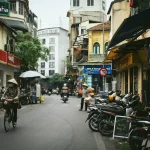
You feel it everywhere. The hum of motorbikes inches past your elbow on a pavement. Plastic stools clack together at a street stall until knees nearly touch. People at ticket counters lean in close because standing back means losing your turn. Queues exist, but they are looser than in Europe or North America. Closeness signals “I am here and waiting.”
The newer metro lines in Hanoi and Ho Chi Minh City have introduced more orderly boarding, but peak-hour carriages still fill quickly. Expect shoulder contact and do not take it personally.
Touch: What Is Friendly and What Crosses a Line
Touch rules in Vietnam depend on gender, age, and relationship. Friends of the same gender often hold hands, link arms, or rest a hand on a knee. This is platonic and common, especially among young women and schoolchildren. Do not read it as romantic.
Between men and women who are not family or partners, touch is more restrained. Hugging a Vietnamese acquaintance of the opposite sex can cause awkwardness, particularly outside big cities. Let the other person lead.
- Head: Traditionally the most sacred part of the body. Do not pat children or adults on the head.
- Feet: Seen as lowest and dirtiest. Never point your feet at people, altars, or food, and do not move objects with your foot.
- Shoulders and back: A light tap on the shoulder to get attention is fine among peers, but avoid it with elders or monks.
- Public affection: Holding hands is accepted in cities. Kissing in public still draws stares, especially near temples.
Greetings and the Distance of Respect
A greeting sets the physical tone. With elders, teachers, or officials, offer a slight bow of the head with a smile. When giving or receiving something, such as a business card, money, or a gift, use both hands or support your right forearm with your left hand. It shows respect and keeps a polite gap between you.

Handshakes are common with younger people and in business. Keep them gentle, since a firm, crushing grip feels aggressive. Women may prefer a nod, so wait for them to extend a hand first.
Distance also depends on the words you use. Vietnamese uses family terms like anh (ahng, older brother), chị (chee, older sister), and ông/bà (ohm/bah, grandfather/grandmother) to place people in a hierarchy. Using these correctly makes people more relaxed around you, and they may then stand or sit closer.
Sharing the Table
Meals are the place where personal space shrinks the most. Dishes are placed in the centre and everyone reaches in. The aroma of grilled pork and the sizzle of a pan on the table pull everyone close. Expect to sit hip to hip on low stools.
A few customs help you manage the closeness:
- Wait for the eldest person to begin eating.
- Never stick chopsticks upright in rice, because it resembles incense offered to the dead.
- Use the serving chopsticks or the clean end of yours to take food from shared plates.
- Hosts often put food into your bowl. Accept it as a sign of care, and leave a bite if you are full.
Refusing a seat beside others or moving your stool far away may look like you dislike the group. If you need room, just shift slightly and keep chatting.
Homes, Altars, and Invisible Boundaries
Inside a Vietnamese home, the boundaries are about places and objects rather than distance. Take off your shoes at the door, even if the host says it is fine. Many homes have an ancestor altar, usually in the main room, with photos, incense, and fruit offerings. Do not touch it, lean on it, or point your feet toward it.
Do not sit on a bed unless invited, because it is a private space. Avoid walking into kitchens or bedrooms uninvited, even in small homes where doors are always open. If a family offers you tea or fruit, accept at least a small amount. Declining everything can feel like you are keeping them at arm’s length.

Questions as Closeness: Verbal Personal Space
Do not be surprised if someone asks, “How old are you? Are you married? How much do you earn?” within five minutes of meeting you. These questions are not intrusive in Vietnamese culture. Age tells people which pronouns to use, and marriage and income show care and interest.
You can answer briefly, joke, or redirect. Saying “Still looking!” with a laugh closes the topic. Staring at foreigners is also common, especially outside major tourist areas, and usually comes from curiosity, not hostility. A smile and a nod usually breaks the tension.
Getting Space Without Causing Offence
When you need room, a calm voice and a smile are your best tools. Avoid sighing, glaring, or pushing, because open irritation causes loss of face for both sides. These phrases are short and effective:
- Xin lỗi (sin loy) – Excuse me / sorry
- Cho tôi qua (chaw toy kwah) – Let me pass
- Không sao (kohm sow) – No problem
- Cảm ơn (gahm uhn) – Thank you
2026 Budget Reality: What Comfort Costs
Personal space can be bought, and Vietnam makes it affordable. These are typical 2026 prices at about 26,000 VND per USD:
- Budget: Metro or local bus within a city, 7,000–20,000 VND ($0.30–0.80). Shared dorm bed, 150,000–250,000 VND ($6–10). Expect crowds and close contact.
- Mid-range: Limousine van seat between cities, 250,000–400,000 VND ($10–15). Grab car for short trips, 60,000–150,000 VND ($2.50–6). Private hotel room, 500,000–1,000,000 VND ($19–38).
- Comfortable: Private car with driver for a day trip, 1,200,000–2,000,000 VND ($46–77). Boutique hotel or villa, 1,500,000–3,500,000 VND ($58–135). Spa treatments in private rooms, 400,000–900,000 VND ($15–35).
Even small upgrades, like eating at off-peak hours or choosing a corner seat, cost nothing and help a lot.
Frequently Asked Questions
Is it rude to step back if someone stands too close in Vietnam?
No, if you do it calmly with a smile. Vietnamese people rarely take it personally, since crowding is usually about practicality, not intrusion. Avoid dramatic gestures or sighs. A small step and a quick “xin lỗi” (sin loy) keeps things friendly and avoids awkwardness.
Is it okay to touch a child’s head in Vietnam?

Avoid it. Traditionally the head is seen as the most sacred part of the body, and many families believe touching a child’s head can bring bad luck or upset their spirit. Compliment the child verbally, smile, and let parents lead any physical interaction.
Do Vietnamese people shake hands with foreigners?
Often yes, especially in business and with younger people. Offer your right hand, support your forearm with your left, and keep the grip gentle. With elders, a slight bow or nod works better. Women may prefer a nod, so wait for them to offer a hand.
Is public affection acceptable in Vietnam?
Light affection like holding hands is fine in cities, especially among younger couples. Kissing and long hugs in public still draw stares, particularly in rural areas or near temples. Friends of the same gender holding hands or linking arms is normal and non-romantic.
Why do people crowd close at counters and in queues?
Queues are looser here, and people judge turns by who is physically at the counter. Standing close signals that you are waiting. Politely move forward, stay near the counter, and make eye contact with staff. It is about efficiency, not disrespect toward you.