On this page
- The Mâm Cơm: Why the Shared Tray Is the Heart of the Home
- “Ăn Cơm Chưa?”: Rice, Greetings, and Care
- Food for the Ancestors: Altars, Death Anniversaries, and Tet
- Three Regions, Three Table Philosophies
- Balance on the Plate: Hot, Cold, and the Five Elements
- Dining Etiquette That Carries Real Meaning
- What Has Changed at the Vietnamese Table by 2026
- 2026 Budget Reality
- Frequently Asked Questions
Many visitors in 2026 treat Vietnamese food as a checklist: pho, banh mi, spring rolls, done. Food apps and short videos push this “eat and move on” habit harder every year. But a Vietnamese meal is rarely just about taste. It is how families stay close, how the dead are remembered, and how a stranger becomes a guest. Understanding that turns a quick bowl of noodles into something you actually remember.
The Mâm Cơm: Why the Shared Tray Is the Heart of the Home
The traditional family meal is called mâm cơm (muhm kuhm), literally “the tray of rice.” Dishes are placed in the middle: a braised fish, a stir-fried vegetable, a bowl of canh (soup), a small dish of dipping sauce. Everyone has their own small rice bowl and reaches into the shared dishes. Nothing is “yours” except the rice.
This layout teaches a quiet lesson in sharing. A good eater does not grab the best piece of fish. A parent or grandparent often picks it up and places it in a child’s bowl, and this is a way of saying “I care about you” without words. You will see this at nearly every family table, from a Hanoi apartment to a Mekong Delta stilt house.
Many families still sit on a mat on the floor, especially in rural areas. The low tray, the clatter of chopsticks on ceramic, and the steam rising from a shared soup pot create a particular warmth. It is the sound of an ordinary evening in Vietnam.
“Ăn Cơm Chưa?”: Rice, Greetings, and Care
Ask a Vietnamese friend how they are, and you may get asked back: “Ăn cơm chưa?” (an kuhm chuh?), which means “Have you eaten rice yet?” It works like “How are you?” and shows concern for your wellbeing.
The reason is history. For generations, rice meant survival, and a good harvest meant a good year. The word cơm means both “cooked rice” and “a meal.” Even if you had noodles, a family might say you “ate cơm.” Wasting rice is seen as disrespectful to farmers’ labour, and elders still tell children that leaving grains in the bowl is bad luck.
If someone asks whether you have eaten, a simple “Rồi, cảm ơn” (roh-ee, gahm uhn), meaning “Yes, thank you,” is enough. If you say “Chưa” (chuh), “not yet,” do not be surprised if you are invited to the table.

Food for the Ancestors: Altars, Death Anniversaries, and Tet
In Vietnamese belief, the dead remain part of the family. Food is how the living keep that bond. On the giỗ (yoh), the death anniversary of a relative, the family prepares the dishes that person loved. These are placed on the ancestor altar with incense, fruit, and sometimes rice wine. After the offering, the family eats the same food together.
Tet, the Lunar New Year, is the biggest version of this. In 2026, Tet falls on 17 February, the start of the Year of the Horse. The meal tells a story:
- Bánh chưng (bahn chuhng): the square sticky rice cake of the North, wrapped in dong leaves, filled with mung bean and pork. Its square shape represents the earth.
- Bánh tét (bahn tet): the cylindrical version common in the Centre and South.
- Thịt kho trứng: pork and eggs braised in coconut water, popular in the South.
- Mứt (muht): candied fruits and seeds, offered to visitors.
Cakes are often boiled overnight, so families sit around the fire, talk, and wait. The smoky smell of leaves and wood fire in the cold late-January air is one of the most unforgettable scents of the season. Mid-Autumn Festival (25 September in 2026) works the same way, with mooncakes and fruit offered, then shared among children and elders.
Three Regions, Three Table Philosophies
Vietnam’s long geography produced different food values. Knowing this explains why the same country can taste so different.
North: Restraint and Subtlety
Northern cooking leans on clear broths, fresh herbs, and modest seasoning. Black pepper provides heat, not chilli. Pho began here, and the cold climate shaped its clean, aromatic broth. Northerners often value “tinh tế,” meaning refined and understated flavour.
Centre: Heat and Precision
The former imperial capital of Hue influenced the Centre’s food. Dishes are small, beautifully arranged, and spicy, shaped by both royal standards and poor soil that made people resourceful. Fermented shrimp paste and chilli are key.
South: Abundance and Sweetness
The Mekong Delta’s rich land produced generous, sweet, and bold flavours. Coconut milk, sugar, and plenty of fresh herbs and greens are common. Meals feel relaxed and plentiful, matching the region’s open, informal manners.
Balance on the Plate: Hot, Cold, and the Five Elements
Vietnamese cooking borrows from traditional Eastern medicine. Foods are described as nóng (nawng, “hot”) or mát (maht, “cooling”). This has nothing to do with temperature. Duck, bitter melon, and many leafy greens are cooling. Beef, chilli, and fried foods are heating.

A cooling herb, like perilla or lettuce, often accompanies a rich dish to keep the body balanced. This is why a plate of raw herbs lands beside your grilled meat or noodle bowl. They are not decoration. The classic mix of sweet, salty, sour, bitter, and spicy comes from the five-element idea, where a full meal should touch all five tastes. Many Vietnamese will tell you “ăn nóng quá thì nóng trong người” (eat too much heating food and you get heat inside), and then reach for coconut water or herbal tea.
Dining Etiquette That Carries Real Meaning
These customs are small, but locals notice them.
- Invite elders first. Say “Mời” (muhy), “please eat,” to the oldest person before you start. Eating before them can look rude.
- Never stick chopsticks upright in rice. It looks like incense at a funeral and is considered very bad luck.
- Use both hands when passing or receiving a bowl, glass, or gift. It signals respect.
- Do not flip a whole fish. Among fishing communities, this suggests a capsizing boat. Remove the bones instead.
- Toast with “Một, hai, ba, dô!” (moht, hai, bah, yoh; Southern: zoh). Clink glasses, and lower yours slightly below an elder’s.
- Do not rush the bill. The host usually pays, and fighting politely over it is part of the ritual.
What Has Changed at the Vietnamese Table by 2026
Life in Vietnam’s cities moves faster than it did in 2024. Delivery apps are everywhere, and many young office workers eat lunch at their desks. Smaller urban families mean that the full mâm cơm happens less on weekdays, so weekend and holiday meals matter even more.
Traditions are adapting rather than disappearing. Pre-made Tet foods can be ordered online, and families who live abroad send relatives money to buy offerings for the altar. International attention, including Michelin recognition of Vietnamese street food since 2023, has also made young Vietnamese more proud of local dishes. Digital payments have spread widely, and QR codes are accepted at most food vendors, though carrying a little cash is still wise.

2026 Budget Reality
Rough 2026 costs per person (about 25,500 VND = 1 USD):
- Budget: 30,000–70,000 VND ($1.20–$2.75) for a single-dish meal such as noodles, broken rice, or a banh mi. Iced coffee costs 20,000–35,000 VND ($0.80–$1.35).
- Mid-range: 120,000–300,000 VND ($4.70–$11.75) for a shared family-style meal of rice, three or four dishes, and a soup.
- Comfortable: 400,000–1,000,000+ VND ($15.70–$39+) for a multi-course regional or tasting-style dinner with drinks.
Prices are generally higher in the biggest cities and tourist-heavy areas, and Tet week often brings temporary price rises. If you are buying a gift to bring to a host, a box of seasonal fruit costs about 150,000–350,000 VND ($6–$14).
Frequently Asked Questions
Why do Vietnamese people eat family-style?
Sharing dishes from the centre of the table reflects family unity and equality. It lets everyone taste everything, helps elders serve children, and keeps the focus on togetherness instead of individual portions. The shared tray is part of a larger Confucian-influenced value of putting the group first.
What does “Ăn cơm chưa?” mean?
It literally means “Have you eaten rice yet?” but works as a caring greeting, similar to “How are you?” The phrase comes from a history where rice meant survival. A simple “Rồi, cảm ơn” (yes, thank you) is a polite, natural reply.
What is a Vietnamese death anniversary meal?
A giỗ is a yearly meal held on the date a relative died. Families cook the person’s favourite dishes, offer them on the ancestor altar with incense, and then eat together. It keeps the memory of the deceased alive and strengthens family ties across generations.
Why shouldn’t you stick chopsticks in rice?
Upright chopsticks in a rice bowl resemble the incense sticks placed in a bowl of rice or ash at funerals and altars. Doing this at a normal meal suggests death and is seen as very unlucky. Rest your chopsticks across the bowl or on a holder.
What foods are eaten during Tet?
Common Tet foods include bánh chưng in the North and bánh tét in the Centre and South, pickled vegetables, braised pork with eggs, boiled chicken, sticky rice, and candied fruits. Each dish carries meaning, such as prosperity, family unity, or respect for ancestors. Tet 2026 begins on 17 February.
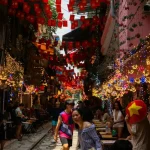
📷 Featured image by Hien Nguyen on Unsplash.