What Mid-Autumn Festival Actually Is
If you arrive in Vietnam in September 2026 and find the streets suddenly flooded with red lanterns, bakery queues stretching around the block, and children carrying glowing fish-shaped lights — you have landed in the middle of Tết Trung Thu, the Mid-Autumn Festival. It is one of the most visually spectacular celebrations in the Vietnamese calendar, and for most visitors it comes as a complete surprise.
The festival falls on the 15th day of the eighth lunar month, when the moon is at its fullest and brightest. Its roots blend Chinese cultural influence with distinctly Vietnamese character. Historically, it was a harvest celebration — a time for farmers to rest after the rice season and give thanks under the full moon. Over centuries it transformed into a festival centred almost entirely on children. Adults buy mooncakes and gather with family; children carry lanterns through the streets in processions that are genuinely moving to watch.
For the Vietnamese, Trung Thu carries the same warmth that Christmas has in Western countries — a time of gifts, family visits, and sweet foods shared across generations. For travellers, it offers something harder to find: a celebration that has not been packaged for tourism. The lantern parades happen in local neighbourhoods. The mooncake stalls are aimed at Vietnamese buyers. You are watching real life, not a show.
2026 Festival Dates and What to Expect That Week
In 2026, the 15th day of the eighth lunar month falls on 12 September. That is the main night of Tết Trung Thu. The surrounding week — roughly 7 to 14 September — is when the atmosphere is richest. Mooncake vendors set up temporary stalls outside supermarkets and in covered markets. Streets in residential areas are strung with coloured lanterns. Schools organise their own lantern parades a day or two before the main date, so you may stumble across a procession of fifty children carrying glowing stars and rabbits even on a Tuesday evening.
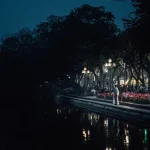
The full moon night of 12 September is when everything peaks. Families gather on rooftops, in parks, and on riverbanks. In Hội An, paper lanterns are released onto the Thu Bồn River. In Hà Nội’s Old Quarter, the streets around Hàng Mã — the city’s famous “paper goods street” — are so packed with people and light displays that moving in a straight line becomes genuinely difficult. Expect noise, colour, and a density of people that feels celebratory rather than stressful if you are prepared for it.
One practical note: this is not a public holiday in the sense that businesses close. Restaurants, shops, and transport all operate normally. The celebration happens in the streets and at home, which means you can still eat, travel, and move around — you will simply be doing it alongside a festival.
Where to Experience It Best
Hội An
Arguably the most beautiful place in Vietnam to spend this night. The Ancient Town’s no-vehicles policy and its tradition of monthly lantern festivals means the infrastructure for a magical evening is already built in. On 12 September, the riverfront fills with paper lanterns on the water, the old shophouses are lit by hundreds of silk lanterns in amber and red, and the crowds — while substantial — move slowly enough to enjoy it. Book your accommodation here months in advance; September is peak season and rooms sell out fast.
Hà Nội
The Old Quarter is the epicentre. Hàng Mã Street transforms into something between a market and an installation art piece — every surface stacked with lanterns, mooncake boxes, and lion dance costumes. The area around Hoàn Kiếm Lake also draws large crowds for lion dance performances. Hà Nội’s festival has a slightly more traditional, community feel than Hội An’s more photogenic version.
Hồ Chí Minh City
The city celebrates with energy in Chinatown (Chợ Lớn / Quận 5), where the Chinese-Vietnamese community has kept lantern and lion dance traditions strong for generations. The streets around Bình Tây Market are worth visiting in the evenings leading up to the full moon. The festival here feels urban and fast-paced — very different from the gentle glow of Hội An.
Smaller Towns
If you happen to be in a provincial town — Ninh Bình, Đà Lạt, Huế, or even a small coastal village — do not assume you will miss out. Neighbourhood lantern parades happen everywhere in Vietnam. Watching thirty children in a quiet alley carrying handmade lanterns is often more touching than the large-city version.

The Mooncake Deep Dive
Mooncakes — bánh trung thu — are the defining food of the festival and one of Vietnam’s most involved gift-giving traditions. They are dense, rich pastries, typically round or square, filled with sweet pastes and wrapped in elaborate boxes that are often as expensive as the cakes themselves.
The two main categories are bánh nướng (baked mooncakes, with a glossy golden crust) and bánh dẻo (snow-skin mooncakes, which are soft, white, and eaten cold). Common fillings include lotus seed paste, mung bean paste, mixed nuts and seeds, and the divisive but traditional salted egg yolk — the yolk represents the full moon inside the cake.
In recent years, Vietnamese bakeries have pushed flavours well beyond tradition. In 2026, you will find mooncakes filled with pandan cream, durian, matcha, coffee, and even savoury options. Premium brands like Kinh Đô, Brodard, and hotel patisseries release limited-edition collections from mid-August. The smell of freshly baked bánh nướng — warm pastry and slightly caramelised lotus paste — drifts from every bakery in September in a way that is genuinely hard to walk past.
Buying mooncakes as a souvenir is common. A box of four makes a practical, meaningful gift that travels reasonably well, though baked varieties last longer than snow-skin versions. Check the production date on the box — good bakeries are transparent about shelf life.
Lanterns and the Children’s Parade
The lantern is the heart of Trung Thu for children. Traditional lanterns were made from cellophane and wire frames in shapes like stars, fish, butterflies, and rabbits — lit from inside by a small candle. You can still find these handmade versions in Hà Nội’s Old Quarter and at craft markets. Most children today carry battery-powered plastic versions, which are safer and wildly colourful.
The children’s parade — rước đèn — is the moment that stays with visitors longest. A group of children, often organised by a school or community group, walks through the neighbourhood carrying their lanterns and singing Trung Thu songs. The rhythm of small lights moving through a dark street, with the sound of children’s voices bouncing off old walls, is one of those Vietnam moments that arrives without warning and lands hard.
Lion dances (múa lân) are performed in front of shops and homes for good luck. Businesses pay troupes to perform at their doors, and the drumming — deep, fast, and insistent — carries several streets away. If you hear it at night, follow the sound.

2026 Budget Reality
Mid-Autumn Festival is genuinely accessible for every budget. The street-level celebration is free.
- Mooncakes (street stalls / basic brands): 30,000–80,000 VND per cake (~$1.20–$3.20 USD). A box of four mid-range mooncakes runs 150,000–300,000 VND (~$6–$12 USD).
- Premium / hotel-brand mooncake boxes: 500,000–1,500,000 VND (~$20–$60 USD). These are gift-giving items, beautifully packaged.
- Children’s lanterns (battery-powered): 30,000–100,000 VND (~$1.20–$4 USD) from street vendors. The handmade candle versions from craft stalls in Hà Nội cost 50,000–150,000 VND.
- Lion dance viewing: Free on the street. Some organised indoor performances at cultural centres charge 100,000–200,000 VND (~$4–$8 USD).
- Paper lantern release (Hội An): 30,000–50,000 VND (~$1.20–$2 USD) per lantern from riverside vendors.
- Festival street food (chè, bánh, sugarcane juice): 15,000–40,000 VND per serving (~$0.60–$1.60 USD).
Accommodation is where costs rise sharply. In Hội An specifically, mid-range guesthouses that normally cost 600,000–900,000 VND per night (~$24–$36 USD) often push to 1,000,000–1,500,000 VND (~$40–$60 USD) the week of the festival. Book at least 6–8 weeks ahead.
Practical Tips for Visiting During the Festival
Transport: The evenings of 11–12 September will see heavy pedestrian and motorbike traffic in city centres. In Hội An’s Ancient Town, the roads close to vehicles from evening anyway, which actually makes it easier to navigate on foot. In Hà Nội and Hồ Chí Minh City, allow extra time for any journey after 7pm.
Crowds and safety: The festival is family-oriented and generally very safe. Pickpocketing risk increases in densely packed areas like Hàng Mã Street — keep phones and wallets in front pockets. Candle lanterns near crowds carry an obvious fire risk; parents manage this, but be aware in tight alleyways.
Photography: The warm, orange-red light of lanterns and the glow of children’s parade lights make for extraordinary photos. A phone camera on night mode handles it well. Ask before photographing family groups directly — most people are happy to be photographed during the festival, but asking first with a smile goes a long way.
What to wear: September is hot and humid across most of Vietnam — expect 28–34°C in the south and centre, slightly cooler in Hà Nội at 26–31°C. Light, breathable clothing is the answer. Evening crowds do not cool down much.
Participating, not just watching: Buy a lantern and walk with one. It costs almost nothing and it signals something — that you are here to share the evening, not just document it. Children will notice and parents will smile.

Frequently Asked Questions
When exactly is Vietnam’s Mid-Autumn Festival in 2026?
The main night falls on 12 September 2026, the 15th day of the eighth lunar month. The festival atmosphere — including mooncake markets, lantern stalls, and neighbourhood parades — builds across the first two weeks of September, with the week of 7–12 September being the most active and visually rich period.
Is Mid-Autumn Festival a public holiday in Vietnam?
No. Tết Trung Thu is a major cultural celebration but not an official public holiday. Businesses, restaurants, and transport operate normally. The celebration takes place in streets, parks, and homes in the evenings rather than through workplace closures. Travellers can move around freely, though expect heavy evening crowds in city centres.
Can tourists participate in the festival, or is it mainly for locals?
Tourists are welcome and participation is easy. Buying mooncakes, carrying a lantern, watching lion dances, and joining the crowds along the riverfront in Hội An are all things visitors do naturally. The festival is not organised for tourism — which is precisely what makes joining it feel genuine rather than performative.
Which mooncake flavour should a first-time visitor try?
Start with a traditional baked mooncake (bánh nướng) with lotus seed paste and a salted egg yolk. It is the classic combination and represents the full range of flavours the pastry is built around — sweet, rich, slightly savoury. After that, the pandan or mung bean versions from good bakeries are approachable for most Western palates.
How far in advance should I book accommodation for the festival?
For Hội An, book 6–8 weeks ahead minimum — it is the most popular destination for the festival and fills quickly. For Hà Nội and Hồ Chí Minh City, 2–4 weeks is usually sufficient, though earlier is always safer. September sits within Vietnam’s peak travel season for international visitors, so last-minute rooms at reasonable prices are genuinely scarce.
Explore more
Beat the Heat: Refreshing Drinks to Enjoy in Vietnam This August 2026
Experiencing Vu Lan: Vietnam’s Ancestor Festival in August 2026
August 2026 Vietnam: Culinary Journeys and Cultural Immersion
📷 Featured image by Hanna Lazar on Unsplash.