On this page
- How Safe Ho Chi Minh City Really Is
- Bag and Phone Snatching: Where It Happens
- Crossing Streets and Riding: Traffic Safety
- Getting Around Without Getting Scammed
- Bui Vien and After-Dark Safety
- Money, ATMs and Common Street Scams
- Health, Heat and Flooding
- 2026 Safety Budget Reality
- If Something Goes Wrong
- Frequently Asked Questions
Scroll through travel forums in 2026 and you will see videos of phones being snatched from bikes in Ho Chi Minh City. Then you read that it is “perfectly safe.” Both are true, which makes planning confusing. The city of more than 9 million people (larger on paper since the mid-2025 province merger) has very low violent crime. It also has real petty theft in a few busy zones. Here is how to tell the difference and what to do about it.
How Safe Ho Chi Minh City Really Is
Serious violent crime against tourists is rare. You can walk back to your hotel at midnight in District 1 and see families eating on plastic stools, couples on dates and street vendors still working. The real risks are small and predictable: opportunistic theft, traffic, overcharging and heat. Solo women and families visit every day without trouble. Most problems come from a few habits, such as texting at the roadside or taking an unmarked taxi, and are easy to avoid.
Bag and Phone Snatching: Where It Happens
Snatch theft is the main crime tourists report. A rider on a motorbike passes close, grabs a phone or bag, and is gone in two seconds. It is most common in these areas:
- Nguyen Hue Walking Street and Dong Khoi: crowds and people filming with phones held out.
- Pham Ngu Lao and Bui Vien: narrow streets with distracted visitors.
- Ben Thanh Market surroundings: especially on Le Loi and Ham Nghi, where people check maps at the kerb.
- Bridges and riverside roads toward District 4 and Thu Thiem, where bikes move fast.
The fixes are simple. Wear a cross-body bag with the zip facing your body. Carry it on the side away from the road. Do not hold your phone at the kerb. Step into a doorway to check your map. Leave passports in your hotel safe and carry a photo copy.
Crossing Streets and Riding: Traffic Safety
Traffic is the thing most likely to hurt you. The hum of thousands of motorbikes is constant, and at rush hour (7–9am and 4:30–7pm) it becomes a river with no gaps. The trick is to walk slowly and steadily at the same pace. Do not stop, run or step back. Riders predict your path and flow around you. Use zebra crossings only when the light is clearly red for traffic.

Pavements are often full of parked bikes and food stalls, so you will sometimes have to step into the road. Keep to the inside edge and look behind you. If you rent a scooter, remember that Vietnam’s stricter traffic fines apply to foreigners too. You need a valid licence that is recognised in Vietnam, plus a helmet and insurance that covers riding. Alcohol limits for riders are effectively zero. Most visitors are safer on Grab bikes or in cars.
Getting Around Without Getting Scammed
Grab and Be show the price before you ride, so there are few arguments. Typical fares from the airport to District 1 are about 150,000–250,000 VND ($6–10) by car and 80,000–120,000 VND ($3–5) by bike. Vinasun and Mai Linh are the taxi brands to trust. Avoid unmarked cars outside the arrivals hall and insist on the meter.
Metro Line 1 has run from Ben Thanh to Suoi Tien since late 2024. It is clean, air-conditioned and well lit, with fares of roughly 7,000–20,000 VND ($0.30–0.80). It is a good option for Thu Duc and the Suoi Tien area. Xe om drivers on the street often quote tourist prices, so agree the fare first or use the app. Cyclos are fine for a short ride, but agree the total price and duration in writing on your phone before sitting down.
Bui Vien and After-Dark Safety
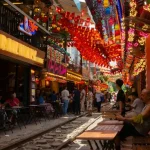
Bui Vien after 10pm is loud, bright and packed. Neon lights, thumping bass and the smell of grilled meat mix with crowds spilling into the road. It is fun, but it is also where tourists lose phones and wallets. Keep valuables in a front pocket or zipped bag. Do not leave a phone on a table at a street bar.
- Watch your drink being made, and never accept drinks from strangers.
- Check the menu price before ordering buckets or cocktails. Write it down if needed.
- Be careful with new “friends” who invite you to a private bar. This is a common set-up for inflated bills.
- Book your ride home from inside the venue, not on the street.

Quieter areas such as Thao Dien, District 3 and Phu Nhuan are calmer for evenings.
Money, ATMs and Common Street Scams
Use ATMs inside banks or malls, such as Vietcombank or ACB branches, and cover the keypad. Some machines charge fees of 20,000–50,000 VND ($1–2), so withdraw larger amounts less often. Count your change on the spot, especially the many 20,000 and 500,000 notes that look similar (blue and similar tones can confuse new visitors). Never hand over a large note without checking it.
Other common situations: fruit sellers who place baskets on your shoulder and then demand payment for a photo, shoe-repair touts who glue your sandal and charge for the fix, and “closed today” claims from drivers trying to redirect you to a shop. Say a polite “không, cảm ơn” (no, thank you), keep walking and do not argue. Ask prices before you accept anything, and use shops with printed prices when possible.
Health, Heat and Flooding
Heat is the quiet problem. Temperatures sit around 32–36°C most of the year, and humidity makes it feel hotter. Drink bottled or filtered water, carry electrolytes, and plan indoor stops from noon to 3pm. The rainy season (May to November) brings short heavy storms, usually in the afternoon. Streets in Binh Thanh, District 4 and Thu Duc can flood quickly, so check the weather before heading out and avoid riding through standing water.
Air quality can be poor in the dry months, mainly from traffic, so sensitive travellers may want a mask. Street food is generally safe if you choose busy stalls with high turnover. Pharmacies are everywhere, and for serious issues, international clinics like FV Hospital in District 7 are used by expats and travellers.
2026 Safety Budget Reality
Staying safe does not cost a lot, but where you sleep and how you travel changes your risk. Approximate rates use $1 ≈ 26,000 VND.
- Budget: hostel bed 150,000–350,000 VND ($6–14); Grab bike rides 25,000–60,000 VND ($1–2.50); metro and walking; travel insurance about 400,000–800,000 VND ($15–30) per week.
- Mid-range: hotel in District 1 or 3 with a safe, 800,000–1,800,000 VND ($30–70); mostly Grab cars at 60,000–150,000 VND ($2.50–6) per trip; a locking cross-body bag around 300,000–600,000 VND ($12–23).
- Comfortable: boutique or five-star stay, 2,500,000 VND+ ($95+); private driver for 1,200,000–1,800,000 VND ($45–70) per day; eSIM data of around 150,000–300,000 VND ($6–12) for constant map access.
If Something Goes Wrong

Save these numbers: 113 for police, 114 for fire and 115 for an ambulance. Staff may speak limited English, so ask your hotel to call and translate. If your phone or passport is stolen, report it at the local ward police station and ask for a written report. You need it for insurance and for a replacement passport from your embassy. Lock your phone remotely using Find My or Google tools, and keep digital copies of key documents in cloud storage. Do not chase a thief on foot or by bike, because the risk of injury is higher than the value of the item.
Frequently Asked Questions
Is Ho Chi Minh City safe for solo female travellers?
Yes, most solo women find it safe and welcoming. Violent crime is rare. Take the usual care: use Grab at night, avoid empty alleys, watch your drink, and keep your bag on the side away from the road. Staying in well-reviewed hotels in Districts 1 or 3 helps with confidence.
Is it safe to walk around Ho Chi Minh City at night?
In busy areas like District 1, Nguyen Hue and Thao Dien, yes. Streets stay lively late. Avoid dark alleys and quiet riverside roads, and do not walk with your phone out. If you are tired or have been drinking, book a Grab instead of walking.
What are the most common scams in Ho Chi Minh City?
The most common are taxi meter tricks, inflated bar bills on Bui Vien, street vendors who demand payment for photos, and cyclo drivers who change prices after the ride. Use Grab, check prices first, and politely refuse anything you did not ask for.
Is bag snatching really a problem in Ho Chi Minh City?
It is the biggest tourist crime risk, but it is avoidable. Snatchers target phones and bags held loosely near the road. Use a cross-body bag, keep it on the building side, and do not check your phone at the kerb. Most visitors never experience it.
Is tap water and street food safe in Ho Chi Minh City?
Avoid tap water and drink bottled or filtered water. Ice in restaurants is usually made from purified water. Street food is generally safe at busy stalls where food is cooked fresh and hot. If you have a sensitive stomach, start slowly and carry oral rehydration salts.
Explore more
Ho Chi Minh City Airport Transfer: Your Guide from SGN to Downtown
The 10 Best Day Trips from Ho Chi Minh City You Can’t Miss
Where to Stay in Ho Chi Minh City: HCMC Neighbourhood Guide for Every Traveler
📷 Featured image by Callum Pastuszak on Unsplash.