On this page
By 2026, Vietnam‘s food scene has exploded into global conversations — Michelin recognition in both cities, viral social media moments, and a surge in culinary tourism that has made “eating your way through Vietnam” a genuine travel strategy. The problem most visitors run into is assuming the two biggest cities serve the same food with different backdrops. They do not. Hanoi and Ho Chi Minh City (still called Saigon by most people who live there) operate from entirely different culinary philosophies, shaped by centuries of geography, climate, trade, and cultural influence. If you eat the same way in both cities, you are missing the point of both.
The Philosophy Behind Each City’s Cuisine
Vietnamese food is not one cuisine. It is a collection of regional traditions that happen to share a language and a few core ingredients. Hanoi sits in the Red River Delta, where the Chinese influence runs deep and where the imperial court once dictated what refined food looked like — subtle, balanced, restrained. Ho Chi Minh City grew from a trading port at the southern tip of the Mekong Delta, fed by the produce of one of the world’s most fertile river systems and shaped by French colonialism, Chinese migration, Khmer roots, and a merchant culture that rewarded abundance.
Northern cuisine values precision. Fewer ingredients, cleaner flavors, dishes where technique carries the weight. A bowl of Hanoi pho is designed so that every element — the bone broth, the rice noodles, the paper-thin beef — exists in balance without any single component overwhelming the others. Southern cuisine values generosity. More herbs, more garnishes, more condiments on the side, more sweetness built into the base flavors. A bowl of Saigon pho arrives with a plate of fresh bean sprouts, Thai basil, sawtooth coriander, and lime on the side, because the southern kitchen trusts the diner to finish the flavor themselves.
Neither approach is better. They reflect different relationships to food, hospitality, and what it means to feed someone well.
Broth, Noodles, and the Pho Divide
Pho is the dish that most travelers use to benchmark Vietnamese food, which makes the Hanoi-vs-Saigon debate both meaningful and genuinely revealing. Both versions use the same basic scaffold — rice noodles in a bone broth with beef or chicken. Everything else is up for argument.
Hanoi pho broth is clear, deeply savory, and built over hours with charred ginger and onion, star anise, cinnamon, clove, and black cardamom. The fat is skimmed carefully. The result is a broth that smells faintly of smoke and spice but looks almost transparent in the bowl. Toppings are minimal: thin slices of raw beef that cook in the hot broth, or pre-cooked brisket, a few sprigs of spring onion, some sliced white onion, a sprinkle of white pepper. You eat it as it is. Adding anything is considered — if not rude — at least unnecessary.

Saigon pho broth is darker, richer, and noticeably sweeter. Rock sugar is common in the pot. The spice profile is bolder. The garnish plate is enormous: bean sprouts, three types of fresh herbs, hoisin sauce, sriracha, lime, fresh chilies. You are expected to build the dish. Many Saigon pho shops also offer a wider range of toppings — tendon, tripe, meatballs alongside the beef slices — because southern culture prizes variety.
At a busy Hanoi pho stall at 6am, the sound is the clatter of ceramic bowls and the quiet slurp of broth. The steam rising from the bowl carries that signature star anise warmth. In Saigon, pho shops run louder and later, the air thick with the sweetness of boiling broth and the chatter of tables that seat ten people at once. Same dish, completely different experience.
Street Snacks That Define Each City
Beyond pho, each city has built a street food identity around dishes that are genuinely hard to find — in their authentic form — anywhere else.
Hanoi’s signature street snacks:
- Bun cha: Grilled pork patties and sliced pork belly served in a bowl of sweet, vinegary dipping broth with thin rice vermicelli and a mountain of fresh herbs on the side. The charcoal smoke from the grills drifts across entire streets in Hanoi’s Old Quarter at lunchtime. This is a midday-only dish in Hanoi — most shops close by early afternoon.
- Banh cuon: Delicate steamed rice rolls filled with minced pork and wood ear mushroom, served with fried shallots, sliced Vietnamese sausage, and a light dipping fish sauce. The batter is poured onto a cloth stretched over simmering water and peeled off in seconds by hands that have done it ten thousand times.
- Cha ca La Vong: Turmeric-marinated fish (traditionally snakehead) pan-fried at the table with dill and spring onion, served over rice noodles. This dish is so specific to Hanoi that an entire street was named after the restaurant that made it famous.
Saigon’s signature street snacks:
- Banh mi: Yes, banh mi exists everywhere in Vietnam, but Saigon’s version is the template the world knows — a French baguette crust giving way to a soft, airy interior loaded with pate, cold cuts, pickled daikon and carrot, cucumber, fresh chili, and coriander. The southern version is heavier on fillings and more likely to include mayonnaise than its northern counterpart.
- Com tam: Broken rice with grilled pork chop, steamed egg cake, shredded pork skin, and a fried egg, all dressed with fish sauce and pork fat. This started as a working-class meal — broken rice grains were cheaper than whole ones — and became Saigon’s unofficial daily staple, eaten morning, noon, and night.
- Banh xeo: A sizzling rice flour crepe filled with shrimp, pork, and bean sprouts, fried in coconut oil until the edges crackle. You tear pieces off and wrap them in mustard leaf or rice paper with herbs and dip in nuoc cham. The sound of the batter hitting the wok — that sharp, violent sizzle — is one of the most recognizable sounds of Saigon street cooking.
The Sweetness Factor: Sugar, Spice, and Regional Palates
One of the most consistent differences between northern and southern Vietnamese food is sweetness, and it is not subtle once you know to look for it. Southern cooks add sugar — or coconut milk, or both — to dishes where northern cooks would reach for salt or more fish sauce. This is not a modern development. It reflects centuries of access to sugarcane, coconut palms, and the agricultural abundance of the Mekong Delta.
Southern fish sauce (nuoc cham) typically contains more sugar, producing a rounder, slightly sweeter dipping sauce. Northern nuoc cham leans sharper and more acidic. Southern braised dishes like thit kho (caramelized pork and eggs in coconut water) are deeply sweet and savory in equal measure. The northern version uses less coconut and more straight caramel, producing a darker, more intense result.
Spice tolerance also differs. Southern food integrates fresh chilies more freely — into broths, into marinades, directly onto the plate. Northern cuisine uses chili more sparingly, though a dish of bun cha will come with a few bird’s eye chilies floating in the broth for those who want the heat. Neither city is as chili-forward as central Vietnamese cuisine from Hue or Da Nang, which is a genuinely different heat category altogether.
Coffee Culture: Ca Phe Trung vs Ca Phe Sua Da
Vietnam produces some of the world’s best robusta coffee, and both cities take drinking it seriously — but in ways that reflect their broader personalities.
Hanoi’s most distinctive coffee is ca phe trung — egg coffee. A Vietnamese phin filter drips dark, bitter robusta into a small cup, and on top sits a thick, creamy foam made from whisked egg yolk, condensed milk, and sometimes a touch of butter or cheese. The result is rich, almost custard-like, and intensely warming. It is the kind of drink you have sitting down, in a narrow Old Quarter cafe where the chairs face the street and the ceiling is low, on a January morning when Hanoi is properly cold — around 15°C and damp.
Saigon’s default coffee is ca phe sua da — strong phin-drip coffee over condensed milk and ice. It is bold, cold, sweet, and fast. Saigon runs hot (30°C or above for most of the year), moves at pace, and its coffee culture reflects that. Many Saigon coffee shops also operate as social spaces where people camp for hours — a trend that has expanded significantly in 2026 with the rise of specialty third-wave cafes blending Vietnamese robusta with highland arabica from Da Lat and Son La.
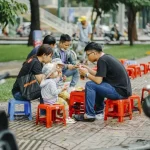
Both cities also have a strong ca phe vot tradition — sock-filtered coffee served at sidewalk plastic-stool joints that open before dawn for workers and close by mid-morning. This is where locals actually start their day, not in Instagram-friendly rooftop cafes.
2026 Budget Reality: Eating Well in Both Cities
Food costs have risen in both cities since 2024, driven by ingredient inflation and increased tourism demand, but Vietnam remains extraordinarily good value by international standards. Here is what to expect in 2026:
Street Food and Local Stalls (Budget)
- Bowl of pho or bun cha: 40,000–70,000 VND (approximately $1.60–$2.80 USD)
- Banh mi from a street cart: 25,000–45,000 VND ($1.00–$1.80 USD)
- Com tam with full toppings: 50,000–80,000 VND ($2.00–$3.20 USD)
- Ca phe sua da or ca phe trung at a local shop: 20,000–35,000 VND ($0.80–$1.40 USD)
Local Restaurants and Com Binh Dan (Mid-Range)
- Full meal with rice, two dishes, and soup at a com binh dan (everyday Vietnamese restaurant): 80,000–150,000 VND ($3.20–$6.00 USD)
- Sit-down bun cha or banh xeo restaurant with beer: 120,000–200,000 VND ($4.80–$8.00 USD) per person
Comfortable Dining
- Modern Vietnamese restaurant with craft cocktails or wine: 350,000–700,000 VND ($14–$28 USD) per person
- Tasting menu at a contemporary Vietnamese concept restaurant (increasingly common in both cities after Michelin recognition): 900,000–2,500,000 VND ($36–$100 USD) per person
One practical note: Hanoi’s street food is marginally cheaper than Saigon’s in 2026, particularly in neighborhoods outside the tourist corridors. In both cities, the price of a dish at a plastic-stool street stall has not changed dramatically since 2024 — the increases have hit mid-range and tourist-facing restaurants harder than the local joints where most of the city actually eats.
Frequently Asked Questions
Is Hanoi food or Saigon food more authentic Vietnamese?
Neither. Both are authentic to their own regions. Vietnamese cuisine is not one unified tradition — it is a collection of distinct regional food cultures. Hanoi represents the northern tradition; Saigon represents the south. Judging one against the other misses what makes each city’s food meaningful in its own context.
Can vegetarians eat well in both Hanoi and Ho Chi Minh City?
Yes, though it takes some navigation. Both cities have strong Buddhist vegetarian traditions — look for com chay (vegetarian rice) restaurants, which are common near pagodas and operate especially on the 1st and 15th of each lunar month. In 2026, plant-based cafes have expanded significantly in both cities, particularly in tourist districts.
Which city is better for food tours and culinary experiences in 2026?
Both cities have mature food tour industries. Saigon offers more variety across a single district due to its denser, more mixed food culture. Hanoi offers deeper focus on northern heritage dishes. The best choice depends on whether you want breadth or depth — Saigon for the former, Hanoi for the latter.
How different is the food in Hanoi’s Old Quarter from the rest of the city?
The Old Quarter caters heavily to tourists in 2026, meaning prices are higher and some dishes are adjusted for foreign palates. For more representative Hanoi cooking, locals point to neighborhoods like Dong Da, Ba Dinh, and Tay Ho, where the stalls are cheaper and the food is less modified for international tastes.
What should I try first if I only have one day in each city?
In Hanoi: start with pho for breakfast, bun cha for lunch, and banh cuon as an afternoon snack. In Saigon: com tam for breakfast, banh mi for lunch, and banh xeo for dinner. These six dishes give you the clearest introduction to what each city considers its everyday food.
📷 Featured image by Khanh Nguyen on Unsplash.