💰 Click here to see Vietnam Budget Breakdown
💰 Prices updated: October, 2026. Budget figures are estimates — always verify before travel.
Exchange Rate: $1 USD = ₫25,964.41
Daily Budget (per person)
Shoestring: ₫650,000 – ₫1,550,000 ($25.03 – $59.70)
Mid-range: ₫1,800,000 – ₫3,900,000 ($69.33 – $150.21)
Comfortable: ₫5,200,000 – ₫9,100,000 ($200.27 – $350.48)
Accommodation (per night)
Hostel/guesthouse: ₫120,000 – ₫350,000 ($4.62 – $13.48)
Mid-range hotel: ₫780,000 – ₫1,850,000 ($30.04 – $71.25)
Food (per meal)
Budget meal: ₫60,000.00 ($2.31)
Mid-range meal: ₫250,000.00 ($9.63)
Upscale meal: ₫800,000.00 ($30.81)
Transport
Single metro/bus trip: ₫10,000.00 ($0.39)
Monthly transport pass: ₫300,000.00 ($11.55)
Most Mekong Delta day tours in 2026 still follow the same script: a crowded bus, a coconut candy workshop, a ten-minute rowboat ride, and a rushed lunch. You come home with photos but no real feel for the place. The delta rewards a slower approach, and recent road upgrades make that easier than ever. This guide shows how to see the real delta, not just the tour-bus version.
Why the Delta Feels Different
The Mekong splits into nine branches here before reaching the sea, and it creates a flat, green region of canals, orchards, rice fields and river towns. Life runs on the water. Houses face the canals, not the roads. Fruit is loaded onto boats at dawn. Kids paddle to school.
Early in the morning, you hear it before you see it. Diesel engines thump across the brown water, a vendor calls out prices over a loudspeaker, and the air smells of wet earth and ripe mango. This is a place for slow travel, not box-ticking.
What Has Changed Since 2024
The biggest change is speed. The expressway from Ho Chi Minh City now runs through to Can Tho, and the Can Tho–Ca Mau expressway has opened up the far south. Trips that once took five or six hours now take about three to four. The second My Thuan bridge project is also reducing the old river-crossing bottlenecks.
Provincial borders also changed in 2025. Several delta provinces were merged, so Ben Tre now sits inside Vinh Long and My Tho falls under Dong Thap. The towns and sights have not moved, but older maps and some booking sites still use the old names. Search by town name, not province.
Where to Go: Four Waterway Experiences
My Tho and Ben Tre: Coconut Country
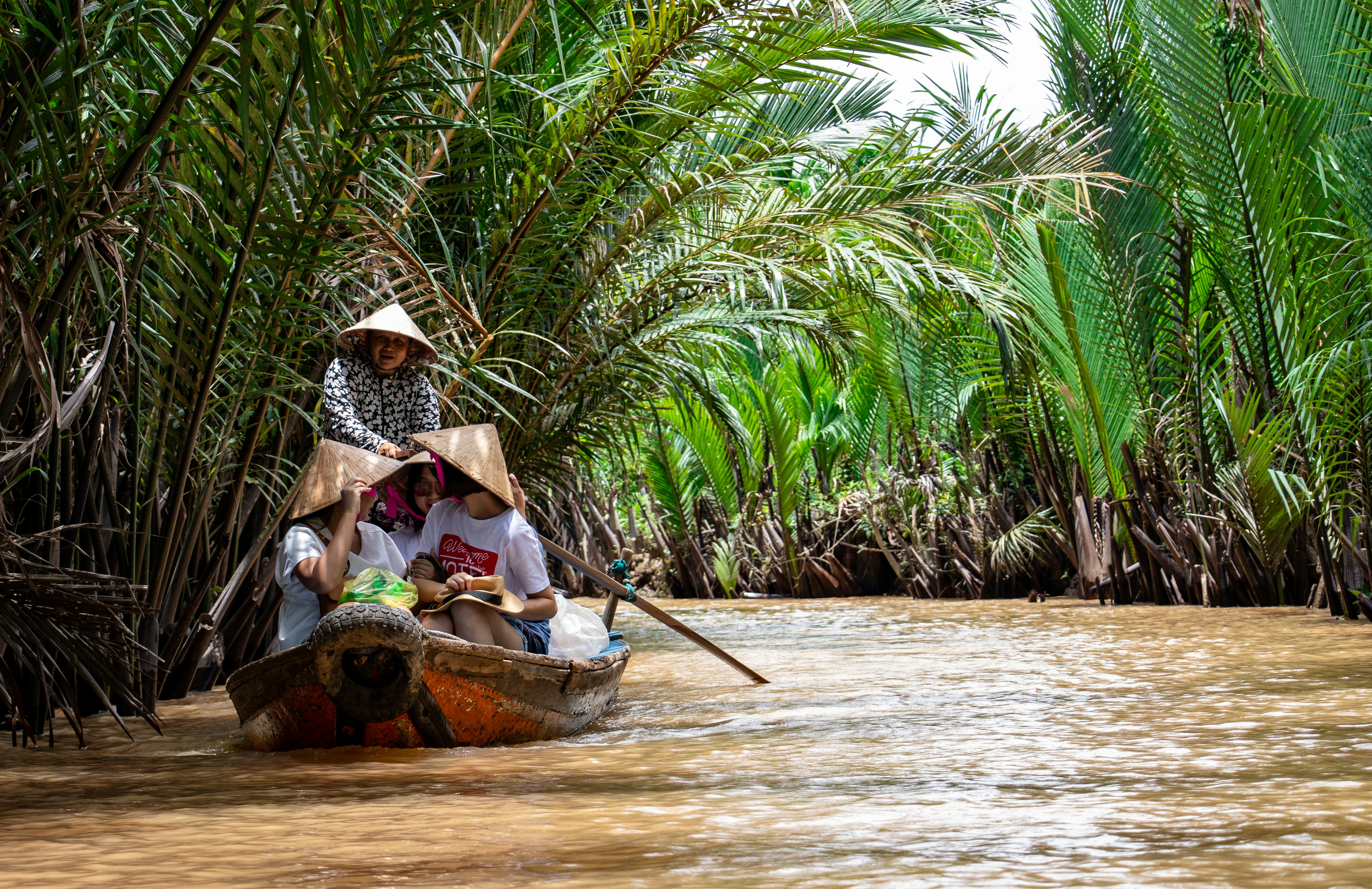
These are the closest areas to Ho Chi Minh City, so they are the busiest. Skip the biggest tour stops. Hire a small boat and ask to be taken into the narrow canals, where coconut palms arch overhead and the water turns green and still. You can watch families make coconut candy in small family kitchens, not showrooms.
Vinh Long and Sa Dec: Orchards and Old Houses
Vinh Long is the best base for homestays. Staying in a garden house means waking to roosters, drinking strong coffee on a wooden jetty and cycling between fruit orchards on concrete paths barely wider than a handlebar. Nearby Sa Dec is known for its flower nurseries and for the century-old Huynh Thuy Le house, linked to the novel and film The Lover.
Can Tho: The Delta’s Big City
Can Tho is the region’s largest city and the easiest hub. Ninh Kieu Wharf comes alive in the evening with families strolling the riverside and street food vendors setting up. From here you can reach the floating markets, rice noodle workshops and quiet canal villages in a morning.
Chau Doc and the Far South
Near the Cambodian border, Chau Doc brings Khmer, Cham and Vietnamese cultures together. Visit the Tra Su cajuput forest, where small boats slide through a carpet of bright green duckweed under tall trees. Farther south, Ca Mau is where Vietnam’s mainland ends, with mangroves, crab and shrimp farms, and very few foreign visitors.
Floating Markets in 2026
Floating markets are shrinking. Bridges, roads and supermarkets have pulled trade onto land, and Cai Rang near Can Tho is much quieter than a decade ago. It is still worth seeing, but go between 5:30 and 7:00 a.m., when wholesale boats are at their busiest. Each boat hangs its goods from a tall pole, such as pineapples, sweet potatoes or watermelons, so buyers can see what is for sale from far away.
Cai Be, closer to Vinh Long, is smaller and feels more local. By 8:00 a.m. most trade has finished, so arrive early or you will see only empty boats.
What to Eat and Where
Delta food is sweeter and more sour than northern Vietnamese food, and it leans on river fish, coconut and fresh herbs. Look for these:
- Lau mam: a fermented fish hotpot loaded with vegetables, eaten around Can Tho and Chau Doc. It smells strong, but the flavour is rich and balanced.
- Banh xeo (southern pancakes): crisp, turmeric-yellow, and wrapped in mustard leaves with herbs. You hear the batter sizzle before you see the pan.
- Elephant ear fish (ca tai tuong): served standing upright, deep-fried, with rice paper and herbs for wrapping. Common in My Tho and Ben Tre.
- Bun ca in Chau Doc: a turmeric fish noodle soup, light and fragrant.
- Banh cong: crunchy shrimp and mung bean cakes, popular as a snack in Can Tho.
For the best meals, eat where locals do. Look for plastic stools, busy riverside stalls and short menus. Ninh Kieu’s evening food streets in Can Tho are a good place to start. Tourist restaurants near tour boat docks tend to charge double.
Day Trip or Overnight?
A day trip from Ho Chi Minh City works if you have only one day. You will see one or two spots, and you will spend about six hours on the road in total. It is enough for a taste, but not much more.
An overnight stay changes everything. You can reach Cai Rang at dawn, eat a long dinner by the river and cycle quiet lanes without tour groups. I recommend two nights if you can spare them: one in Vinh Long or Ben Tre for the countryside, and one in Can Tho for the market and food. Add a third night if you want Chau Doc or Ca Mau.
Getting There and Getting Around
There is no train to the delta. Buses are the main option. Operators like Futa Bus and Thanh Buoi run frequent services from Mien Tay Bus Station in Ho Chi Minh City to Can Tho, Vinh Long, Ben Tre and Chau Doc. Limousine vans are faster and pick up from hotels in the city centre. Can Tho International Airport also has direct flights from Hanoi, which suits travellers coming from the north.
Once there, getting around depends on the area:
- In towns: use Grab for cars and bikes, or walk. Can Tho is easy to explore on foot.
- In the countryside: hire a bicycle or a motorbike taxi. Many homestays lend bikes for free.
- On the water: private boats can be hired by the hour from the main docks. Agree the price and route before boarding.
2026 Budget Reality
The delta is cheaper than Ho Chi Minh City, Hoi An or Da Nang. Approximate daily costs per person, at about 26,000 VND to the US dollar:
- Budget: 600,000–900,000 VND ($23–35). Dorm bed or simple homestay (200,000–350,000 VND), street meals (40,000–70,000 VND each), shared bus (130,000–200,000 VND one way).
- Mid-range: 1,500,000–2,500,000 VND ($58–96). Hotel or garden homestay with private room (700,000–1,400,000 VND), restaurant meals (120,000–300,000 VND), small-group day tour (500,000–900,000 VND).
- Comfortable: 3,500,000–6,000,000 VND ($135–230). Riverside boutique hotel or resort (2,000,000–4,500,000 VND), private boat and guide (800,000–1,500,000 VND for half a day), limousine transfers.
A shared boat to Cai Rang usually costs 150,000–300,000 VND ($6–12) per person. Private boats cost more, but you can pick your own schedule.
Practical Tips: Season and Packing
The dry season, from December to April, brings blue skies and lower humidity, with temperatures around 25–34°C. The wet season, from May to November, is greener and has fewer crowds, with short, heavy afternoon rain. Water levels peak around September and October, and some country lanes may flood.
Pack a light rain jacket, mosquito repellent, sun protection and shoes that can handle mud. Carry small notes, since many rural stalls and boatmen do not have change for 500,000 VND bills.
Frequently Asked Questions
How many days do you need in the Mekong Delta?
Two nights is ideal. That gives you time for a countryside homestay and a dawn floating market visit in Can Tho. One day is possible from Ho Chi Minh City, but it is rushed. Add a third night if you want to reach Chau Doc or Ca Mau.
What is the best time of year to visit the Mekong Delta?
December to April is the best time, with dry weather, sunshine and comfortable temperatures. The wet season from May to November is greener and quieter, but expect afternoon downpours. September and October can bring high water, and some rural paths may be flooded.
Is the Mekong Delta worth visiting?
Yes, if you go beyond the standard day tour. Staying overnight, cycling through orchards and visiting a floating market at dawn show a side of Vietnam that big cities cannot. If you only have a rushed day trip, it can feel touristy.
How do you get from Ho Chi Minh City to Can Tho?
Take a bus or limousine van from Mien Tay Bus Station or a city centre pickup. With the expressway, the trip takes around three to four hours and costs roughly 130,000–200,000 VND ($5–8). Grab cars and private drivers are faster but cost more.
Is the Mekong Delta safe for tourists?
Yes, it is generally very safe and friendly. The main risks are everyday ones: motorbike traffic, sun exposure and mosquitoes. Agree boat prices in advance, keep valuables close in crowded markets and use licensed operators. Drink bottled water and eat at busy stalls.
📷 Featured image by Tomáš Malík on Unsplash