On this page
- Why Domestic Flights Make Sense in Vietnam in 2026
- The Five Airlines You’ll Actually Use
- Vietnam’s Domestic Airport Network
- Getting to and from the Airport
- How to Book a Domestic Flight Step by Step
- 2026 Budget Reality: What Flights Actually Cost
- Documents, Check-in, and What to Expect at Security
- Flights vs. Trains — When Each One Wins
- Common Mistakes That Cost Travellers Money
- Frequently Asked Questions
Vietnam is long and thin — about 1,650 kilometres from Hanoi to Ho Chi Minh City as the crow flies. That geography is the single biggest pain point for travellers trying to plan an efficient route in 2026. Overlanders who skip the flight option often burn two or three days on bus or train journeys that a two-hour flight would have solved for less than the cost of a decent hotel night. This guide covers everything you need to book, board, and land on a domestic flight in Vietnam without overpaying or getting caught out by the fine print.
Why Domestic Flights Make Sense in Vietnam in 2026
The train network is beautiful and worth doing at least once — but it is slow. The Hanoi to Ho Chi Minh City journey on Vietnam Railways (www.dsvn.vn) takes 17 to 20 hours even on the fast SE trains. The same route by air takes roughly 2 hours in the cabin, plus maybe 90 minutes total for airport check-in and transfers. On a three-week trip where you want to cover Hanoi, Hoi An, Hue, Nha Trang, and Ho Chi Minh City, flying one or two of the longer legs is simply the rational choice.
The other reason flights have become more attractive since 2024 is price competition. Vietnam’s low-cost carriers — Vietjet Air, Pacific Airlines, and Vietravel Airlines — keep each other honest on the major trunk routes. Promotional fares starting from around VND 200,000 to 300,000 (USD 8 to 12) appear regularly, especially 6 to 10 weeks out from travel. Those fares vanish quickly, but they signal just how competitive this market has become.
Flying also opens up destinations that are genuinely hard to reach overland. Phu Quoc Island, Con Dao, and Da Lat are all reachable by road but the journey times are brutal. A 55-minute flight from Ho Chi Minh City to Phu Quoc versus a six-hour ferry and bus combination is not a close comparison for most travellers.

The Five Airlines You’ll Actually Use
Vietnam’s domestic aviation market in 2026 has five active carriers. Here is an honest breakdown of each.
Vietnam Airlines (www.vietnamairlines.com)
The national full-service carrier. It flies to almost every domestic airport and is the most reliable option when punctuality and included baggage matter. Economy class includes 23kg checked baggage and 10kg carry-on. Meals and drinks are included. Fleet modernisation has continued with Airbus A321neos and Boeing 787s on longer routes. Expect to pay a premium over low-cost carriers, but the total cost is often closer than it looks once you price up a low-cost fare with added bags.
Vietjet Air (www.vietjetair.com)
The biggest low-cost network in the country. Vietjet connects almost every domestic airport with frequent daily departures and aggressive promotional pricing. The base fare includes 7kg carry-on only — checked baggage is purchased separately. Food and drinks are available to buy on board. If you are travelling light and booking early, Vietjet is usually the cheapest option. Vietjet continues adding routes to smaller tourist destinations in 2026, and bundled fare options that include baggage at a slightly higher upfront price are now more common than they were in 2024.
Bamboo Airways (www.bambooairways.com)
A hybrid carrier positioned between full-service and low-cost. Bamboo went through significant restructuring in 2024 and 2025, which resulted in a tighter, more focused domestic route network. Their international operations have been scaled back considerably. The domestic product is stable and often competitively priced. Baggage varies by fare class — the base Bamboo Economy fare includes 7kg carry-on, while Bamboo Economy Flex fares typically include 20kg checked baggage. Always read the specific fare rules before booking. Monitor their website closely, as policies continue to evolve post-restructuring.

Pacific Airlines (www.pacificairlines.com.vn)
A low-cost subsidiary of Vietnam Airlines, previously known as Jetstar Pacific. The rebrand to Pacific Airlines was completed before 2024, and the airline has since deepened its integration with Vietnam Airlines’ systems, which may allow more seamless connections and codeshare options on some itineraries. It focuses on the high-traffic routes: HCMC–Hanoi, HCMC–Da Nang, and HCMC–Phu Quoc. Base Economy includes 7kg carry-on; checked baggage is an add-on purchase. Worth checking alongside Vietjet when you’re pricing the main southern routes.
Vietravel Airlines (www.vietravelairlines.vn)
The youngest carrier in the group, operating as a leisure-focused low-cost airline with strong ties to Vietravel’s tour packages. It hubs from Phu Bai Airport in Hue (HUI), Tan Son Nhat in Ho Chi Minh City (SGN), and Noi Bai in Hanoi (HAN). Pricing tends to be competitive during off-peak periods. Checked baggage is purchased separately from the 7kg carry-on base fare. If you are travelling outside of peak season, Vietravel sometimes offers noticeably cheaper fares on popular leisure routes.
Vietnam’s Domestic Airport Network
Vietnam has a well-spread network of airports that covers all the major traveller destinations. Here is what you need to know by region.
Northern Vietnam
- Noi Bai International Airport (HAN) — Hanoi: The main gateway for the north. About 35 kilometres from the Old Quarter.
- Cat Bi International Airport (HPH) — Hai Phong: Serves Hai Phong city. Useful if you want to reach Ha Long Bay without going through Hanoi — it is about 60 kilometres from Ha Long City by road.
- Van Don International Airport (VDO) — Quang Ninh: The closest airport to Ha Long Bay itself. Much less congested than Hanoi and increasingly served by Vietjet and Vietnam Airlines.

Central Vietnam
- Da Nang International Airport (DAD) — Da Nang: The busiest airport in Central Vietnam. Only 3 kilometres from Da Nang city centre and about 25 kilometres from Hoi An. An excellent base for exploring the central stretch.
- Phu Bai International Airport (HUI) — Hue: Serves the imperial city directly. About 14 kilometres from the city centre.
- Cam Ranh International Airport (CXR) — Nha Trang: Located about 35 kilometres south of Nha Trang city centre on the Cam Ranh Peninsula.
- Dong Hoi Airport (VDH) — Quang Binh: The gateway airport for Phong Nha-Ke Bang National Park. Flights here save you a very long bus ride from Da Nang or Hue.
Southern Vietnam
- Tan Son Nhat International Airport (SGN) — Ho Chi Minh City: The busiest airport in Vietnam. Located about 8 kilometres from District 1.
- Phu Quoc International Airport (PQC) — Phu Quoc Island: Served frequently from both Hanoi and Ho Chi Minh City.
- Lien Khuong Airport (DLI) — Da Lat: About 28 kilometres from Da Lat city. The altitude on the approach is genuinely dramatic — expect a noticeable descent through low cloud in the wet season.
- Can Tho International Airport (VCA) — Can Tho: Serves the Mekong Delta. Fewer daily flights than most airports on this list, so book ahead.
Getting to and from the Airport
Airport transfers in Vietnam are well organised at the major hubs, and the rise of Grab and Be ride-hailing has made the process straightforward. Here is what to budget.
Ride-Hailing (Grab and Be)

Grab (grab.com) and Be (be.com.vn) are available at all major airports. The fare is shown in the app before you confirm, which eliminates the haggling problem that used to plague airport taxi queues. Both apps require a Vietnamese phone number for registration, but Grab also works with international numbers linked to your home account.
- Noi Bai (HAN) to Hanoi city centre: VND 250,000 – 350,000 (USD 10 – 14)
- Tan Son Nhat (SGN) to HCMC District 1: VND 120,000 – 200,000 (USD 5 – 8)
Metered Taxis
Mai Linh and Vinasun are the two reputable taxi companies to look for. Always confirm the meter is running before the car moves. Fixed-price airport taxis exist — ask the driver to confirm the price before you get in if going that route. Fares have risen slightly since 2024 in line with fuel cost increases.
Airport Buses
For those watching their budget, airport buses are reliable and very cheap.
- Hanoi (HAN) — Bus Route 86 (Airport Express): Runs to Hanoi Railway Station and the Old Quarter area. Fare: VND 45,000 (USD 1.80). Frequency roughly every 25 to 30 minutes, operating from 05:00 to 22:00.
- Ho Chi Minh City (SGN) — Bus Routes 109 and 152: Connect to District 1 and the main bus terminals. Fare: VND 15,000 – 20,000 (USD 0.60 – 0.80).
How to Book a Domestic Flight Step by Step
Booking directly through an airline website is the cleanest option. Here is the exact process using any of the major carrier sites.
- Go to the airline’s official website (e.g., www.vietjetair.com or www.vietnamairlines.com).
- Select “Domestic” and choose “One Way” or “Round Trip.”
- Enter your departure and arrival airports using the IATA codes (e.g., HAN to SGN) or city names.
- Pick your travel date. If flexible, use the calendar view or Google Flights first to find the cheapest day.
- Enter the number of passengers — adults, children (under 12), and infants (under 2).
- Hit search and review the available fare classes. Pay attention to what each fare includes — specifically the baggage allowance.
- Select your flight. Add checked baggage, seat selection, or a meal combo at this stage if needed. Adding baggage later is almost always more expensive.
- Enter passenger names exactly as they appear on your passport. A mismatch causes problems at check-in.
- Proceed to payment. Major international credit and debit cards (Visa, Mastercard, Amex, JCB) are accepted across all airlines. Local customers can also pay via the Napas ATM gateway or e-wallets including MoMo and ZaloPay — acceptance of these wallets has grown significantly since 2024 but is not universal on every airline site.
- Save your booking confirmation and e-ticket. A PDF is fine; a screenshot in your phone’s photo roll works too.

For price comparison across airlines, Skyscanner (www.skyscanner.com) and Google Flights are the most reliable aggregators. Traveloka Vietnam (www.traveloka.com/en-vn) is the most useful local OTA. The downside of OTAs is that changes and cancellations go through a middleman, which adds friction if plans shift. For simple, point-to-point bookings, the direct airline site is cleaner.
2026 Budget Reality: What Flights Actually Cost
Prices below are for one-way Economy class, booked a few weeks in advance, outside of peak periods. Peak season surcharges around Tet, April 30th/May 1st, and September 2nd National Day can push fares to two or three times these figures.
Ticket Price Tiers
- Short routes (e.g., HCMC to Da Lat): VND 500,000 – 1,500,000 (USD 20 – 60)
- Medium routes (e.g., HCMC to Da Nang): VND 800,000 – 2,000,000 (USD 32 – 80)
- Long routes (e.g., Hanoi to HCMC): VND 1,000,000 – 3,000,000 (USD 40 – 120)
Promotional fares on low-cost carriers can drop as low as VND 200,000 – 300,000 (USD 8 – 12) on the short and medium routes, but these sell out fast and almost never appear during peak travel windows.

Additional Fees to Budget For
- Checked baggage (low-cost carriers): 15 to 20kg costs VND 200,000 – 400,000 (USD 8 – 16) per flight segment when added at booking. Adding it later at the airport costs significantly more.
- Overweight baggage: VND 50,000 – 80,000 (USD 2 – 3) per kilogram over your allowance.
- Seat selection: VND 50,000 – 200,000 (USD 2 – 8) depending on position — exit row and front-row seats cost the most.
- Meals on board (low-cost): VND 50,000 – 150,000 (USD 2 – 6) for a basic combo.
- Flight change fees: VND 300,000 – 700,000 (USD 12 – 28) per passenger per change, plus any fare difference. The cheapest fares are typically non-refundable.
- Airport departure tax: Always included in the quoted ticket price — you will not be asked to pay this separately at the airport. The domestic airport service charge sits around VND 80,000 – 100,000 (USD 3.20 – 4).
Documents, Check-in, and What to Expect at Security
The document rules for domestic flights in Vietnam are simple but non-negotiable.
What ID You Need
- Foreign nationals: Original passport only. A photocopy or phone photo is not accepted.
- Vietnamese citizens: Original National ID Card (CCCD or CMND), passport, or a valid photo driving licence. Children under 14 without their own ID use a birth certificate.
Check-in Options
Online check-in opens 24 hours before departure for most airlines and closes 1 hour before departure. Complete it through the airline’s app or website, then show the mobile boarding pass at bag drop and the gate. Self-service kiosks are available at Noi Bai (HAN), Tan Son Nhat (SGN), and Da Nang (DAD) — primarily for Vietnam Airlines passengers.
If checking in at the counter, arrive at the airport at least 1.5 to 2 hours before departure. Check-in counters typically close 40 minutes before the scheduled departure time. The hum of the departures hall at Tan Son Nhat during the morning rush is intense — hundreds of families, business travellers, and tour groups all moving at once — so the earlier arrival buffer genuinely helps.

Security
Standard procedures apply. Liquids, gels, and aerosols in carry-on bags must be in containers of 100ml or less, placed in a single transparent resealable plastic bag with a maximum capacity of one litre. Remove laptops and large electronics from your bag at the screening point — this is enforced consistently at all major airports.
Flights vs. Trains — When Each One Wins
The flight vs. train decision comes up on almost every Vietnam itinerary. Here is the honest answer for the routes where it actually matters.
Choose a Flight When:
- You are covering more than 500 kilometres (e.g., Hanoi to Nha Trang, Hanoi to HCMC).
- You have a connection to catch or a limited time window — 2 hours in the air beats 17 to 20 hours on the ground every time.
- Your destination is an island or highland city with no direct train access (Phu Quoc, Da Lat, Con Dao).
Choose Vietnam Railways When:
- You are travelling between 200 and 500 kilometres — Hanoi to Hue or Da Nang to Hue, for instance, are beautiful overnight or morning train journeys.
- You want city-centre to city-centre travel without an airport transfer at each end — Hanoi Railway Station and Ho Chi Minh City’s Saigon Station are both central.
- Budget matters above all else — a hard sleeper booked in advance can undercut the total cost of a flight plus two airport transfers by a significant margin.
- You want the scenic coastal route through Hai Van Pass, which is genuinely one of the best rail views in Southeast Asia.
For full details on train classes, sleeper options, and booking through www.dsvn.vn, refer to the dedicated Vietnam Railways guide on this site.
Common Mistakes That Cost Travellers Money
These are the errors that show up repeatedly, and all of them are avoidable with a few minutes of preparation.

- Buying a “cheap” fare and then adding baggage at the airport. Low-cost airline baggage fees added at the airport or on the day of travel are always higher than pre-purchased online. Add your bags at the time of booking.
- Booking too late for Tet. Domestic flights around the Lunar New Year fill up months in advance. If your trip overlaps with Tet (late January or early February), book 3 to 6 months out. The same applies to the April 30th/May 1st holiday block and September 2nd National Day.
- Passenger name mismatches. Vietnamese airlines check ID at every stage — booking counter, bag drop, and gate. If the name on your ticket does not exactly match your passport, expect delays and potential denial of boarding. Double-check before confirming payment.
- Ignoring the flight time buffer for Tan Son Nhat (SGN). HCMC’s main airport is 8 kilometres from District 1, but traffic on the roads leading to it can be severe during morning and evening rush hours. A Grab that takes 20 minutes at 10am can take 50 minutes at 7am. Build in extra time.
- Using an OTA for a booking you might need to change. If there is any chance your plans will shift, book directly with the airline. Changing or cancelling through an OTA adds steps, fees, and response time that the airline’s own booking system avoids.
- Forgetting to check the specific fare rules on Bamboo Airways. Post-restructuring, Bamboo’s fare classes and included services have shifted. What was true in 2024 may not match the 2026 product. Read the fare breakdown line by line before confirming.
Frequently Asked Questions
How far in advance should I book domestic flights in Vietnam?
For standard travel, 1 to 3 months in advance gives you good prices and solid availability. For travel during Tet, the April 30th/May 1st holiday, or September 2nd National Day, book 3 to 6 months out. Those peak periods sell out fast and prices rise sharply as the dates approach.

Can I use my foreign passport to board a domestic flight in Vietnam?
Yes. Foreign nationals must present their original passport at check-in and at the boarding gate. Photocopies, phone photos, and digital scans are not accepted as valid ID for domestic flights. Carry your physical passport with you on travel days.
Which airline is cheapest for domestic flights in Vietnam?
Vietjet Air and Pacific Airlines typically offer the lowest base fares on major routes. However, the total price — including checked baggage and seat selection — often closes the gap with Vietnam Airlines. Always calculate the all-in cost before assuming the cheapest listed fare is actually the best deal.
How early should I arrive at the airport for a domestic flight?
Arrive 1.5 to 2 hours before your scheduled departure. Check-in counters close 40 minutes before departure. At busy airports like Tan Son Nhat in Ho Chi Minh City, morning departure queues can be substantial. If you have completed online check-in and have carry-on only, you can be more efficient, but the 90-minute buffer remains sensible.
Is it safe to book domestic flights through third-party websites like Skyscanner or Traveloka?
Skyscanner and Google Flights are reliable for comparing prices — but they redirect you to the booking page rather than completing the transaction themselves. Booking through Traveloka or other OTAs is generally safe, but any changes or cancellations require going through the OTA rather than the airline directly, which adds complexity. For simple itineraries, direct airline bookings are cleaner.
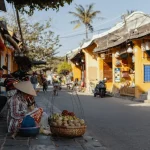
📷 Featured image by Nguyễn Hiệp on Unsplash.