On this page
- The Short Answer: Do You Need a Visa for Ho Chi Minh City?
- Who Can Enter Visa-Free in 2026
- How to Get a Vietnam E-Visa, Step by Step
- Visa on Arrival and Embassy Visas: When They Still Make Sense
- Landing at Tan Son Nhat: Immigration and Getting Into the City
- What Has Changed Since 2024
- Extensions, Overstays and Re-Entry Rules
- Where to Stay and How Registration Works
- Day Trips and Border Crossings From Saigon
- Best Time to Visit and When to Apply
- Your First Night in Saigon: Food, Nightlife and Shopping
- Practical Tips for the First 48 Hours
- Budget Breakdown: Visa Fees and Daily Costs
- Frequently Asked Questions
💰 Click here to see Vietnam Budget Breakdown
💰 Prices updated: November, 2026. Budget figures are estimates — always verify before travel.
Exchange Rate: $1 USD = ₫25,797.29
Daily Budget (per person)
Shoestring: ₫700,000 – ₫1,100,000 ($27.13 – $42.64)
Mid-range: ₫1,500,000 – ₫2,800,000 ($58.15 – $108.54)
Comfortable: ₫3,000,000 – ₫5,500,000 ($116.29 – $213.20)
Accommodation (per night)
Hostel/guesthouse: ₫120,000 – ₫470,000 ($4.65 – $18.22)
Mid-range hotel: ₫700,000 – ₫1,800,000 ($27.13 – $69.77)
Food (per meal)
Budget meal: ₫40,000.00 ($1.55)
Mid-range meal: ₫150,000.00 ($5.81)
Upscale meal: ₫1,000,000.00 ($38.76)
Transport
Single metro/bus trip: ₫10,000.00 ($0.39)
Monthly transport pass: ₫500,000.00 ($19.38)
Vietnam‘s entry rules have changed several times in the last few years, and old blog posts still circulate with outdated fees and wrong stay limits. Add the dozens of fake “official” visa websites that charge $60 to $100 for a $25 document, and a simple question becomes stressful. Airlines can also refuse boarding if your paperwork is wrong. This guide explains exactly what you need to land in Ho Chi Minh City in 2026, which route fits your passport, and what to expect when you arrive.
The Short Answer: Do You Need a Visa for Ho Chi Minh City?
Ho Chi Minh City has no separate visa. You need permission to enter Vietnam, and that permission covers the whole country. Most travelers arriving in Saigon use one of three routes:
- Visa exemption: citizens of certain countries enter without any visa for 14 to 45 days (90 days for a few nationalities).
- E-visa: everyone else can apply online for a visa valid for up to 90 days.
- Visa on arrival or embassy visa: older routes that still exist but are rarely the best choice.
Whatever route you choose, two rules apply. Your passport must be valid for at least six months from your arrival date, and it needs at least one blank page. Check both before you pay for anything.
Who Can Enter Visa-Free in 2026
Vietnam extended its 45-day visa exemption well into the late 2020s. It now covers citizens of the United Kingdom, Germany, France, Italy, Spain, Russia, Japan, South Korea, Denmark, Sweden, Norway, Finland and Belarus. Poland, Czechia and Switzerland were also added in 2025, along with a few other European countries. The Ministry of Foreign Affairs updates the list, so check it close to your departure date.
Neighboring countries get shorter exemptions:
- 30 days: Thailand, Malaysia, Singapore, Indonesia, Laos and Cambodia.
- 21 days: the Philippines.
- 14 days: Brunei and Myanmar.
- 90 days: Chile and a small number of other nationalities.
Passports from the United States, Canada, Australia, New Zealand, India and China are not on the exemption list. These travelers need an e-visa before flying.
Some details of the exemption trip people get wrong:
- The days count from your arrival date. Immigration stamps your passport on entry, and the stamp shows your permitted stay.
- The old rule requiring a 30-day gap between exempt visits was dropped in 2023, so you can re-enter repeatedly. Officers may question very frequent entries.
- Many airlines ask for proof of onward travel, such as a flight out of Vietnam. Have a screenshot ready.
- Phu Quoc Island offers 30 days visa-free to all nationalities, but only if you fly in directly. That does not apply to Saigon.

How to Get a Vietnam E-Visa, Step by Step
The e-visa is the standard answer for most Western and South Asian travelers. Since August 2023, citizens of every country can apply. It is valid for up to 90 days and comes in single-entry or multiple-entry versions.
- Use only the official portal. The government site is evisa.gov.vn. Look-alike sites rank high in search results and add “service fees” of $20 to $80.
- Prepare your files. You need a clear photo of your passport data page and a recent passport-style portrait photo, both in digital format.
- Fill in the form carefully. Enter your name exactly as it appears on your passport. Choose Tan Son Nhat International Airport (SGN) as your entry point if you are flying into Saigon.
- Pay the fee. A single-entry e-visa costs $25 (about 650,000 VND). A multiple-entry e-visa costs $50 (about 1,300,000 VND). The fee is non-refundable even if the application is rejected.
- Wait about three working days. Approvals sometimes arrive faster, but do not count on it. Save the registration code the system gives you so you can check the status.
- Download and print the approval. Carry a paper copy. Airline staff and immigration officers still ask for it, and phone batteries die at awkward moments.
Visa on Arrival and Embassy Visas: When They Still Make Sense
“Visa on arrival” in Vietnam does not mean what it means in Cambodia or Sri Lanka. You cannot just show up and pay. You first need an approval letter from a Vietnamese travel agency, which costs roughly $10 to $25 online depending on processing speed. At Tan Son Nhat you then pay a stamping fee in cash: $25 for single entry or $50 for multiple entry. The total usually ends up higher than the e-visa, and you queue at a separate counter.
This route only works for air arrivals, so it does not help at land borders. It makes sense in only a few cases: your nationality is not eligible for the e-visa portal, or you need a visa type the portal does not offer, such as some business or work-related categories.

An embassy or consulate visa is the third option. It still exists, but it means sending your passport or booking an appointment, and fees vary by country. If you can use the e-visa, skip it.
Long-stay visas for work, study or investment follow different rules and require sponsorship from a Vietnamese employer, school or company. Tourists should not attempt to work on a tourist visa or exemption. Remote work for foreign clients falls in a legal gray area that immigration law does not clearly address.
Landing at Tan Son Nhat: Immigration and Getting Into the City
Tan Son Nhat sits about 7 km from the center of District 1. In the immigration hall, the line can take 15 minutes at a quiet time or an hour when several wide-body flights land together. The officer checks your passport, visa or exemption eligibility, and photographs you. Keep your e-visa printout, hotel address and onward ticket within reach.
After customs, your main transport options are:
- Grab: The most popular choice. A car to District 1 typically costs 150,000 to 250,000 VND ($6 to $10), depending on traffic. Use the designated pickup zone.
- Metered taxi: Vinasun and Mai Linh are the reliable brands. Expect a similar price. Insist on the meter.
- Public bus: Routes 109 and 152 run to the Ben Thanh and Pham Ngu Lao area. They cost under 20,000 VND ($0.80) but take longer and are tricky with large bags.
The new Metro Line 1 (Ben Thanh to Suoi Tien) does not reach the airport. It is useful for trips to Thu Duc and the eastern suburbs, but not for your arrival. Traffic is heaviest from 4:30 to 7:30 pm. A 25-minute ride can double during rush hour.
Long Thanh International Airport, about 40 km east of the city in Dong Nai Province, is being phased in to ease pressure on Tan Son Nhat. Commercial operations are planned to begin in 2026, but airlines will likely transfer slowly. Check your ticket carefully to confirm which airport you land at.
What Has Changed Since 2024
If your last trip was in 2023 or 2024, expect these differences:
- Longer visa-free stays and more countries: The 45-day exemption was extended, and more European countries joined in 2025.
- E-visa for all nationalities, up to 90 days: The old 30-day limit is gone, and multiple-entry e-visas are available.
- Merged provinces: On 1 July 2025, Vietnam restructured its provinces. Ho Chi Minh City now includes the former Binh Duong and Ba Ria–Vung Tau areas. For visitors, this means Vung Tau and Con Dao now sit inside the city’s administrative boundary. Your visa still covers all of it.
- Metro Line 1 is running: It opened in December 2024 and connects the center with the east side.
- Digital everywhere: Cash still works, but QR payments, Grab and e-wallets are normal even at street stalls.

Extensions, Overstays and Re-Entry Rules
Visa extensions are possible, but they are not self-service. The common route is through a licensed travel agency in District 1 or District 3, which submits your application to the Immigration Department. Fees vary, and agencies typically charge from about 1,500,000 to 3,500,000 VND ($60 to $135), depending on the length and speed. Visa-exempt travelers often find extensions harder than people on an e-visa, so many simply exit and re-enter, or apply for an e-visa in advance.
Overstaying is risky. Fines for short overstays start at roughly 500,000 to 2,000,000 VND ($20 to $80), and longer overstays bring higher penalties, possible detention, and re-entry bans. Check the date on your entry stamp or e-visa on the first day, not the last.
Re-entry works differently by visa type:
- Single-entry e-visa: It becomes void as soon as you leave Vietnam. A side trip to Cambodia and back needs a new visa.
- Multiple-entry e-visa: You can leave and return until it expires.
- Visa exemption: Each entry gets a new stay period, as long as you qualify.
Where to Stay and How Registration Works
Vietnamese law requires every foreign guest to be registered with local police. Hotels and licensed guesthouses handle this at check-in by scanning your passport, so give it to the front desk and expect it back within minutes. Airbnb and private rentals are registered by the host. Ask when you book.
- District 1 (Ben Nghe, Ben Thanh, Pham Ngu Lao): The most walkable zone, close to sights, bars and the metro. Noisy but convenient.
- District 3: Tree-lined streets, French villas, quiet cafes. Good for slower trips.
- Thao Dien (Thu Duc City): Expat-heavy, with western brunch spots, riverside walks and boutique hotels. Close to Metro Line 1 stations.
- Binh Thanh: A local residential area with cheaper food and fewer tourists, a short Grab from the center.
Typical 2026 nightly rates:
- Budget: dorm beds and basic rooms from 150,000 to 450,000 VND ($6 to $18).
- Mid-range: 900,000 to 1,800,000 VND ($35 to $70) for a clean, central hotel.
- Luxury: 3,500,000 VND ($135) and up for five-star towers and riverside hotels.

Day Trips and Border Crossings From Saigon
Your visa matters most if you plan to leave the city. These popular day trips stay inside Vietnam and need no extra paperwork:
- Cu Chi Tunnels: About 70 km northwest, 1.5 to 2 hours each way. Allow a half day. Tours cost 400,000 to 900,000 VND ($15 to $35).
- Mekong Delta (My Tho or Ben Tre): About 2 hours by road. A full day covers boats, coconut candy workshops and canals.
- Cao Dai Holy See, Tay Ninh: Around 100 km away, 2.5 hours. Often combined with Cu Chi.
- Vung Tau: A beach town about 2 hours by road or a fast ferry from Bach Dang Wharf. Now part of Ho Chi Minh City’s expanded boundary.
For Cambodia, buses run from Pham Ngu Lao to Phnom Penh via the Moc Bai border in 6 to 7 hours, costing about $12 to $18. E-visas are accepted at this crossing, but check the official port list.
Best Time to Visit and When to Apply
The dry season runs from December to April, with daytime temperatures of 28 to 35°C and little rain. April can be brutal, sometimes reaching 37°C before the rains begin. The wet season from May to November brings short, heavy afternoon downpours, often with streets flooding for an hour. Mornings stay clear, so plan indoor visits for the afternoon.
Tet (Lunar New Year) falls on 17 February in 2026. The city empties as residents head home, many restaurants close for several days, and flight prices spike. The airport still works, but visa agencies and government offices close, so do not plan an extension during Tet week. Nguyen Hue Walking Street fills with flower displays and the atmosphere is excellent.
For a December to February trip, apply for your e-visa even earlier than usual, because demand rises in peak season.
Your First Night in Saigon: Food, Nightlife and Shopping
Once the stamp is in your passport, head out. For food, start at Ben Thanh Street Food Market, a night market just behind the main hall, or walk to Nguyen Thuc Tu and Ho Thi Ky in District 10 and 3 for local alleys. Vinh Khanh Street in District 4 is the seafood strip: plastic stools, clouds of grilled-garlic smoke, and clams for 60,000 to 120,000 VND per plate. Dinner for two at a local spot costs 200,000 to 400,000 VND ($8 to $16).

For drinks, Bui Vien Walking Street is loud, cheap and chaotic, with beer around 30,000 to 60,000 VND. If you prefer calm, try rooftop bars along Nguyen Hue and Dong Khoi, where cocktails cost 180,000 to 350,000 VND ($7 to $14). Hidden speakeasies tucked inside apartment blocks off Ly Tu Trong add a quieter alternative.
For shopping, Ben Thanh Market is crowded, with stall owners calling out in several languages, and prices need bargaining. Saigon Square and Tax Trade Center sell clothing and souvenirs. For better design and local brands, browse the boutiques around Dong Khoi, Le Thanh Ton and the Reunification Palace area.
Practical Tips for the First 48 Hours
- SIM card: Buy at the airport (Viettel, Vinaphone or Mobifone). You need your passport for registration. A 30-day data plan costs roughly 150,000 to 300,000 VND ($6 to $12). eSIMs are also easy.
- Water: Do not drink tap water. Bottled water costs 8,000 to 15,000 VND.
- Money: ATMs usually limit withdrawals to 3,000,000 VND per transaction with fees around 50,000 VND. Cards work in hotels and malls, but street stalls prefer cash or QR.
- Safety: Saigon is safe for violent crime, but phone and bag snatching from passing motorbikes happens in District 1. Walk on the inside of the pavement and keep your phone away from the road.
- Tipping: Not expected. Rounding up for a Grab driver or leaving 5 to 10 percent in upscale restaurants is appreciated.
- Language: English works in hotels and tourist areas. Elsewhere, a translation app and a smile go a long way.
- Midday heat: Many locals rest from noon to 2 pm. Plan indoor sights like the War Remnants Museum or a long coffee stop.
- Carry ID: Keep a copy of your passport and visa on your phone, with the original locked in your hotel safe.
Budget Breakdown: Visa Fees and Daily Costs
Using an exchange rate of about 26,000 VND per US dollar, here is what to expect in 2026.
Visa Costs
- Visa exemption: free.
- Single-entry e-visa: $25 (about 650,000 VND).
- Multiple-entry e-visa: $50 (about 1,300,000 VND).
- Visa on arrival: $35 to $75 total (about 900,000 to 1,950,000 VND) including the approval letter and stamping fee.
- Extension through an agency: about 1,500,000 to 3,500,000 VND ($60 to $135).
Daily Travel Costs in Ho Chi Minh City
- Budget: 700,000 to 1,000,000 VND ($27 to $38) per day. Includes a dorm bed or basic room, street food, buses and the metro.
- Mid-range: 1,800,000 to 3,000,000 VND ($70 to $115) per day. Includes a central hotel, mixed restaurants, Grab rides and one tour or activity.
- Comfortable: 4,500,000 VND ($170) and up per day. Includes a luxury hotel, rooftop bars, private drivers and fine dining.

Frequently Asked Questions
Do US citizens need a visa for Ho Chi Minh City?
Yes. US passport holders are not on the visa exemption list, so you need an e-visa before flying. Apply through the official portal, evisa.gov.vn, pay $25 for single entry or $50 for multiple entry, and print the approval. Your passport must be valid for at least six months.
How long can I stay in Vietnam without a visa?
It depends on your nationality. Citizens of countries such as the UK, Germany, France, Japan and South Korea get 45 days. Thailand, Malaysia and Singapore citizens get 30 days. Others get 14 to 21 days. Everyone else needs a visa. Check the official list before booking.
How long does a Vietnam e-visa take to process?
Official processing takes three working days, and many applications are approved within one to two days. Apply at least a week before departure, and earlier in peak season or around Tet. Errors cannot be corrected after approval, so check your name and passport number before submitting.
Can I extend my visa in Ho Chi Minh City?
Yes, usually through a licensed travel agency that applies to the Immigration Department on your behalf. Costs run from about 1,500,000 to 3,500,000 VND ($60 to $135) depending on length and speed. Visa-exempt visitors often find it simpler to exit and re-enter or apply for an e-visa.
Is the visa-on-arrival at Tan Son Nhat Airport worth it?
Rarely. You need a pre-approved letter from an agency, then pay a cash stamping fee on arrival, so it costs more and takes longer than the e-visa. It is mainly useful if your nationality or visa type cannot be handled through the e-visa portal.
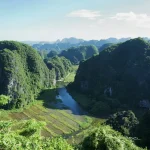
📷 Featured image by Tat Linh Nguyen on Unsplash.