On this page
- When Buddha’s Birthday Happens in Vietnam 2026
- Major Celebrations Across Vietnamese Temples
- Vesak Day Traditions You’ll Experience
- Planning Your Temple Visits During the Festival
- Regional Differences: North vs South Celebrations
- Food and Cultural Elements of the Celebration
- What to Expect as a Foreign Visitor
- 2026 Budget Guide for Buddha’s Birthday Activities
- Frequently Asked Questions
Buddha’s Birthday in Vietnam falls on different dates each year, following the lunar calendar, which often catches visitors off guard when planning their May 2026 temple visits. The celebration, known locally as Phật Đản or Vesak Day, transforms temples nationwide into vibrant centers of devotion, lantern displays, and community gathering.
When Buddha’s Birthday Happens in Vietnam 2026
In 2026, Buddha’s Birthday falls on May 23rd, marking the birth, enlightenment, and death of Buddha according to Vietnamese Buddhist tradition. This date shifts annually because it follows the lunar calendar, typically occurring on the 15th day of the fourth lunar month.
The celebration extends beyond a single day. Most temples begin special ceremonies and decorations a week prior, with the most significant activities happening from May 21st through May 25th. Major temples in Hanoi, Ho Chi Minh City, and Hue often hold evening ceremonies for three consecutive nights leading up to the main day.
Vietnam recognizes Buddha’s Birthday as a national public holiday, meaning government offices, banks, and many businesses close. This creates larger crowds at temples but also a more authentic atmosphere as local families participate in traditional observances.
Major Celebrations Across Vietnamese Temples
Jade Emperor Pagoda in Ho Chi Minh City becomes the focal point for southern celebrations. The temple fills with the sweet smoke of thousands of incense sticks as devotees arrive before dawn to participate in morning chanting ceremonies. The courtyard transforms into a sea of lotus-shaped lanterns, each representing prayers and wishes.
In Hanoi, Temple of Literature hosts scholarly ceremonies that blend Confucian and Buddhist traditions. The One Pillar Pagoda, despite its small size, draws massive crowds for its historic significance. Bach Ma Temple in the Old Quarter offers a more intimate experience, though expect shoulder-to-shoulder crowds during peak hours.

Hue’s Thien Mu Pagoda presents perhaps the most photogenic celebration. The seven-story tower overlooks the Perfume River, where floating lotus flowers and candles create a mystical evening scene. The temple’s large bronze bell, cast in 1710, rings throughout the day to mark different ceremony phases.
Regional temples each add local flavors to the celebration. Cao Dai temples in Tay Ninh province incorporate their unique syncretic elements, while mountain temples near Sapa blend Buddhist practices with local ethnic traditions.
Vesak Day Traditions You’ll Experience
The bathing of Buddha statues represents the day’s central ritual. Devotees pour scented water mixed with flower petals over small Buddha statues, symbolizing purification of the soul. The gentle sound of water flowing over bronze and stone statues creates a meditative atmosphere throughout temple grounds.
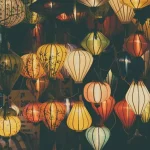
Lantern processions begin after sunset, with thousands of colorful paper lanterns carried through temple courtyards and nearby streets. Red lanterns represent happiness, yellow symbolizes wisdom, and white represents purity. Children often carry smaller lanterns while adults manage larger, more elaborate designs.
Vegetarian feast preparation becomes a community effort. Temple kitchens work overtime preparing elaborate plant-based meals served free to all visitors. The aroma of lemongrass, star anise, and fresh herbs fills temple courtyards as volunteers prepare traditional dishes like vegetarian pho and lotus root soup.
Merit-making activities intensify during this period. You’ll witness devotees releasing birds from bamboo cages, donating money for temple maintenance, and participating in group meditation sessions. These acts of generosity and mindfulness form the spiritual core of the celebration.
Planning Your Temple Visits During the Festival
Arrive at temples between 5:00-7:00 AM to witness morning ceremonies without overwhelming crowds. Most temples open before dawn on Buddha’s Birthday, and the early morning light filtering through incense smoke creates the most atmospheric photography opportunities.

Dress conservatively with covered shoulders and knees. Remove shoes before entering temple buildings and prayer halls. Many temples provide small plastic bags for storing shoes, though bringing your own shoe bag proves more hygienic.
Parking becomes nearly impossible near major temples. Use ride-sharing apps or public transport when available. In Ho Chi Minh City, walking from District 1 to Jade Emperor Pagoda takes about 20 minutes and lets you observe street-level celebration preparations.
Bring small denomination Vietnamese dong for temple donations. Most donation boxes accept 20,000 to 100,000 VND notes. Having exact change shows respect and prevents awkward money-changing situations during solemn moments.
Regional Differences: North vs South Celebrations
Northern Vietnam emphasizes scholarly and historical aspects of Buddhism. Hanoi temples often incorporate classical Vietnamese literature readings alongside traditional chanting. The pace feels more formal and structured, reflecting the region’s Confucian educational heritage.
Southern celebrations blend Buddhist traditions with Chinese influences brought by immigrant communities. Ho Chi Minh City temples feature more elaborate decorations, louder ceremonial music, and extended festival periods. The atmosphere leans more festive than meditative compared to northern counterparts.
Central Vietnam, particularly around Hue, maintains the most traditional imperial-era Buddhist practices. Former royal temples preserve ceremonies dating back centuries, with specific protocols for different ritual phases. The integration of natural elements like river settings adds unique spiritual dimensions.
Mountain regions incorporate ethnic minority traditions into Buddhist celebrations. Temples near Sapa or in the Central Highlands may include traditional music instruments and local flower varieties not found in lowland celebrations.
Food and Cultural Elements of the Celebration
Vegetarian cuisine reaches its pinnacle during Buddha’s Birthday. Temple kitchens serve elaborate mock meat dishes crafted from tofu, mushrooms, and wheat gluten that replicate traditional Vietnamese flavors without animal products. The skill involved in creating these plant-based versions of favorite dishes demonstrates culinary devotion.
Lotus flowers dominate decorative schemes throughout temples. Fresh lotus blooms float in temple courtyards, while paper lotus decorations hang from rooflines. The flower’s symbolism of rising pure from muddy waters perfectly represents Buddhist concepts of enlightenment emerging from worldly suffering.
Traditional music performances accompany evening ceremonies. Wooden fish drums, bronze bells, and traditional Vietnamese instruments create rhythmic backgrounds for chanting. Some larger temples host cultural performances featuring traditional dance and theatrical presentations of Buddha’s life stories.
Calligraphy exhibitions appear in many temple courtyards, with master calligraphers creating Buddhist verses and prayers using traditional brushwork. Visitors can often commission personalized pieces for small donations, creating meaningful souvenirs of their temple visits.
What to Expect as a Foreign Visitor
Vietnamese temple-goers generally welcome foreign visitors who show genuine respect for traditions. Many older devotees speak some French or English and enjoy explaining ritual meanings to curious travelers. Younger Vietnamese often help translate during ceremonies.
Photography etiquette requires sensitivity. Avoid flash photography during active ceremonies and never photograph people praying without permission. Temple exteriors, decorations, and architectural details make excellent subjects, while interior photography should be limited and respectful.
Expect intense incense smoke that may trigger sensitivities for some visitors. The combination of hundreds of incense sticks burning simultaneously creates thick, aromatic clouds throughout temple grounds. Bringing tissues and staying near outdoor areas helps manage any discomfort.
Language barriers rarely present problems since Buddhist ceremonies rely heavily on visual elements and universal gestures. Following the lead of local devotees provides clear guidance on appropriate behavior during different ritual phases.
2026 Budget Guide for Buddha’s Birthday Activities
Budget Level (under 500,000 VND per day):
- Temple donations: 20,000-50,000 VND per temple
- Local transport via bus or motorbike taxi: 30,000-80,000 VND
- Street food vegetarian meals: 30,000-60,000 VND per meal
- Incense purchase for offerings: 10,000-20,000 VND
Mid-range Level (500,000-1,500,000 VND per day):
- Grab rides between temples: 80,000-200,000 VND
- Restaurant vegetarian set meals: 150,000-300,000 VND
- Calligraphy or temple art purchases: 200,000-500,000 VND
- Professional temple tour guide: 600,000-1,000,000 VND for half-day
Comfortable Level (1,500,000+ VND per day):
- Private car with driver for temple visits: 1,200,000-2,000,000 VND per day
- High-end vegetarian restaurant experiences: 500,000-1,000,000 VND per meal
- Professional photography tour: 2,000,000-4,000,000 VND
- Luxury hotel packages including temple visits: varies by provider
Frequently Asked Questions
Can non-Buddhists participate in Buddha’s Birthday ceremonies?
Yes, temples welcome respectful visitors of all backgrounds. Follow local devotees’ lead, dress modestly, and maintain quiet, reverent behavior during ceremonies. Most activities involve observation rather than active participation.
What should I bring to temples during Buddha’s Birthday?
Bring small Vietnamese dong denominations for donations, tissues for incense smoke, a shoe bag, and modest clothing. Consider bringing lotus flowers or incense as offerings, though these are also sold near temple entrances.
Are temples crowded during Buddha’s Birthday in Vietnam?
Yes, expect significant crowds, especially at famous temples between 8:00 AM and 6:00 PM. Visit early morning or late evening for smaller crowds and better photography opportunities while still experiencing authentic celebrations.
Do temples serve vegetarian food to visitors on Buddha’s Birthday?
Most large temples offer free vegetarian meals to all visitors during Buddha’s Birthday. These community feasts are part of the merit-making tradition, though donations to support temple operations are appreciated and customary.
Is Buddha’s Birthday the same date throughout Vietnam in 2026?
Yes, all Vietnamese temples celebrate on May 23rd, 2026, following the national lunar calendar. However, some temples begin celebrations several days earlier, and ethnic minority regions may blend local traditions with Buddhist observances.
Explore more
Comfortable Exploration: Navigating Vietnam’s Cities in April 2026
Vietnam After Dark: Evening Activities for April 2026 Travelers
Sacred Spaces and Serene Moments: Exploring Vietnam’s Temples in April 2026