On this page
- What Makes Can Tho’s Floating Markets Different From the Rest
- Cai Rang: The Market That Actually Feeds the Delta
- Phong Dien: The Quieter Alternative Worth the Extra Kilometres
- Getting to Can Tho in 2026
- Navigating the Waterways: Boats, Guides, and What It Costs
- 2026 Budget Reality: What to Expect to Spend
- Where to Eat in Can Tho Beyond the Boat
- Day Trip or Overnight? Making the Call
- Frequently Asked Questions
💰 Click here to see Vietnam Budget Breakdown
💰 Prices updated: October, 2026. Budget figures are estimates — always verify before travel.
Exchange Rate: $1 USD = ₫25,964.41
Daily Budget (per person)
Shoestring: ₫650,000 – ₫1,550,000 ($25.03 – $59.70)
Mid-range: ₫1,800,000 – ₫3,900,000 ($69.33 – $150.21)
Comfortable: ₫5,200,000 – ₫9,100,000 ($200.27 – $350.48)
Accommodation (per night)
Hostel/guesthouse: ₫120,000 – ₫350,000 ($4.62 – $13.48)
Mid-range hotel: ₫780,000 – ₫1,850,000 ($30.04 – $71.25)
Food (per meal)
Budget meal: ₫60,000.00 ($2.31)
Mid-range meal: ₫250,000.00 ($9.63)
Upscale meal: ₫800,000.00 ($30.81)
Transport
Single metro/bus trip: ₫10,000.00 ($0.39)
Monthly transport pass: ₫300,000.00 ($11.55)
Most travellers heading to the Mekong Delta in 2026 make the same mistake: they book a day tour from Ho Chi Minh City, spend three hours on a bus each way, and end up at the floating market just as the last vendors are packing up. The markets run on the delta’s schedule, not the tourist bus timetable. If you arrive after 9am expecting to see hundreds of boats loaded with produce, you’ll find a few stragglers and a lot of empty water. This guide is built around getting you there at the right time, in the right way, with the full picture of what Can Tho actually offers beyond the famous morning boats.
What Makes Can Tho’s Floating Markets Different From the Rest
Can Tho sits at the widest point of the Mekong Delta’s canal network, about 170 kilometres southwest of Ho Chi Minh City. It’s the largest city in the delta — with a population of around 1.3 million — and it functions as the region’s commercial hub. The floating markets here aren’t tourist reconstructions. They are working wholesale markets where fruit and vegetable traders from across the delta come to buy in bulk before redistributing to smaller markets throughout the provinces.
The signature image of a floating market is the bẹo — a tall pole hanging from the bow of each boat with samples of whatever that vendor is selling tied to the top. Bananas, pineapples, pomelos, dragon fruit, watermelons: the poles act as a floating billboard so buyers can spot what they need from a distance. This system works because it’s efficient, not because someone thought it would look good in photos. That practical authenticity is what separates Can Tho from more tourist-groomed experiences elsewhere in Vietnam.
There are two main markets worth visiting: Cai Rang and Phong Dien. They serve different purposes and attract different kinds of visitors.
Cai Rang: The Market That Actually Feeds the Delta
Cai Rang is the larger of the two, located about 6 kilometres south of Can Tho city centre on the Cai Rang River. At its peak — between 5am and 7am — the scene is genuinely chaotic in the best way. Dozens of large wooden boats cluster together, produce stacked in towers of colour. The smell of ripe fruit mixes with diesel and river water. Vendors shout prices across the water. Smaller boats weave between the big ones selling coffee, bánh mì, and bowls of hủ tiếu to the traders who’ve been working since before dawn.
By 8am the wholesale trading has largely wound down. By 9am it’s quiet. This is not an exaggeration. If you arrive at 9:30am expecting a market, you’ve missed it.
The boat journey from Can Tho’s Ninh Kieu Wharf to Cai Rang takes about 30–40 minutes depending on your route. Many boat operators loop through smaller canals lined with water hyacinth and riverside gardens before reaching the main market. This part of the journey is genuinely beautiful — the canals are narrow, the light at 5am is soft, and the only sounds are paddling and the occasional rooster.
One thing that has changed in 2026: Can Tho city authorities have introduced a small environmental levy on tourist boats operating on the Cai Rang route — 20,000 VND (under USD 1) per person. This is collected at the wharf, not by your boat operator. It funds rubbish collection on the waterways, which were getting visibly polluted by tourist boat traffic.
Phong Dien: The Quieter Alternative Worth the Extra Kilometres
Phong Dien floating market sits about 20 kilometres southwest of Can Tho city centre and operates on a much smaller scale. Where Cai Rang is wholesale and commercial, Phong Dien is retail — individual households selling directly from their own boats. The pace is slower, the atmosphere is calmer, and the vendors are noticeably less accustomed to foreign tourists watching them work.
The market is at its best between 5am and 7am as well, but because it’s smaller, it actually feels more alive per square metre of water. You’ll see women in conical hats paddling sampans loaded with morning vegetables, families eating breakfast on their boats, and the kind of unhurried transaction that has defined life on this river for generations.
Getting to Phong Dien by road and then taking a short local boat ride is the most practical approach for independent travellers. The road from Can Tho is straightforward and takes about 40 minutes by motorbike or taxi. From the Phong Dien market landing, you can rent a small rowboat (a xuồng) with a local paddler for around 100,000–150,000 VND (USD 4–6) per hour to move through the market at water level.
If you’re choosing between the two, Cai Rang gives you scale and spectacle. Phong Dien gives you something closer to daily life.
Getting to Can Tho in 2026
Can Tho is more accessible now than it was even two years ago. The main options from Ho Chi Minh City are:
- Bus: Multiple operators run the route from Mien Tay Bus Station in Ho Chi Minh City, with journey times of 3 to 3.5 hours. The Phuong Trang (FUTA) and Thanh Buoi lines are reliable, depart frequently from around 5am, and cost 120,000–160,000 VND (USD 5–6.50). Book online or through their apps.
- Limousine minibus: 9- and 16-seater door-to-door services run from central Ho Chi Minh City districts to Can Tho hotels. These cost around 200,000–250,000 VND (USD 8–10) and save you the taxi trip to Mien Tay. Journey time is similar to the bus.
- Flight: Can Tho International Airport has direct connections to Hanoi, Da Nang, and several international routes. Domestic flights from Hanoi take around 2 hours and cost from 800,000 VND (USD 32) with budget carriers. The airport is about 10 kilometres from the city centre.
- New expressway update: The My Thuan – Can Tho Expressway, which opened fully in late 2023, has made the drive significantly faster. If you’re renting a car or joining a private tour, journey time from Ho Chi Minh City is now consistently under 2.5 hours in normal traffic.
Navigating the Waterways: Boats, Guides, and What It Costs
There are three practical ways to get on the water in Can Tho:
- Negotiate directly at Ninh Kieu Wharf. This is the budget option. You’ll find boat owners at the wharf from early evening onwards. Agree on a price, departure time, and route before you commit. Average price for a 2-hour private boat: 200,000–300,000 VND (USD 8–12).
- Book through your hotel. Most Can Tho guesthouses and hotels organise morning boat trips. Prices are slightly higher — usually 350,000–500,000 VND (USD 14–20) per person — but they handle the 4:30am wake-up call and logistics.
- Join a half-day tour. Several local operators run small-group tours that combine Cai Rang, a canal detour, and a stop at a riverside orchard or rice noodle factory. These run 400,000–600,000 VND (USD 16–24) per person and are good value if you’re travelling solo and want company.
A guide is not strictly necessary at Cai Rang, but having someone who speaks Vietnamese makes a difference. They’ll buy you a coffee from a floating vendor, translate a price negotiation for a bag of pomelos, and tell you what’s actually on those bẹo poles when you can’t identify the produce.
2026 Budget Reality: What to Expect to Spend
Can Tho is one of the more affordable cities in Vietnam for travellers. Here’s a realistic daily breakdown:
- Budget (backpacker): 350,000–500,000 VND/day (USD 14–20). Dorm bed at a riverside guesthouse, street food meals, self-organised boat trip from the wharf.
- Mid-range: 700,000–1,200,000 VND/day (USD 28–48). Private room at a 2–3 star hotel near Ninh Kieu, sit-down restaurant meals, hotel-arranged boat tour.
- Comfortable: 1,500,000–2,500,000 VND/day (USD 60–100). Boutique riverside hotel, private guided day on the water, dinner at one of Can Tho’s better Vietnamese restaurants.
Accommodation note: Prices on Ninh Kieu riverfront have risen about 15% since 2024 due to increased domestic tourism. Booking two to three nights in advance during weekends is now advisable, particularly from October to February (the dry season and peak travel period).
Where to Eat in Can Tho Beyond the Boat
Can Tho’s food scene reflects the delta’s agricultural abundance. The city grows and receives more tropical fruit, freshwater fish, and rice varieties than almost anywhere else in Vietnam, and that shows on the plate.
Bún cá: A delicate fish noodle soup made with snakehead fish and a light turmeric-tinged broth. Find it at street stalls around the Ninh Kieu market area from early morning. The broth has a clean, slightly sweet flavour unlike anything you’ll eat in Hanoi or Saigon.
Bánh cống: A deep-fried savoury cake made from mung beans, pork, and dried shrimp in a rice flour shell. The crust shatters when you bite into it. This is a Can Tho specialty and the stalls near the Binh Thuy Ancient House area do a particularly good version.
Lẩu mắm: A fermented fish hot pot loaded with vegetables, pork, and seafood. Intensely flavoured and not for the faint-hearted — the fermented fish paste base smells stronger than it tastes. This is a dish people from the delta eat with pride, and you should try it at a proper local restaurant rather than a tourist-facing spot.
For evening eating, the night market along Ninh Kieu Wharf runs until around 10pm and has a mix of stalls selling fruit, grilled seafood, and local snacks. It’s busy with domestic tourists on weekends and relaxed on weeknights.
Day Trip or Overnight? Making the Call
This is the central question for most visitors, and the honest answer is: day trip from Ho Chi Minh City is a bad idea if you actually want to see the floating markets.
Here’s the maths. To reach Cai Rang market by 6am, you’d need to leave Ho Chi Minh City by 2:30am at the latest, allowing travel time plus boat time. That’s not a day trip — that’s an overnight journey with no sleep. Anyone selling you a “day tour to the floating market” departing Ho Chi Minh City at 5am or 6am is selling you a trip to watch empty water.
One night in Can Tho is the minimum for a worthwhile visit. Two nights lets you cover both Cai Rang and Phong Dien on separate mornings, explore the city properly during the day, and eat your way through the local food scene without rushing. The city itself — the colonial French architecture along the riverfront, the Binh Thuy Ancient House, the enormous Ninh Kieu night market — rewards unhurried time.
If you’re combining Can Tho with other Mekong Delta stops like Vinh Long, Chau Doc, or Ha Tien, build two nights in Can Tho into your itinerary and treat it as a base rather than a stopover.
Frequently Asked Questions
What time do the Can Tho floating markets start and finish?
Both Cai Rang and Phong Dien markets are most active between 5am and 7am. Trading winds down significantly by 8am and is largely finished by 9am. To see the markets at their peak — with full boats and active trading — you need to be on the water no later than 5:30am.
Is it still worth visiting the floating markets in 2026, or have they become too touristy?
Cai Rang remains a genuine wholesale market. Tourism exists alongside the commerce but doesn’t replace it. The traders are there to trade, not to perform. Early morning visits — before tour groups arrive — still feel authentic. Phong Dien has even less tourist infrastructure and is more representative of everyday delta life.
Can I visit Can Tho’s floating markets independently without a guide or tour?
Yes. Navigate to Ninh Kieu Wharf the evening before your visit, negotiate a boat hire directly with one of the operators there, and agree on a 5am departure. You don’t need a formal tour. Basic Vietnamese phrases help, but the wharf operators are experienced with foreign visitors and communication is manageable.
What is the best time of year to visit Can Tho?
The dry season from November to April offers the most comfortable conditions — lower humidity, cooler mornings, and clear skies for boat trips. The wet season (May to October) means afternoon downpours but also greener, more lush canal scenery. The floating markets operate year-round regardless of season.
How do I get from Can Tho to other Mekong Delta destinations?
Bus connections from Can Tho’s main bus station run regularly to Vinh Long (1.5 hours), Chau Doc (3 hours), and Ha Tien (4 hours). For Ca Mau, journey time is around 3.5 hours by express bus. The bus station is about 2 kilometres from the city centre and accessible by taxi or xe ôm (motorbike taxi).
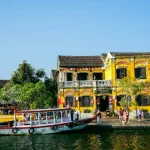
📷 Featured image by Roshana Brown on Unsplash.