💰 Click here to see Vietnam Budget Breakdown
💰 Prices updated: November, 2026. Budget figures are estimates — always verify before travel.
Exchange Rate: $1 USD = ₫25,797.29
Daily Budget (per person)
Shoestring: ₫700,000 – ₫1,100,000 ($27.13 – $42.64)
Mid-range: ₫1,500,000 – ₫2,800,000 ($58.15 – $108.54)
Comfortable: ₫3,000,000 – ₫5,500,000 ($116.29 – $213.20)
Accommodation (per night)
Hostel/guesthouse: ₫120,000 – ₫470,000 ($4.65 – $18.22)
Mid-range hotel: ₫700,000 – ₫1,800,000 ($27.13 – $69.77)
Food (per meal)
Budget meal: ₫40,000.00 ($1.55)
Mid-range meal: ₫150,000.00 ($5.81)
Upscale meal: ₫1,000,000.00 ($38.76)
Transport
Single metro/bus trip: ₫10,000.00 ($0.39)
Monthly transport pass: ₫500,000.00 ($19.38)
Most first-timers book a Ha Long Bay tour, step off the bus in a car park full of identical white boats, and wonder how they ended up in a queue instead of a postcard. In 2026 the bay is still spectacular, but the experience depends heavily on where you sleep, where your boat leaves from, and which part of the water you sail through. This guide explains the places around the bay so you can choose well.
How Ha Long Bay and Ha Long City Fit Together
“Ha Long” means two things. Ha Long City is the busy port city in Quang Ninh Province. Ha Long Bay is the UNESCO-listed seascape of roughly 1,600 limestone islands just offshore. The city sits on the bay’s northern shore and is split in two by the Bai Chay Bridge: Bai Chay to the west and Hon Gai to the east.
Beyond the main bay are two neighbours that many travellers now prefer. Bai Tu Long Bay lies to the northeast and has similar scenery with far fewer boats. Lan Ha Bay is to the south, around Cat Ba Island, in Hai Phong. Since 2023 the wider Ha Long–Cat Ba area has been recognised by UNESCO as one heritage site. Knowing this helps when a tour company says “Ha Long Bay cruise” and means Lan Ha.
Bai Chay: The Tourist Strip
Bai Chay is where most visitors land. It is a wide seafront district of high-rise hotels, souvenir shops, karaoke bars and seafood restaurants. It is not charming, but it is convenient. You can walk to the ferry terminals, find an ATM in two minutes, and eat at midnight.
The main attraction on land is Sun World Ha Long, a theme park with the Queen Cable Car and the Sun Wheel. The cable car ride over the bridge and bay gives you a free preview of the karst scenery. Near the park, the night market opens after dark. You smell grilled squid and sugarcane juice before you see the stalls, and the sound is a mix of vendors calling out and music from the beach promenade.
Stay in Bai Chay if you have one night on land, an early boat departure, or a late bus back to Hanoi. Choose a hotel on the streets behind the main road, since the seafront rooms can be noisy at weekends.
Hon Gai: The Local Side
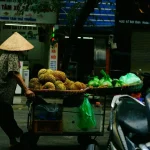
Cross the bridge to Hon Gai and the atmosphere changes. This is the older working harbour, with fishing boats, coal-era buildings and neighbourhood life that does not revolve around tourists. In the early morning, scooters crowd the streets near Ha Long Market 1, and stalls sell live crab, fresh squid and dried seafood.

This is the best area for local food. Look for chả mực (hand-pounded squid cakes), served hot with rice noodles, and for simple seafood restaurants where you point at what you want and pay by weight. Always ask the price per kilogram before they weigh it. Locals eat here for 50,000–100,000 VND ($2–4) a meal.
Hon Gai has fewer hotels and less English, but it suits travellers who want a real city feel. Allow 15–25 minutes by taxi or Grab to Bai Chay.
Bai Tho and Tuan Chau: Quieter Pockets
Bai Tho Mountain rises between the two halves of the city. A stepped path climbs to a viewpoint, and the walk takes about 20–30 minutes at an easy pace. From the top you see the bay, the bridge and the harbour at once. Go in the late afternoon, when the air cools and the light turns the water gold. It is one of the few free activities in the city that is worth your time.
Tuan Chau Island is a short drive southwest of Bai Chay, connected to the mainland by a causeway. It holds a marina where many cruises board, plus resorts and a few entertainment venues. It feels more like a resort enclave than a neighbourhood, so it suits families and travellers who want a calm base and a short walk to the boats. There are few local restaurants, so you will probably eat at the hotel.
Day Trip, Overnight Cruise or Land Stay?
This is the biggest decision for first-timers, so be honest about your time.
Day trip (5–6 hours on the water)
A day trip from Hanoi means about five hours on the road, which leaves you tired and rushed. Boat time is usually 4–5 hours. It works if you only have a single free day, but you will see the bay at its busiest.
Overnight cruise (2 days, 1 night)
This is the best choice for most people. You board around noon, sail through the karsts, kayak or visit a cave, and sleep on the water. The morning is the highlight: mist sits low between the rocks, the engines are silent, and the bay is calm. Ask for itineraries in Bai Tu Long or Lan Ha Bay if you want fewer crowds.

Land stay in Ha Long City
Staying on land and taking a day boat gives you more flexibility and is cheaper. It also lets you enjoy Hon Gai’s food and Bai Tho’s viewpoint. It works best if you are travelling slowly or have a tight budget.
Getting There in 2026
The expressway from Hanoi to Ha Long has made the trip much easier. Distances are about 160 km, and the drive takes 2.5 to 3 hours in normal traffic, though Friday afternoons and holiday weekends can add an hour.
- Limousine van: The most popular option. Vans leave from central Hanoi and drop you at your Bai Chay hotel or the boat terminal. Expect 250,000–350,000 VND ($10–14) one way.
- Public bus: Cheaper, at about 120,000–180,000 VND ($5–7), from Hanoi’s Gia Lam and My Dinh bus stations. It is slower, and you will need a taxi from the Ha Long bus station.
- Private car: About 1.8–2.8 million VND ($72–112) each way. It is good value for groups of three or four.
- Cruise transfers: Most overnight cruises include round-trip transport from Hanoi. Check whether it is a shared bus or a van.
- By air: Van Don International Airport is about 50–60 km east of Ha Long and connects by expressway. Flight options are limited, so check current schedules before planning around it.
For Cat Ba and Lan Ha, you can take a ferry and bus combination from Hai Phong, or a speedboat from Tuan Chau to Gia Luan harbour on Cat Ba. Check the tide and weather before booking a non-refundable ticket.
When to Go
The seasons matter more here than in southern Vietnam.
- October to early December: Clear skies, comfortable temperatures of 20–27°C and good visibility. Probably the best window.
- March to April: Mild, 18–26°C, but often misty with drizzle. The mist can look beautiful, though photos may look flat.
- December to February: Cold and grey, 10–16°C. Bring a jacket, since the deck is windy at night. Crowds are smaller.
- May to September: Hot and humid at 30–35°C, with the highest risk of storms and typhoons. It is the busiest season for domestic tourists, so July and August are packed.

2026 Budget Reality
Prices rise at weekends and during holidays like Tet and 30 April–1 May. The figures below are typical 2026 ranges, at roughly 25,000 VND per US dollar.
Budget
- Hostel or small guesthouse: 250,000–500,000 VND ($10–20) per night
- Day boat tour: 600,000–900,000 VND ($24–36)
- Local meals: 50,000–100,000 VND ($2–4)
Mid-range
- 3-star hotel: 800,000–1.8 million VND ($32–72) per night
- 2-day, 1-night cruise: 3–4.5 million VND ($120–180) per person
- Seafood dinner: 300,000–600,000 VND ($12–24) per person
Comfortable
- 4–5 star resort: 2.5–6 million VND ($100–240) per night
- Premium cruise with balcony cabin: 6–12 million VND ($240–480) per person
- Private car and guide: 2–3 million VND ($80–120) per day
What Has Changed Since 2024
Transport is faster, with better expressway links between Hanoi, Hai Phong and Quang Ninh, and Grab now works reliably in Ha Long City. Authorities have continued to push cruises toward less crowded areas such as Bai Tu Long and Lan Ha Bay, and to enforce rules on waste and boat numbers. The wider UNESCO listing also means more attention to environmental limits. Vietnam’s e-visa lasts up to 90 days, so a bay trip fits easily into a longer route north. Many cruise companies now accept online payment and offer clearer refund terms than a few years ago, but read them anyway.
Frequently Asked Questions
How many days do you need for Ha Long Bay?
Two days and one night is the best format. You get the afternoon light, a night on the water and a calm morning without the day-trip crowds. A one-day trip is possible from Hanoi but tiring. Add a third day if you want Hon Gai, Bai Tho or Cat Ba.
Is Ha Long Bay worth visiting in 2026?
Yes, if you plan well. The scenery is still among Vietnam’s best, but the busiest areas feel crowded. Choose an overnight cruise, avoid peak summer weekends, and consider Bai Tu Long or Lan Ha Bay for quieter water and more space.
What is the best way to get from Hanoi to Ha Long Bay?
A limousine van is the easiest option for most travellers. It takes about 2.5 to 3 hours, drops you near your hotel or the terminal, and costs roughly 250,000–350,000 VND. If you book a cruise, the transfer is usually included.
Where should I stay in Ha Long City?
Bai Chay is best for convenience, with hotels, restaurants and boat access. Hon Gai suits travellers who want local food and a quieter feel. Tuan Chau works for families wanting a resort setting. Most visitors stay on a cruise instead of in the city.
Is Ha Long Bay safe, and can boats be cancelled?
The bay is generally safe, and cruise boats must follow safety rules. Bad weather can lead to cancelled departures, especially from June to September. Pick an operator with a clear rescheduling or refund policy, and check the forecast a couple of days before you travel.
Explore more
Ha Long Bay Travel Tips: Your Essential Guide for a Perfect Trip
Ha Long Bay Nightlife Guide — Best Bars and Clubs
Where to Eat in Ha Long Bay: The Ultimate Food Guide
📷 Featured image by snap shoot on Unsplash.