On this page
- The Dong and the 2026 Exchange Rate
- Cash vs Digital: What to Carry
- ATMs: Fees, Limits, and the Exact Steps
- Cards, Contactless, and the DCC Trap
- E-Wallets and VietQR: What Foreigners Can Really Use
- Opening a Local Bank Account
- Moving Money In and Out of Vietnam
- Changing Cash: Gold Shops, Banks, and the Passport Rule
- Tipping Without Overthinking It
- 2026 Budget Reality: Budget, Mid-Range, and Comfortable
- Common Mistakes to Avoid
- Frequently Asked Questions
💰 Click here to see Vietnam Budget Breakdown
💰 Prices updated: October, 2026. Budget figures are estimates — always verify before travel.
Exchange Rate: $1 USD = ₫25,964.41
Daily Budget (per person)
Shoestring: ₫650,000 – ₫1,550,000 ($25.03 – $59.70)
Mid-range: ₫1,800,000 – ₫3,900,000 ($69.33 – $150.21)
Comfortable: ₫5,200,000 – ₫9,100,000 ($200.27 – $350.48)
Accommodation (per night)
Hostel/guesthouse: ₫120,000 – ₫350,000 ($4.62 – $13.48)
Mid-range hotel: ₫780,000 – ₫1,850,000 ($30.04 – $71.25)
Food (per meal)
Budget meal: ₫60,000.00 ($2.31)
Mid-range meal: ₫250,000.00 ($9.63)
Upscale meal: ₫800,000.00 ($30.81)
Transport
Single metro/bus trip: ₫10,000.00 ($0.39)
Monthly transport pass: ₫300,000.00 ($11.55)
Most digital nomads in Vietnam lose money in small ways. A 1-3% foreign fee on every card tap, a flat ATM charge each time you withdraw, a bad rate at the airport. Over three or six months, these leaks add up to a real monthly bill. Meanwhile, Vietnam has moved fast toward QR codes and e-wallets since 2024, but cash still matters in many places. This guide shows you how to combine cards, cash, e-wallets, and a local bank account so you keep more of your income while you work from Vietnam in 2026.
The Dong and the 2026 Exchange Rate
The official currency is the Vietnamese Dong (VND). It is non-convertible outside Vietnam, so you cannot easily exchange it abroad. Spend or convert your leftover dong before you fly home.
As of early 2026, the approximate rate is 1 USD = 24,500 VND to 25,000 VND. Rates change daily, so check a reputable source before any large exchange.
Banknotes are polymer and come in 1,000, 2,000, 5,000, 10,000, 20,000, 50,000, 100,000, 200,000, and 500,000 VND. Coins are rarely used as of 2026 and have largely been phased out. The notes look similar in colour, especially 10,000 and 500,000 at a glance. Check the number in the corner every time you pay in cash.
Cash vs Digital: What to Carry
Since 2024, digital payments have accelerated sharply. In urban centres in 2026, e-wallets and QR codes are the preferred way to pay for retail, dining, and services. Cash still wins in several situations:
- Small street vendors, local markets, and small independent shops
- Regular taxis (Grab accepts digital payments)
- Remote areas where card terminals or internet may be limited
- Local services such as motorbike repair and informal guesthouses
Carry a mix of both. A practical long-stay habit is to keep a small cash float for markets and street food, and use cards or QR for everything else. At a sidewalk coffee stall, you will often hear a small speaker chirp the amount received the moment someone scans the QR code, while the glass of cà phê sữa đá clinks with ice. That sound is the new normal in Vietnam’s cities.
ATMs: Fees, Limits, and the Exact Steps
ATMs are widely available in cities and major towns. Most accept international Visa, Mastercard, JCB, and UnionPay cards. American Express is less common. Major banks with ATMs include Vietcombank, BIDV, Agribank, Sacombank, Techcombank, VPBank, MBBank, and HSBC Vietnam.
ATM fees in 2026
Most Vietnamese banks charge 40,000 VND to 60,000 VND (about 1.60 USD to 2.40 USD) per international card withdrawal:

- Vietcombank: about 50,000 VND per transaction
- BIDV: about 50,000 VND per transaction
- Agribank: about 40,000 VND per transaction
- Sacombank: about 40,000 VND per transaction
- Techcombank: about 60,000 VND per transaction
- HSBC Vietnam: no local ATM fee for HSBC Premier/Advance customers. For other cardholders, a fee may apply, so check the screen before you confirm.
Your own bank may add a foreign transaction fee (typically 1-3%) and a flat withdrawal fee on top.
Withdrawal limits
Most Vietnamese ATMs cap each transaction at 2,000,000 VND to 3,000,000 VND (about 80 USD to 120 USD). Some machines, such as Citibank and HSBC, may allow up to 5,000,000 VND (about 200 USD), but they are less common. Your home bank may also set its own daily limit.
Step by step
- Insert your card.
- Select “English” as the language.
- Enter your 4-digit PIN.
- Select “Withdrawal” (Rút tiền).
- Choose “Savings Account” (Tài khoản tiết kiệm) or “Credit Card” (Thẻ tín dụng) if prompted. For debit cards, “Savings Account” is usually correct.
- Enter the amount in VND. Stick to common denominations if possible.
- Confirm the transaction.
- Collect your cash, then your card, and finally the receipt.
Cards, Contactless, and the DCC Trap
Visa, Mastercard, and JCB are widely accepted at supermarkets such as Aeon, Lotte Mart, and WinMart, as well as shopping malls, larger restaurants, hotels, and many cafes. American Express is accepted mainly at higher-end places.
Most new POS terminals now have NFC readers, so you can tap with a compatible card or a phone wallet such as Apple Pay or Google Pay. This is increasingly common in urban areas by 2026. The NAPAS network (National Payment Services of Vietnam) has also expanded its interoperability, which may help some foreign cards process more smoothly. Do not count on it, and test your card before relying on it.
Two rules protect your money at the terminal:
- Expect a foreign transaction fee. Your home bank will likely charge 1-3% on every purchase in VND. For a long stay, a card with low or no foreign transaction fees makes a real difference.
- Decline Dynamic Currency Conversion (DCC). If the terminal offers to charge you in your home currency, such as USD, choose VND. DCC almost always gives a worse exchange rate.
E-Wallets and VietQR: What Foreigners Can Really Use
E-wallets are the most popular digital payment method in Vietnam. You will see them from large retailers down to small street food stalls, usually through a QR code taped to the cart.
- MoMo: the market leader (momo.vn)
- ZaloPay: linked to the Zalo messaging app (zalopay.vn)
- ViettelPay: backed by the military-owned telecom company Viettel (viettelpay.vn)
- Other notable apps include Moca (integrated with Grab) and VNPay.
The foreigner problem
A full-featured MoMo, ZaloPay, or ViettelPay account typically requires a local Vietnamese bank account. There has been progress since 2024. By 2026, MoMo and ZaloPay offer limited functionality that lets foreigners link an international Visa or Mastercard for payments at select merchants, often with higher transaction fees or limits. Full features, such as P2P transfers and bill payments, still need a local bank account. Because the exact features and fees change, check the in-app terms before you rely on card linking.
General setup with a local bank account (MoMo or ZaloPay)
- Download the app from Google Play or the Apple App Store.
- Register with a local Vietnamese phone number.
- Verify your identity (KYC) with your passport, and possibly a temporary residence card for full functionality. This step can be complex without a local bank account or long-term visa.
- Link your local Vietnamese bank account.
- Top up from your linked account, or with cash at a MoMo or ZaloPay partner store.
- To pay, scan the merchant’s QR code, enter the amount, and confirm.
VietQR
VietQR is a standardised QR payment system launched by the State Bank of Vietnam. Many banks support it directly in their mobile banking apps, so you can pay without a separate e-wallet. Merchants often display one QR code that works with multiple banking apps and wallets. Once you have a local bank account, VietQR is often the easiest way to pay.
Opening a Local Bank Account
If you stay several months or more, a local account is highly recommended. It lets you pay rent and utilities without constant foreign transaction fees.

What you need in 2026
- Passport: valid for at least 6 months
- Visa: a long-term visa (such as a business visa, investor visa, or a valid temporary residence card). Tourist visas are generally not enough for a full account, though some banks may offer limited prepaid card options.
- Temporary Residence Card (TRC, Thẻ Tạm Trú): often the most important document, especially at major local banks
- Local phone number: essential for verification and mobile banking
- Proof of address: sometimes required, such as a rental contract
Which bank
International banks are generally more familiar with foreign customers and offer English-speaking staff: HSBC Vietnam (hsbc.com.vn) and Shinhan Bank Vietnam (shinhan.com.vn). Citibank’s retail operations are being phased out in some markets, so confirm its current status in Vietnam before you plan around it.
Local banks such as Vietcombank (vietcombank.com.vn), Techcombank (techcombank.com.vn), and Sacombank (sacombank.com.vn) work very well once the account is open. They may have stricter requirements for foreigners, and most still want a TRC.
Local transfers
Domestic transfers run on Napas 247 and are usually instant through the bank app. Fees range from 0 VND to 11,000 VND (about 0.45 USD), depending on the bank and the amount. Many banks make instant transfers free under a threshold, for example 50,000,000 VND.
Moving Money In and Out of Vietnam
Most nomads earn in a foreign currency, so this part matters more than any ATM.
- Inbound by bank: SWIFT transfers to your Vietnamese account work, but both the sending and receiving banks charge fees.
- Inbound by app: Wise (wise.com), Remitly (remitly.com), and WorldRemit (worldremit.com) are popular and often give better rates and lower fees than bank transfers. They can pay VND into a local bank account, or as cash pickup.
- Outbound: sending money out of Vietnam usually requires proof of income or the purpose of the transfer, under State Bank of Vietnam regulations. These rules remain relatively strict in 2026.
Because outbound transfers are harder, do not leave large savings sitting in a Vietnamese account. Keep your main funds abroad and move over what you need each month.
Changing Cash: Gold Shops, Banks, and the Passport Rule
If you bring USD, EUR, GBP, or AUD, here is where to exchange:
- Gold shops (Tiệm Vàng): often slightly better than banks, especially for larger amounts. Choose reputable ones in city centres, such as Hanoi’s Old Quarter or Ho Chi Minh City’s District 1. They are officially licensed to exchange currency.
- Banks: competitive and secure. Bring your passport.
- Hotels: generally less favourable.
- Airports: the worst rates. Change only a small amount for the first taxi or Grab ride.

Rates are displayed clearly, so compare two or three places before changing a larger sum. One 2026 point to know: rules for non-bank exchangers such as gold shops have become stricter. Licensed exchangers must record customer details and report transactions, so always bring your passport. Unlicensed exchanges are illegal and should be avoided.
Tipping Without Overthinking It
Tipping is not mandatory in Vietnam, but it is increasingly appreciated in tourist areas and at higher-end places.
- Local eateries: no tip expected.
- Mid-range and high-end restaurants: a 5-10% service charge may already be on the bill. If not, 5-10% is fair for good service.
- Hotels: bellhops 20,000-50,000 VND, housekeepers 50,000 VND per night.
- Tour guides: 100,000-200,000 VND per person per day.
- Private car drivers: 50,000-100,000 VND per day.
- Taxi and Grab drivers: round up the fare.
- Spas and massage: 50,000-100,000 VND, or 10-15% of the service cost.
2026 Budget Reality: Budget, Mid-Range, and Comfortable
These figures are illustrative. Prices vary by city, season, and your choices.
Budget tier
- Local meal (cơm bình dân or phở): 30,000-70,000 VND (about 1.20-2.80 USD)
- Coffee (cà phê sữa đá): 20,000-40,000 VND (about 0.80-1.60 USD)
- Tourist SIM from Viettel, Mobifone, or Vinaphone, with 30GB for 30 days: 150,000-250,000 VND (about 6-10 USD)
Mid-range tier
- Furnished 1-bedroom apartment in Ho Chi Minh City or Hanoi (District 1, Binh Thanh, Ba Dinh, Tay Ho): 10,000,000-20,000,000 VND per month (about 400-800 USD)
- Hanoi to Da Nang train, soft sleeper berth in a 4-berth cabin (about 16-18 hours): 900,000-1,300,000 VND (about 36-52 USD). Book at dsvn.vn.
Comfortable tier
- Upper end of the apartment range, around 20,000,000 VND (about 800 USD) per month in central districts
- Higher-end restaurants, where a 5-10% service charge may be added
- Regular tips for guides and drivers, at the rates in the tipping section above
Fees matter on top of these prices. A single 50,000 VND ATM fee equals a whole local meal at the cheaper end.
Common Mistakes to Avoid
- Withdrawing small amounts often. Each withdrawal triggers the same flat fee at the Vietnamese bank and possibly your own bank too.
- Accepting DCC. Always pay in VND.
- Arriving without a cash float. Markets, street vendors, and regular taxis still run on cash.
- Assuming a tourist visa opens a bank account. Most full accounts need a long-term visa or TRC.
- Expecting full e-wallet access with a foreign card. Card linking is limited and P2P transfers still need a local account.
- Changing money without a passport or at unlicensed spots. Rules are stricter in 2026, and unlicensed exchange is illegal.
- Parking large savings in Vietnam. Outbound transfers need documentation, so move money in as you need it.
- Exchanging a lot at the airport. It has the weakest rates.

Frequently Asked Questions
Can digital nomads open a bank account in Vietnam on a tourist visa?
Generally not a full account. Banks usually want a long-term visa or a Temporary Residence Card, plus a passport valid for at least 6 months and a local phone number. Some banks may offer limited prepaid card options to tourist visa holders, so ask at the branch.
What is the cheapest way to get cash in Vietnam?
Use an ATM with a lower fee, such as Agribank or Sacombank at about 40,000 VND, and withdraw the maximum allowed, usually 2,000,000 to 3,000,000 VND. Fewer, larger withdrawals reduce flat fees. Your home bank may also charge 1-3% plus its own fee.
Can foreigners use MoMo or ZaloPay?
Partly. By 2026, MoMo and ZaloPay let foreigners link a Visa or Mastercard for payments at select merchants, often with higher fees or limits. Full features such as P2P transfers and bill payments still require a local Vietnamese bank account, a local phone number, and identity verification.
Where is the best place to exchange money in Vietnam?
Licensed gold shops in city centres, such as Hanoi’s Old Quarter and Ho Chi Minh City’s District 1, often give slightly better rates than banks. Banks are secure and competitive. Avoid airports and hotels except for small amounts. Always bring your passport, since exchangers must record customer details.
Should I tip in Vietnam?
Tipping is not required, but it is appreciated in tourist areas. Skip it at local eateries, check for a 5-10% service charge at upscale restaurants, and round up taxi or Grab fares. Guides typically receive 100,000-200,000 VND per person per day, and drivers 50,000-100,000 VND per day.
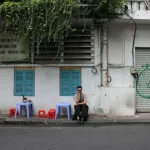
📷 Featured image by Ngwyren Tan Dinh on Unsplash.