On this page
- Why Small VND Bills Still Rule in 2026
- Which Denominations to Carry — and Why Each One Matters
- Getting Cash: ATMs Step by Step, Fees, and Limits
- Currency Exchange: Where to Get the Best Rate
- When Plastic Actually Works — and Where It Fails
- Tipping in Vietnam: What to Pay, Who to Pay, and How Much
- 2026 Budget Reality: What Things Actually Cost in Small Bills
- Common Mistakes Travelers Make with VND Cash
- Frequently Asked Questions
💰 Click here to see Vietnam Budget Breakdown
💰 Prices updated: October, 2026. Budget figures are estimates — always verify before travel.
Exchange Rate: $1 USD = ₫25,964.41
Daily Budget (per person)
Shoestring: ₫650,000 – ₫1,550,000 ($25.03 – $59.70)
Mid-range: ₫1,800,000 – ₫3,900,000 ($69.33 – $150.21)
Comfortable: ₫5,200,000 – ₫9,100,000 ($200.27 – $350.48)
Accommodation (per night)
Hostel/guesthouse: ₫120,000 – ₫350,000 ($4.62 – $13.48)
Mid-range hotel: ₫780,000 – ₫1,850,000 ($30.04 – $71.25)
Food (per meal)
Budget meal: ₫60,000.00 ($2.31)
Mid-range meal: ₫250,000.00 ($9.63)
Upscale meal: ₫800,000.00 ($30.81)
Transport
Single metro/bus trip: ₫10,000.00 ($0.39)
Monthly transport pass: ₫300,000.00 ($11.55)
Vietnam’s payment landscape has changed fast — QR codes on café tables, tap-to-pay at supermarkets, Grab rides charged to your Visa. Travelers arriving in 2026 sometimes assume they can leave the cash at home. Then they try to pay VND 25,000 for a bowl of bún bò Huế with a 500,000-bill and the vendor shakes their head. No change. That moment happens to almost every first-time visitor, and it is entirely avoidable. This guide covers everything you need to know about handling cash and payments in Vietnam so small-change problems never slow you down.
Why Small VND Bills Still Rule in 2026
Vietnam’s push toward a cashless economy is real. Government policy, bank promotions, and app-driven incentives have driven mobile wallet adoption sharply upward since 2024. But that growth is concentrated in cities, inside air-conditioned shops, and among customers who already have Vietnamese bank accounts. Step outside that ecosystem — which travelers do constantly — and cash is still king.
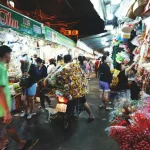
Street food vendors at a morning market in Hội An, xe ôm drivers waiting outside a train station, women selling fruit from bicycle baskets on the side of Highway 1, the ticket booth at a local pagoda — none of these accept cards. Many have never been asked. The sizzle of bánh xèo batter hitting a clay pot, the vendor holding out her hand for exact change while her other hand stirs the filling — that transaction is cash only, and it will be for years to come.
The practical problem is not just having cash. It is having the right cash. Handing over a VND 500,000 note (roughly USD 20) for a VND 30,000 coffee means asking a small vendor to hand back VND 470,000 in a mix of notes they may not have, especially first thing in the morning before other customers have paid. This creates genuine awkwardness, delays, and sometimes the vendor simply cannot complete the sale.
Rural and remote areas compound this. Outside of Da Nang, Hanoi, Ho Chi Minh City, and established tourist towns, ATMs are sparse and card terminals are uncommon. Cash is not a backup option in these places — it is the only option.
Which Denominations to Carry — and Why Each One Matters
Not all VND notes are equally useful. Here is how to think about each tier:
- VND 10,000 and VND 20,000: Essential for street food, local bus fares, temple entrance fees, and tipping small amounts. These are the notes that make vendors smile. Always have at least ten of each.
- VND 50,000: The workhorse denomination. Covers most street food meals, short xe ôm rides, a bottle of water at a roadside stall, and small market purchases. This is the note you will reach for most often.
- VND 100,000: Good for mid-priced street meals, local café drinks, short taxi rides, and market haggling where you need to pay quickly. Vendors can usually make change from this.
- VND 200,000 and VND 500,000: Useful for larger purchases — pharmacy runs, supermarkets, paying a guesthouse — but always break these at a convenience store, supermarket, or restaurant where change is guaranteed before heading into markets or rural areas.

Getting Cash: ATMs Step by Step, Fees, and Limits
ATM coverage in urban Vietnam is solid in 2026. Vietcombank, BIDV, Agribank, Techcombank, VPBank, and Sacombank all operate machines that accept Visa, Mastercard, and American Express, with English-language menus.
- Find the right machine. Stick to ATMs attached to bank branches during daylight hours. Avoid standalone machines in poorly lit areas.
- Insert your card and select English. All major bank ATMs offer English as the first language option.
- Choose Withdrawal (Rút Tiền). Enter your 4-digit PIN and cover the keypad with your other hand.
- Enter the amount. Most machines cap a single transaction at VND 2,000,000–3,000,000 (approximately USD 80–120). Your card’s daily limit from your home bank will also apply, typically VND 10,000,000–20,000,000 (USD 400–800).
- Collect cash, then card. The machine returns your card after dispensing cash. Many travelers forget it at this step — do not.
Fees to expect in 2026: Vietnamese bank ATMs charge international cardholders an operator fee. Vietcombank charges around VND 30,000, Agribank around VND 25,000, and some private banks up to VND 40,000 per transaction (approximately USD 1.00–1.60). Your home bank will also likely add its own international withdrawal fee of 1–3% of the amount, plus currency conversion charges. To minimize fees, withdraw larger amounts less frequently rather than small amounts repeatedly.
Currency Exchange: Where to Get the Best Rate
The airport exchange counter is convenient on arrival but offers the worst rates. You do not need to exchange much at the airport — enough for a taxi or airport bus and a meal will do. Then find a better rate in the city.

Gold shops (tiệm vàng) are Vietnam’s best-kept exchange secret. These licensed dealers offer rates that frequently beat banks and are faster. You will need your passport. Hà Trung Street in Hanoi and Lê Thánh Tôn Street in Ho Chi Minh City are well-known concentrations of reputable shops.
Banks (Vietcombank, BIDV, Agribank) offer competitive rates with the advantage of being a regulated environment. Bring your passport and visa. Expect 15–30 minutes for the process including form-filling.
Hotels are convenient but mark up the rate noticeably. Use them only in a pinch.
As of 2026, the USD to VND rate generally sits in the range of VND 24,000–25,500 per dollar, though this fluctuates. Always count your VND carefully before stepping away from any exchange counter. Recount it a second time. Errors happen, and once you leave the counter, they are difficult to dispute.
When Plastic Actually Works — and Where It Fails
Contactless cards (Visa, Mastercard, Amex) work reliably in 2026 at large supermarkets such as Lotte Mart, Aeon Mall, and WinMart; international hotel chains; department stores; and high-end restaurants and cafes. Major tourist attractions in cities increasingly have card-enabled ticket counters.
Vietnam Railways tickets can now be booked online at dsvn.vn using international Visa or Mastercard with better reliability than in 2024, though some foreign banks still flag the transaction. A 2–3% payment processing fee applies online. At major train stations, contactless card payment at ticket windows has also expanded since 2024.
Mobile wallets — MoMo, ZaloPay, ViettelPay — are everywhere on QR codes at shops and restaurants, but they are built around Vietnamese bank accounts. International tourists cannot meaningfully use them without a local account. Some limited direct linking of international Visa/Mastercard to these apps exists in 2026 for in-app payments at specific merchants, but it is not consistent and often carries extra fees. For practical purposes, treat mobile wallets as off-limits unless a local friend assists you.
Grab ride-hailing accepts international cards linked to your Grab account, making it the easiest card-friendly transport option. But traditional xe ôm drivers and local buses remain cash only — exact change preferred for buses.
Tipping in Vietnam: What to Pay, Who to Pay, and How Much
Tipping is not mandatory in Vietnam and carries no social pressure like it does in some Western countries. It is a gesture that is appreciated, particularly where service is genuinely good. Always tip in small VND cash — handing someone a 500,000 note for a tip creates the same change problem described earlier.

- Restaurants and cafes: Higher-end spots often add a 5–10% service charge. If not, VND 20,000–50,000 per person (USD 0.80–2.00) is generous for good service. Casual street food: no tip expected.
- Tour guides: VND 50,000–100,000 per person for a full-day tour (USD 2–4). For multi-day trips, scale up accordingly.
- Drivers: VND 20,000–50,000 for a day of driving (USD 0.80–2.00).
- Spa and massage: VND 50,000–100,000 for a 60–90 minute session (USD 2–4).
- Hotel bellhops and housekeeping: VND 20,000–50,000 per interaction.
- Grab rides: The app has an in-app tipping option after the ride. Rounding up the fare works for taxis.
2026 Budget Reality: What Things Actually Cost in Small Bills
Here is what you should expect to spend using small VND denominations on a typical day in Vietnam in 2026:
Budget tier (backpacker, street food, guesthouses):
- Bowl of phở or bún bò Huế from a street stall: VND 30,000–50,000 (USD 1.20–2.00)
- Bánh mì from a sidewalk cart: VND 20,000–35,000 (USD 0.80–1.40)
- Local coffee at a plastic-chair café: VND 15,000–25,000 (USD 0.60–1.00)
- Short xe ôm ride (2–3 km): VND 20,000–40,000 (USD 0.80–1.60)
- Local bus fare (city): VND 5,000–8,000 (USD 0.20–0.32) — exact coins/small bills required
- Dorm bed per night: VND 150,000–250,000 (USD 6–10)
Mid-range tier (sit-down restaurants, private rooms, occasional taxis):
- Meal at a mid-range restaurant: VND 80,000–200,000 per person (USD 3.20–8.00)
- Vietnamese iced coffee at a branded café: VND 45,000–75,000 (USD 1.80–3.00)
- Grab car ride across the city: VND 60,000–150,000 (USD 2.40–6.00)
- Private guesthouse room per night: VND 400,000–800,000 (USD 16–32)
Comfortable tier (boutique hotels, organised tours, nicer meals):
- Dinner at a tourist-facing restaurant: VND 200,000–500,000 per person (USD 8–20)
- Boutique hotel room per night: VND 1,000,000–2,500,000 (USD 40–100)
- Day tour with guide and transport: VND 500,000–1,500,000 per person (USD 20–60)
- Vietnam Railways soft sleeper (Hanoi–Ho Chi Minh City): VND 1,200,000–2,000,000 (USD 48–80)
Common Mistakes Travelers Make with VND Cash
Even experienced Southeast Asia travelers make these errors in Vietnam:
- Withdrawing only large notes and never breaking them. ATMs dispense high denominations. If you do not actively break them down at supermarkets or convenience stores, you will be stuck with useless bills at markets.
- Relying on hotel exchange rates. The convenience costs you noticeably over a long trip. Gold shops are easy to find and significantly better.
- Assuming QR codes mean card-friendly. Many QR codes at Vietnamese shops link exclusively to local bank apps. Scanning them with your foreign phone does nothing useful.
- Not checking your home bank’s fees before travelling. Some international cards charge 3% on foreign transactions plus a flat fee per ATM withdrawal. A travel card with no foreign transaction fees — such as Wise, Revolut, or Charles Schwab (for US travelers) — saves meaningful money on a longer trip.
- Keeping all cash in one place. Split your cash between your wallet, a hidden money belt, and your bag. Petty theft targeting tourists happens, particularly in busy markets and on crowded city streets.
- Confusing VND 10,000 and VND 200,000 notes. Both are blue-green in tone. Check the number, not just the colour, especially in dim lighting at a night market.

Frequently Asked Questions
Can I use US dollars instead of Vietnamese Dong in Vietnam?
Officially, all transactions in Vietnam must be in VND. Some tourist-facing businesses in places like Hội An or Phú Quốc may quote prices in USD, but legally they must accept VND. Paying in USD often means getting change back at an unfavourable rate. Always use VND for the best value and to avoid confusion.
How much VND cash should I carry per day in Vietnam?
For a budget traveler, VND 300,000–500,000 per day (USD 12–20) covers street food, local transport, and small purchases. Mid-range travelers should carry VND 800,000–1,500,000 (USD 32–60). Always have a buffer of small bills beyond your planned spend — unexpected cash-only situations are common.
Are there good travel cards for minimising ATM and foreign transaction fees in Vietnam?
Yes. Wise and Revolut are popular globally and offer low-fee international withdrawals and competitive exchange rates. US travelers often use Charles Schwab for fee-free ATM withdrawals worldwide. Australian travelers favour Macquarie or HSBC international accounts. Set up your preferred card before leaving home — Vietnamese banks do not offer these products to tourists.
Is it safe to use ATMs in Vietnam in 2026?
Generally yes, provided you use ATMs attached to major bank branches during daylight hours. Card skimming exists but is not widespread at reputable bank ATMs. Always cover the keypad when entering your PIN, check the card slot for anything that looks added or loose, and use your bank’s transaction alerts to monitor activity in real time.
Do Vietnamese street vendors accept contactless payment in 2026?
Almost never. Street food stalls, wet market vendors, roadside hawkers, and small family-run shops (tạp hóa) operate on cash. Some display QR codes, but these link to Vietnamese mobile wallet apps that tourists cannot access without a local bank account. For all street-level transactions, carry small VND bills — there is no reliable workaround in 2026.
📷 Featured image by Jerone Ballarta on Unsplash.