On this page
- History and War Sites That Put Everything in Perspective
- Sacred Spaces and Colonial Architecture You’ll Actually Remember
- Museums Worth Several Hours of Your Time
- Neighborhoods Built for Wandering
- Where to Eat: Street Food Alleys and Market Halls
- The Coffee Stops That Define the City
- Art, Design, and Creative Spaces
- The River: Ferries, Cruises, and Waterfront Life
- After Dark: Bar Streets, Live Music, and Night Markets
- Shopping That Actually Reflects the City
- Day Trips That Are Actually Worth the Travel Time
- Practical Tips for Getting Around in 2026
- 2026 Budget Breakdown: What Things Actually Cost
- Frequently Asked Questions
💰 Click here to see Vietnam Budget Breakdown
💰 Prices updated: August, 2026. Budget figures are estimates — always verify before travel.
Exchange Rate: $1 USD = ₫26,080.50
Daily Budget (per person)
Shoestring: ₫782,415 – ₫1,304,025 ($30.00 – $50.00)
Mid-range: ₫2,086,440 – ₫3,912,075 ($80.00 – $150.00)
Comfortable: ₫5,216,100 – ₫9,128,175 ($200.00 – $350.00)
Accommodation (per night)
Hostel/guesthouse: ₫78,242 – ₫312,966 ($3.00 – $12.00)
Mid-range hotel: ₫521,610 – ₫1,825,635 ($20.00 – $70.00)
Food (per meal)
Budget meal: ₫50,000.00 ($1.92)
Mid-range meal: ₫150,000.00 ($5.75)
Upscale meal: ₫400,000.00 ($15.34)
Transport
Single metro/bus trip: ₫10,000.00 ($0.38)
Monthly transport pass: ₫500,000.00 ($19.17)
Bến Thành Market is fine. But if it’s the centerpiece of your Ho Chi Minh City trip, you’re seeing maybe 5% of what this city actually offers. In 2026, HCMC is moving faster than ever — new metro lines are running, the dining scene has exploded across Districts 3, 4, and Bình Thạnh, and a wave of independent art spaces and specialty coffee shops has completely redrawn the map for curious travelers. This guide gives you 35 genuinely worthwhile things to do, organized by theme so you can build days that make sense rather than zigzagging across 24 districts chasing a listicle.
History and War Sites That Put Everything in Perspective
No city in Southeast Asia carries its 20th-century history as visibly as Ho Chi Minh City. These aren’t places to check off — they’re places that stay with you.
- War Remnants Museum (Quận 3): Still the most visceral war museum in Vietnam. The third floor, with its photography collection from international photojournalists, is genuinely difficult to walk through. Go early — by 10am the tour groups arrive in waves. Entry costs 40,000 VND (roughly USD 1.60).
- Reunification Palace: Less visited than it deserves to be. The basement war room, with its original maps and radio equipment, feels frozen in April 1975. The building itself — all 1960s modernist geometry — is stunning. Allow 90 minutes minimum.
- Cu Chi Tunnels (Ben Dinh site): The lesser-visited Ben Dinh section gives a more authentic experience than Ben Duoc. You can crawl through a 100-metre tunnel section. The heat and darkness are not a simulation — bring water and leave the claustrophobia concerns at home.
- Binh Duong Iron Triangle: Most travelers don’t make it here, but for serious history seekers, this region northwest of the city tells the guerrilla war story from a completely different angle.
Sacred Spaces and Colonial Architecture You’ll Actually Remember
HCMC’s skyline is a collision of French colonial facades, ornate Chinese-Vietnamese pagodas, and glass towers. The contrast is the point.
- Jade Emperor Pagoda (Phước Hải Tự): The carved wooden interior — smoke-darkened, dense with incense — is one of the most atmospheric religious spaces in all of Vietnam. The turtle pond in the courtyard has been home to the same families of turtles for decades. Come on a weekday morning when worshippers outnumber tourists.
- Thien Hau Pagoda (Quận 5): The Cantonese trading community built this in the 19th century. The roof sculptures — intricate ceramic figures depicting sea voyages and mythological scenes — are extraordinary. Cholon’s Quận 5 location puts it deep in the Chinese quarter, making it a natural anchor for a half-day walk.
- Notre-Dame Cathedral Saigon: Still partially under scaffolding in 2026 following ongoing restoration work, but the exterior and the square in front remain compelling, especially at golden hour when the red-brick facade glows. The Central Post Office next door, designed by Gustave Eiffel’s firm, is fully operational and genuinely beautiful inside.
- Giac Lam Pagoda (Tân Bình): Dating to 1744, this is one of the oldest pagodas in the city. The layers of gilded Buddhas stacked floor to ceiling in the main hall feel genuinely ancient. Fewer than a dozen tourists visit on any given morning.

Museums Worth Several Hours of Your Time
The city’s museum scene has improved considerably since the early 2020s. Several venues have completed renovation and installed proper English-language interpretation.
- Ho Chi Minh City Museum (Quận 1): The colonial-era building alone is worth the entry fee. Inside, exhibits trace the city from Khmer settlement through French rule to reunification. The rooftop terrace offers a surprisingly good view across Quận 1.
- Museum of Vietnamese History: Strong on pre-modern Vietnam — Cham sculpture, Óc Eo artifacts, bronze drums from the Đông Sơn culture. A useful counterpoint to the war-heavy narrative most travelers encounter.
- Fine Arts Museum (Bảo Tàng Mỹ Thuật): Three floors of Vietnamese art from the colonial period to contemporary work. The 1929 building, with its yellow-tiled French-Chinese architecture, is as interesting as anything hanging on the walls. Entry is 30,000 VND (USD 1.20).
- Southern Women’s Museum: Recently expanded and often overlooked. Covers the roles of Vietnamese women in war, trade, and culture. Some of the most powerful personal accounts in the city’s entire museum network.
Neighborhoods Built for Wandering
HCMC rewards the traveler who picks a neighborhood and just walks. Each district has a distinct texture, pace, and population.
- Quận 3: Tree-lined streets, French villas converted into cafes and restaurants, and the best-preserved residential colonial architecture in the city. Walk Võ Văn Tần, Trần Cao Vân, and Nguyễn Thị Diệu streets.
- Bình Thạnh — Thảo Điền area: Where expats, artists, and young Vietnamese professionals have built a genuinely interesting neighborhood. The Nhiêu Lộc canal path is now a proper riverside walkway — cycle or walk it at 6am when locals do their morning exercise and the light is low and golden.
- Quận 4: Directly across the canal from Quận 1 but completely different in feel. Dense, local, loud, and home to some of the best street food in the city. The night market on Xóm Chiếu Street gets busy after 7pm.
- Cholon (Quận 5 and 6): The old Chinese quarter. Dry goods wholesalers, herbal medicine shops, dim sum restaurants, and pagodas running back-to-back along narrow streets. It feels like a different city. Budget a full half-day.

Where to Eat: Street Food Alleys and Market Halls
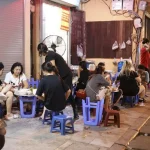
Skip the tourist-facing stalls around Bến Thành and head to where locals actually eat. The hiss of banh xeo batter hitting a blazing cast iron pan on Hẻm 46 Đinh Công Tráng — a lane tucked into Quận 3 — is the kind of sound that follows you home.
- Nguyễn Tri Phương food street (Quận 5): The best banh mi and Vietnamese-Chinese hybrids in the city. Busy from 6am.
- Hẻm 76 Hai Bà Trưng: A legendary alley in Quận 1 known for bún bò Huế and cháo lòng (offal congee). Small plastic stools, open from around 6am to noon.
- Bến Thành Street Food Market (inside the market building, upper floor): Actually better than it sounds — local vendors rather than tourist traps, and the prices are controlled. Good for those who want a clean, air-conditioned introduction to Vietnamese street food.
- Quận 4 night market on Xóm Chiếu: Grilled seafood, ốc (snails cooked a dozen different ways), and chè desserts. Bring cash and arrive hungry.
- Eat Central (Hàm Nghi, Quận 1): A newer food hall format launched in late 2024, with curated vendors across Vietnamese regional cuisines. Clean, well-lit, and genuinely good.
The Coffee Stops That Define the City
Ho Chi Minh City’s cafe culture operates on multiple levels simultaneously. You can spend 20,000 VND (USD 0.80) on a cà phê sữa đá poured into a plastic bag at a sidewalk cart, or 85,000 VND (USD 3.40) on a single-origin pour-over at a specialty roaster. Both are correct answers.
- The Workshop (Lý Tự Trọng, Quận 1): Third-wave, serious coffee, good Wi-Fi, and long tables that fill with laptop workers by 9am. Still the benchmark after a decade.
- Noir. Dining in the Dark: More of an experience than a cafe — dinner in complete darkness, served by visually impaired staff. Unusual, genuinely moving, and the food is actually good.
- Rang Rang Cafe (Quận 3): Old Saigon aesthetic, vintage enamelware, strong cà phê đen. The courtyard fills up on weekend mornings.
- Cộng Cà Phê (multiple locations): The retro-socialist decor is a gimmick, but the coconut cà phê is genuinely excellent and the branches in Quận 3 and Bình Thạnh are less tourist-heavy than the Quận 1 outpost.
- Rooftop cafes on Bùi Viện and around Bến Nghé: Best for the view rather than the coffee quality. Go at dusk when the city lights up and motorbike traffic below becomes a moving river of headlights.

Art, Design, and Creative Spaces
HCMC’s independent creative scene has grown significantly since 2022. Several permanent venues now offer consistent programming worth planning around.
- Factory Contemporary Arts Centre (Quận 2): The city’s most serious contemporary art space. Rotating exhibitions from Vietnamese and international artists, plus film screenings and residency programs. Check the current program before you visit.
- Saigon Creative Hub (various pop-up venues): A loose network of design studios, independent publishers, and makers that runs regular weekend markets. The Thảo Điền iteration is the most established.
- The Old Customs House (Quận 1): A restored colonial building now used as a cultural venue for rotating exhibitions and design events.
- Zero Station (Quận 3): An experimental art space in a repurposed warehouse. Programming is irregular but consistently interesting — follow their social media for current events.
The River: Ferries, Cruises, and Waterfront Life
The Saigon River is the city’s original highway and still one of its best assets. Most travelers see it only from the embankment on Tôn Đức Thắng Street.
- Public ferry to Thủ Thiêm: Now somewhat redundant since the metro bridge opened in 2025, but the 5-minute crossing on the old wooden ferries — which still operate — costs 4,000 VND (USD 0.16) and gives you an unmatched view of the Quận 1 skyline from the water.
- Sunset cruise on the Saigon River: Several operators run 2-hour dinner cruises departing from Bạch Đằng Wharf. Quality varies significantly — the Bonsai Cruise and Saigon Princess have maintained consistent standards. Book directly to avoid overpriced commissions.
- Bach Dang Wharf waterfront: Renovated and extended in 2024, this riverside promenade now runs from the Opera House area south toward Tôn Đức Thắng. Food trucks operate after 5pm on weekends.

After Dark: Bar Streets, Live Music, and Night Markets
HCMC’s nightlife divides cleanly into tourist-facing party zones and a genuinely interesting local scene. Both have their moments.
- Bùi Viện Walking Street: Loud, neon-lit, and relentless. Best for people-watching and cheap beer (bia hơi from 15,000 VND / USD 0.60). The street is pedestrianized from 7pm to midnight Thursday through Sunday. Not the place for a quiet evening but undeniably alive.
- The Vibe rooftop (Quận 1): One of several rooftop bars around the central hotel district with unobstructed city views. Cocktails run 120,000–180,000 VND (USD 4.80–7.20). Most get busy from 7pm.
- Eon Heli Bar (Bitexco Financial Tower, floor 52): The view is the product here. Expensive but unforgettable on a clear night when the city stretches to every horizon.
- Observatory (Quận 1): A proper cocktail bar with a local bartending team that knows what they’re doing. More interesting than most in this price range.
- Live music at Yoko (Quận 1) and The Acoustic Bar (Quận 3): Vietnamese indie bands and covers bands play nightly. Cover charges are modest or zero. The Acoustic Bar in particular has a loyal local following and genuine atmosphere.
- Night markets in Quận 7 (Phú Mỹ Hưng area): Large, clean, and family-oriented. Better for browsing and eating than buying anything of quality, but the energy on a Friday night is excellent.
Shopping That Actually Reflects the City
The best shopping in HCMC isn’t in malls or tourist markets. It’s scattered across specific streets and neighborhoods with very different characters.
- Lê Công Kiều (Antique Street, Quận 1): A short street lined with dealers selling lacquerware, old propaganda posters, French-era ceramics, Cham artifacts, and assorted curios. Prices are negotiable. Quality varies wildly — handle things carefully and buy what you love, not what seems valuable.
- Lê Thánh Tôn (Quận 1): Electronics, phone accessories, and cameras. This street is where locals buy tech, not tourists.
- Tailors in Quận 3: The stretch of Nguyễn Trãi near the Phạm Viết Chánh intersection has several established tailors doing quality work at honest prices. Allow 3–4 days minimum for fittings if you want something custom.
- Fahasa Bookshop (Nguyễn Huệ): The largest chain bookshop in Vietnam. English-language titles are limited but include a good Vietnam section. The stationery floor is excellent.
- Design and lifestyle boutiques in Thảo Điền (Quận 2): Independent clothing designers, homeware, and ceramics from Vietnamese makers. Trần Ngọc Diện Street has become the main cluster. Prices are mid-range to premium but the quality is genuine.

Day Trips That Are Actually Worth the Travel Time
HCMC is a useful base for several genuinely rewarding day trips, though “day trip” sometimes requires an early start.
- Mekong Delta (Mỹ Tho or Bến Tre): About 70–80 kilometres southwest. The standard tour circuit — floating markets, coconut candy factories, river boat rides — is now somewhat scripted, but the landscape itself remains extraordinary. Bến Tre is slightly less touristy than Mỹ Tho. Allow a full day.
- Vũng Tàu: 130 kilometres southeast by road, or 90 minutes by hydrofoil from Bạch Đằng Wharf. A real beach town with good seafood, a French colonial hill area (Núi Nhỏ), and a much more relaxed pace. The hydrofoil runs several daily departures and costs around 250,000 VND (USD 10) each way.
- Núi Bà Đen (Tây Ninh): 100 kilometres northwest. The cable car to the summit of Vietnam’s highest southern mountain now operates a modern gondola system (upgraded in 2024). The Cao Đài Holy See temple at Tây Ninh town is en route and absolutely unlike anything else in the country — the noon ceremony is open to visitors.
- Long An Wetlands: Less than an hour from the city, these bird-rich wetlands are almost unknown on the tourist circuit. A guide is needed but several Saigon-based eco-tour operators offer small-group birding trips.
Practical Tips for Getting Around in 2026
The transport situation in HCMC changed meaningfully in late 2024 and through 2025 with metro lines becoming genuinely useful.
- Metro Line 1: Now fully operational, running from Bến Thành station in central Quận 1 out to Suối Tiên in Quận 9 (Thủ Đức City). Covers a useful corridor for travelers staying in or visiting Thảo Điền and Bình Thạnh. Fares are 12,000–26,000 VND (USD 0.48–1.04) depending on distance. Trains run every 10–12 minutes during peak hours.
- Grab: Still the dominant ride-hailing app. GrabBike (motorcycle) is faster in traffic and costs around 30,000–50,000 VND (USD 1.20–2.00) for most Quận 1 trips. GrabCar runs roughly double. Always confirm the destination in the app before departure.
- xe ôm (motorbike taxis): The unofficial drivers who wait at street corners. Fine for short hops but negotiate the price clearly before getting on. Many travelers find Grab easier for avoiding misunderstandings.
- Walking: More viable than most travelers expect in the Quận 1 core. The pavement quality has improved noticeably since 2023. Cross streets by walking slowly and steadily — the motorbikes will flow around you. Do not dart or stop suddenly.
- Airport transfer: Tân Sơn Nhất International Airport is 7 kilometres from central Quận 1. A Grab car runs 100,000–150,000 VND (USD 4–6). The airport bus (Route 49) costs 20,000 VND (USD 0.80) and takes 30–45 minutes depending on traffic. Metered taxis are fine but agree on the meter before loading luggage.
- Scams to know: The cyclo (pedicab) ride that ends with a wildly inflated price. Shoe shiners who approach and start cleaning without invitation. Taxi drivers at the airport departures level (departures taxis are frequently unlicensed) — use Grab or the official taxi queue at arrivals instead.

2026 Budget Breakdown: What Things Actually Cost
Prices below reflect 2026 conditions. The dong has held relatively stable against USD since 2024, with the current exchange rate at approximately 25,000 VND per 1 USD.
- Budget tier (under 600,000 VND / USD 24 per day): Street food meals at 40,000–80,000 VND each, guesthouse dorm beds in Phạm Ngũ Lão from 150,000–200,000 VND per night, Grab bikes for transport, free entry to most neighborhoods and markets, and 20,000 VND coffee at sidewalk stalls.
- Mid-range tier (600,000–1,500,000 VND / USD 24–60 per day): Private room in a 2–3 star hotel in Quận 1 or Quận 3 (400,000–700,000 VND), restaurant meals at 120,000–250,000 VND, GrabCar between sights, one or two paid museum entries (30,000–60,000 VND each), and specialty coffee at 75,000–90,000 VND per cup.
- Comfortable tier (1,500,000 VND+ / USD 60+ per day): Boutique hotel in Thảo Điền or a 4-star property in Quận 1 (1,200,000–2,500,000 VND per night), upscale Vietnamese restaurant dinners (300,000–600,000 VND per person), private car transfers, rooftop cocktails at 150,000–200,000 VND, and guided tours at 800,000–1,500,000 VND per person.
Frequently Asked Questions
How many days do I need in Ho Chi Minh City?
Three full days covers the main districts and key sights without rushing. Four or five days lets you go deeper — add Cholon, a day trip to the Mekong or Vũng Tàu, and proper time for the cafe and food scenes. Anything under two days is genuinely too short for a city this layered.

Is Ho Chi Minh City safe for solo travelers in 2026?
Generally yes. Violent crime against tourists is rare. The main risks are bag snatching from motorbikes (keep bags on the wall side when walking, not the road side), traffic, and opportunistic scams targeting newcomers near tourist zones. Stay alert, use Grab, and trust your instincts. Solo female travelers navigate the city comfortably with standard precautions.
What is the best area to stay in Ho Chi Minh City?
Quận 1 (District 1) puts you walking distance from most major sights and has the widest range of accommodation. Quận 3 is quieter, more local in feel, and excellent for mid-range stays. Thảo Điền (Quận 2) suits expat-style comfort seekers and those wanting a slower pace with good food and cafes nearby.
Do I need to book attractions in advance?
Most museums and pagodas in HCMC operate on walk-in entry with no advance booking needed. Exceptions include the Cu Chi Tunnels (guided tours book out fast on weekends — book 2–3 days ahead), the Noir. Dining in the Dark restaurant (reservation essential), and river dinner cruises, which should be booked at least a day in advance.
What is the best time of year to visit Ho Chi Minh City?
December through April is the dry season and the most comfortable for sightseeing. January and February align with Tết (Lunar New Year), which is spectacular for atmosphere but causes widespread closures for several days around the holiday. May through November brings afternoon thunderstorms but also fewer tourists and lower prices across accommodation and tours.
📷 Featured image by Vivu Vietnam on Unsplash.