On this page
- The Floating Markets Everyone Talks About — and Why Can Tho Still Delivers in 2026
- Cai Rang vs Phong Dien: Two Markets, Two Completely Different Experiences
- Timing Is Everything: When to Go for the Real Experience
- Getting to Can Tho from Ho Chi Minh City and Beyond
- Navigating the Markets: Boats, Guides, and Avoiding the Overpriced Package
- What to Eat and Drink on the Water
- 2026 Budget Reality: What Everything Actually Costs
- Day Trip or Overnight? An Honest Answer
- Beyond the Markets: What Most Visitors Miss
- Frequently Asked Questions
💰 Click here to see Vietnam Budget Breakdown
💰 Prices updated: October, 2026. Budget figures are estimates — always verify before travel.
Exchange Rate: $1 USD = ₫25,964.41
Daily Budget (per person)
Shoestring: ₫650,000 – ₫1,550,000 ($25.03 – $59.70)
Mid-range: ₫1,800,000 – ₫3,900,000 ($69.33 – $150.21)
Comfortable: ₫5,200,000 – ₫9,100,000 ($200.27 – $350.48)
Accommodation (per night)
Hostel/guesthouse: ₫120,000 – ₫350,000 ($4.62 – $13.48)
Mid-range hotel: ₫780,000 – ₫1,850,000 ($30.04 – $71.25)
Food (per meal)
Budget meal: ₫60,000.00 ($2.31)
Mid-range meal: ₫250,000.00 ($9.63)
Upscale meal: ₫800,000.00 ($30.81)
Transport
Single metro/bus trip: ₫10,000.00 ($0.39)
Monthly transport pass: ₫300,000.00 ($11.55)
The Floating Markets Everyone Talks About — and Why Can Tho Still Delivers in 2026
A fair warning before you plan this trip: if you search “Mekong Delta floating market” in 2026, you’ll find a flood of posts saying the markets are “dying” or “too touristy.” Some of that is true. But it misses the bigger picture. Cai Rang market still moves hundreds of tonnes of wholesale produce every single morning, and Phong Dien still has locals buying their groceries by boat. The trick is knowing which market to visit, when to show up, and how to navigate without getting herded onto an overpriced group tour. This guide gives you that information straight.
Cai Rang vs Phong Dien: Two Markets, Two Completely Different Experiences
Most visitors treat these two markets as interchangeable. They are not.
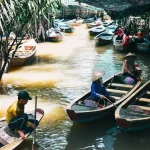
Cai Rang is the big one — a wholesale market sitting about 6 kilometres southwest of Can Tho city centre on the Cai Rang River. It operates at commercial scale. Dozens of large wooden boats cluster together, each one piled high with a single product: watermelons stacked like cannonballs, mountains of pineapples, crates of dragonfruit. The vendors hang a sample of their goods from a tall bamboo pole called a beo hang — this is the market’s visual signature. Wholesalers from across the delta come here to buy in bulk. There are tourists too, but the trading is real and it happens fast.
Phong Dien is smaller, quieter, and about 20 kilometres from the city centre. It draws almost no group tours. The boats are smaller, the sellers are often elderly women, and what’s for sale is everyday produce — vegetables, fruit, rice noodles, live fish. There are fewer photo opportunities but more authentic human moments. If you want to buy a bowl of noodles from a woman who’s been selling from the same boat for 30 years, this is your market.
Serious travellers often visit both on the same morning, starting at Phong Dien before the sun is fully up, then arriving at Cai Rang around 6:30am when wholesale activity peaks.
Timing Is Everything: When to Go for the Real Experience
Both markets are most active between 5:00am and 8:00am. By 9:00am, Cai Rang starts winding down significantly. By 10:00am, it’s largely over. Phong Dien wraps up even earlier — if you’re not on the water by 7:00am, you’ve missed the best of it.
This means your alarm is set for 4:30am at the latest. It sounds brutal, but the reward is arriving on the river while mist still sits on the water and the orange glow of boat lanterns reflects off the surface. That sensory experience — the creak of wooden hulls knocking together, the smell of woodsmoke and river water mixed with overripe fruit — disappears completely once the sun climbs and the day heats up.

In terms of seasons, the dry season (November through April) brings calmer water and easier boat conditions. The wet season (May through October) brings higher water levels that actually make navigation easier in some channels, but afternoon storms can complicate your return journey. The markets run year-round regardless of weather.
In 2026, weekend mornings at Cai Rang bring noticeably more tourist boats than weekdays, particularly on Saturdays when day-trippers from Ho Chi Minh City arrive in large numbers. If your schedule is flexible, aim for a Tuesday or Wednesday.
Getting to Can Tho from Ho Chi Minh City and Beyond
Can Tho sits approximately 170 kilometres southwest of Ho Chi Minh City. In 2026, your main options are:
- By road (bus or private car): The most common choice. The Trung Luong–My Thuan Expressway and the My Thuan–Can Tho Expressway are now both fully operational, cutting travel time from central Ho Chi Minh City to Can Tho down to around 2.5–3 hours in normal traffic. Futa Bus Lines and Phuong Trang (FUTA/Phương Trang) both run comfortable sleeper and seated coaches from Mien Tay Bus Station for around 150,000–180,000 VND (USD 6–7) each way.
- By flight: Can Tho International Airport receives domestic flights from Hanoi and Da Nang. From Hanoi, Vietnam Airlines and Vietjet both serve the route in about 2 hours. It’s rarely necessary to fly from Ho Chi Minh City given the expressway situation.
- By private transfer: If you’re traveling in a group of three or four, splitting a private car from HCMC often works out cheaper than the bus and saves the hassle of terminal connections. Expect to pay around 1,200,000–1,500,000 VND (USD 47–60) for a one-way transfer.
Navigating the Markets: Boats, Guides, and Avoiding the Overpriced Package
The main boat departure point for tourists is Ninh Kieu Pier in central Can Tho. This is also where the most aggressive pricing happens. Touts at the pier in 2026 typically quote 250,000–400,000 VND per hour for a small rowboat or motorised sampan. That’s not unreasonable for a private boat, but confirm the total price and duration before you step on board — some operators quote per person without making that clear.
Group boat tours bundled with a visit to a fruit orchard or rice noodle factory are widely available for 200,000–300,000 VND per person. These can feel rushed and include unnecessary stops designed to sell you things. If your time is limited, a private boat focused purely on the market visit is worth the slightly higher cost.
On the water, vendors will paddle small wooden boats directly to you selling coffee, bánh mì, and fruit. This is perfectly fine — it’s how the market has always worked. You are not obligated to buy, but a coffee bought from a river vendor while drifting past loaded cargo boats is one of those travel moments that stays with you.
What to Eat and Drink on the Water
Floating food vendors at both markets sell a short menu of early-morning staples. The standout is hủ tiếu — a clear-broth rice noodle soup with pork and dried shrimp that is the breakfast of choice across the Mekong Delta. A bowl costs 25,000–40,000 VND (about USD 1–1.50) and is served directly from a pot on the vendor’s boat into whatever bowl you’re handed.
Strong Vietnamese drip coffee with condensed milk is available from floating vendors and costs 15,000–20,000 VND. Drink it while it’s hot — the morning river air is cooler than you expect, especially before sunrise.
Fresh fruit cut to order is another option. Vendors at Cai Rang will often slice open a sample of whatever they’re wholesaling that day and offer it free or for a small fee. Biting into a cold wedge of watermelon at 6am on the river, watching the sun burn off the mist — that’s the Mekong Delta at its best.
Back in Can Tho city, the Ninh Kieu Night Market and the streets around Hai Ba Trung are the best places for dinner. Look for bánh cống (crispy fried taro and shrimp cakes) and lẩu mắm (a fermented fish hotpot that smells confrontational but tastes extraordinary).
2026 Budget Reality: What Everything Actually Costs
Can Tho remains one of the more affordable cities in Vietnam’s south. Here’s a realistic breakdown for 2026:
- Budget accommodation: 180,000–350,000 VND per night (USD 7–14) for a clean guesthouse room in Ninh Kieu district
- Mid-range hotel: 500,000–900,000 VND per night (USD 20–36) — riverside hotels in this bracket are good value
- Comfortable/boutique: 1,200,000–2,000,000 VND per night (USD 47–79) for newer riverside properties with proper amenities
- Private boat hire (2 hours): 300,000–400,000 VND (USD 12–16) if arranged through your accommodation
- Group market tour: 200,000–300,000 VND per person (USD 8–12)
- Breakfast on the water: 40,000–60,000 VND total (USD 1.50–2.50) for noodles and coffee
- Dinner at a local restaurant: 80,000–150,000 VND per person (USD 3–6) for a full meal with rice and two dishes
A solo traveler staying two nights, visiting both markets by private boat, and eating entirely at local spots can expect to spend around 1,500,000–2,000,000 VND (USD 60–80) total excluding transport to Can Tho.
Day Trip or Overnight? An Honest Answer
Technically, you can do Can Tho as a day trip from Ho Chi Minh City. In practice, it’s a poor experience. To catch the markets at their best, you need to be on the water by 5:30am. If you’re coming from HCMC, that means leaving the city by 2:00am or 3:00am — doable, but exhausting and wasteful of the expressway’s new convenience.
One night in Can Tho is the minimum that makes sense. You arrive the afternoon before, explore Ninh Kieu waterfront in the evening, eat well, sleep early, and wake for the markets refreshed. This structure lets you actually enjoy the experience rather than surviving it on no sleep.
Two nights is better. It gives you a second morning to visit whichever market you felt was cut short, explore the city’s French-influenced architecture around the Munirangsyaram Pagoda, and take an afternoon boat ride through the quieter canal villages on the city’s western edge — a completely different water experience from the commercial market scene.
Beyond the Markets: What Most Visitors Miss
Can Tho has a functioning city life that most visitors never engage with because they arrive for the markets and leave by noon. A few things worth staying for:
- Can Tho Museum on Hoa Binh Avenue — a well-maintained local history museum that gives real context to the Mekong Delta’s role in Vietnamese history, including its complex relationship with Khmer culture. Free entry.
- Binh Thuy Ancient House — a 19th-century merchant’s villa that blends French colonial and Vietnamese architectural styles. It was used as a filming location during the French colonial era and is one of the best-preserved private heritage buildings in the south. Entry costs around 20,000 VND.
- Canal village cycling — several guesthouses in 2026 now offer bicycle rental with mapped routes through Cai Rang and Phong Dien districts that take you through village lanes alongside the waterways. This is a grounded counterpoint to the boat-eye view of the same landscape.
- Can Tho University Botanical Garden — understated and often empty, with good shade and a pleasant walk alongside the river in the late afternoon.
Frequently Asked Questions
Are the Can Tho floating markets still worth visiting in 2026?
Yes, but with realistic expectations. Cai Rang remains a genuine wholesale market processing real commercial volume every morning. Phong Dien is small but authentic. The experience is not pristine or untouched — there are tourist boats — but the markets are still operational and worth the early wake-up if you manage your timing correctly.
What time should I arrive at the floating markets?
Aim to be on the water at Phong Dien by 5:30am and at Cai Rang by 6:00–6:30am. Both markets peak before 8:00am and wind down sharply after that. Arriving after 9:00am means you’ll see a fraction of the activity and likely feel the visit wasn’t worth it.
How do I get from Ho Chi Minh City to Can Tho?
The fastest and most practical option in 2026 is the express bus from Mien Tay Bus Station via the completed Trung Luong–Can Tho Expressway, taking roughly 2.5–3 hours and costing around 150,000–180,000 VND. Private car transfers work well for groups of three or more splitting the cost.
Is it better to book a tour or hire a private boat?
A private boat arranged through your accommodation gives you more flexibility and often costs less per person if you’re traveling with one or two others. Group tours are fine if you’re solo on a tight budget, but they follow fixed schedules and include filler stops. A private boat lets you spend more time at whichever market you prefer.
What should I wear and bring to the floating market?
Wear something you don’t mind getting damp — river spray is common on smaller boats. Bring a light jacket or long-sleeved layer for the pre-dawn cold on the water, which surprises most visitors from Ho Chi Minh City. Cash in small denominations is essential — vendors cannot process cards. Sunscreen is important for the return journey once the sun is up.
📷 Featured image by Ben Turnbull on Unsplash.