On this page
- What Ba Be Lake Actually Is (and Why It’s Still Underrated in 2026)
- Getting to Ba Be: Trains, Buses & the 2026 Road Situation
- On the Water: Boating Routes and What You’ll Actually See
- Trekking in the Park: Trails, Waterfalls & Forest Walks
- Homestays at Ba Be: What to Expect and How to Choose
- The Food Scene at Ba Be Lake
- How Long to Spend at Ba Be
- 2026 Budget Reality: What Ba Be Costs
- Practical Tips Before You Go
- Frequently Asked Questions
💰 Click here to see Vietnam Budget Breakdown
💰 Prices updated: October, 2026. Budget figures are estimates — always verify before travel.
Exchange Rate: $1 USD = ₫25,964.41
Daily Budget (per person)
Shoestring: ₫650,000 – ₫1,550,000 ($25.03 – $59.70)
Mid-range: ₫1,800,000 – ₫3,900,000 ($69.33 – $150.21)
Comfortable: ₫5,200,000 – ₫9,100,000 ($200.27 – $350.48)
Accommodation (per night)
Hostel/guesthouse: ₫120,000 – ₫350,000 ($4.62 – $13.48)
Mid-range hotel: ₫780,000 – ₫1,850,000 ($30.04 – $71.25)
Food (per meal)
Budget meal: ₫60,000.00 ($2.31)
Mid-range meal: ₫250,000.00 ($9.63)
Upscale meal: ₫800,000.00 ($30.81)
Transport
Single metro/bus trip: ₫10,000.00 ($0.39)
Monthly transport pass: ₫300,000.00 ($11.55)
Most travellers who make it to northern Vietnam tick off Sapa and Ha Long Bay, then head south. Ba Be Lake sits 240 kilometres North of Hanoi in Bac Kan Province, and it remains genuinely off the mainstream circuit even in 2026 — not because it lacks appeal, but because getting there takes effort. That effort is exactly what keeps it beautiful. If you’ve been burned by overcrowded “hidden gems” that turned out to be anything but, Ba Be is a legitimate exception.
What Ba Be Lake Actually Is (and Why It’s Still Underrated in 2026)
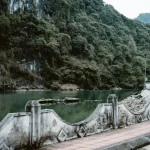
Ba Be is the largest natural freshwater lake in Vietnam, stretching about 8 kilometres long and sitting at roughly 145 metres above sea level inside Ba Be National Park. The name means “three bays” in the Tay language — a reference to the three connected bodies of water that form the lake. Limestone karst peaks rise straight from the water, dense forest hangs over the banks, and on a still morning the whole scene reflects like a mirror. It’s the kind of place that makes you lower your voice without thinking.
The national park covers over 10,000 hectares and is home to more than 400 species of plants, around 300 bird species, and freshwater fish found nowhere else on earth. UNESCO recognised the area as a Ramsar Wetland of International Importance in 2011, and that designation has helped limit large-scale development. In 2026, there is still no luxury resort on the lakeshore. That situation is unlikely to change soon given the protected status, which is good news for travellers who come for nature rather than amenities.
The majority of people living around the lake are Tay ethnic minority communities, and they’ve been running homestays here for over two decades. The relationship between local families and tourism income is one reason the environment has stayed intact.
Getting to Ba Be: Trains, Buses & the 2026 Road Situation
There is no train station near Ba Be. The closest rail connection is Thai Nguyen, which adds unnecessary complexity. The practical options are a direct bus from Hanoi or hiring private transport.
By sleeper bus from Hanoi: Several operators run overnight or early-morning buses from My Dinh Bus Station in Hanoi directly to Cho Ra town, the main gateway to Ba Be. Journey time is roughly 5–6 hours depending on road conditions. As of 2026, the Hanoi–Cho Ra expressway extension opened its final section, cutting what used to be a rough 7-hour drive on National Highway 3 down to a more manageable trip. Tickets cost around 150,000–200,000 VND (roughly USD 6–8).
By private car or motorbike: Many travellers rent a motorbike in Hanoi and ride up over two days, overnighting in Bac Kan city. The scenery through Bac Kan Province on QL3B is excellent — terraced fields, quiet market towns, and almost no tourist traffic. From Cho Ra, it’s another 18 kilometres on a well-paved road to the park entrance at Pac Ngoi village.
Organised tours from Hanoi: Several Hanoi-based tour operators run 2-night or 3-night Ba Be packages that include transport, guide, boat trips, and homestay. These are worth considering if you don’t want to coordinate everything yourself. Prices in 2026 start around 2,500,000 VND (roughly USD 100) per person for a 2-night group tour.
On the Water: Boating Routes and What You’ll Actually See
The boat trip is the centrepiece of any Ba Be visit. Wooden longboats with small motors move quietly through the lake and into the river system that connects the three bays. You can hire a boat through your homestay or at the park office near Pac Ngoi. Rates are set by the park authority: expect to pay around 250,000–350,000 VND (USD 10–14) per boat for a half-day trip, which comfortably fits 4–6 passengers.
The standard route crosses the main lake, passes through a narrow limestone cave called Puong Cave — where tens of thousands of bats roost on the ceiling, and the echo of water dripping echoes around you in the dark — and continues to Dau Dang Waterfall at the far end. The waterfall itself isn’t dramatic by Vietnamese standards, but the river journey to reach it, with forest canopy meeting overhead and kingfishers darting across the water, is the actual attraction.
A longer route takes you to An Ma Island, a small forested island in the middle of the lake where a Tay shrine sits among ancient trees. Floating fishing villages can still be seen along the lake edges, though their number has reduced compared to a decade ago as families have resettled onshore.
Early morning is the best time to be on the water — the mist sits low over the lake, the light is soft, and the tourist boats from other homestays haven’t fully launched yet. If you can negotiate a 6:00 AM departure with your boat operator, the first hour on the lake will be yours almost entirely.
Trekking in the Park: Trails, Waterfalls & Forest Walks
Ba Be is primarily a boating destination, but the park has a growing set of trekking routes for travellers who want more than a boat seat. Trails range from easy village walks to full-day forest hikes requiring a local guide.
The most accessible walk is the 4-kilometre trail from Pac Ngoi village along the lakeshore to the fishing community at Cam Village. The path passes through bamboo groves, over small wooden bridges, and along rice paddies right at the water’s edge. No guide is needed and it takes about 90 minutes each way at a relaxed pace.
For deeper forest, the trail to Bo Lu Waterfall involves about 3 hours of walking through primary jungle, with significant elevation. The forest here is genuinely thick — canopy blocking most sunlight, roots crossing the path, and the constant sound of insects and unseen birds. Hiring a park-certified guide is mandatory for this trail, both for navigation and to comply with park rules. Guides can be arranged through the national park office or your homestay for around 200,000–300,000 VND (USD 8–12) per day.
There are also multi-day trekking options for experienced hikers that loop through Tay villages in the buffer zone around the park. These require advance planning and are best organised through a Hanoi tour operator that works specifically with Ba Be.
Homestays at Ba Be: What to Expect and How to Choose
Pac Ngoi village, right at the park entrance, is the main hub for homestays. Around 20 families offer accommodation here, and several more homestays operate at Cam Village and Bun Village further along the lake. The standard setup is sleeping on a traditional raised wooden stilt house, sharing space with the family, and eating meals prepared in the home kitchen.
Rooms are basic but clean — expect a fan, a mosquito net, and a shared bathroom. Hot water availability varies by family and season. What you’re paying for isn’t hotel amenities; it’s waking up to the sound of water, eating food cooked over a wood fire, and having a family arrange your boat and guide without you having to speak to a park bureaucrat.
The most consistently recommended homestays in Pac Ngoi as of 2026 are operated by families who’ve been in the business since the early 2000s and have English-speaking family members who handle bookings. Ms. Huong’s homestay and Mr. Thanh’s family home appear frequently in traveller accounts for their food quality and boat coordination. Booking directly via Facebook Messenger or WhatsApp is still the norm here — online booking platforms have limited coverage for Ba Be.
Pac Ngoi is the better choice if you want to walk to the lake immediately and have boat access from the doorstep. Cam Village is quieter and better for travellers who prioritise seclusion over convenience.
The Food Scene at Ba Be Lake
There are no restaurants at Ba Be in the conventional sense. You eat where you sleep. Homestay meals are the food scene here, and they’re genuinely good — simple Tay cooking that centres on rice, freshwater fish from the lake, bamboo shoots, and whatever vegetables the family grows or buys at the Cho Ra market.
A typical dinner spread includes sticky rice served in a woven bamboo container, a whole fish grilled over charcoal with salt and lemongrass, stir-fried morning glory with garlic, and a clear broth soup. The smell of charcoal smoke from the cooking area drifts through the stilt house as the sun drops — it’s one of those details that makes the whole stay feel grounded rather than staged.
Meals are usually included in the homestay rate or priced separately at around 80,000–120,000 VND (USD 3–5) per meal. Local rice wine is almost always available and usually pressed upon you. Cho Ra market, about 18 kilometres away, is where most families shop — there is no supermarket or convenience store near the lake itself. Bring any snacks or specific dietary items from Hanoi.
How Long to Spend at Ba Be
The minimum worthwhile visit is two nights. This gives you one full day on the water and one day for trekking or village walking, with time to actually decompress rather than rush. Three nights is the sweet spot if you want to combine a full boat circuit, a forest trek, and some genuine stillness.
Ba Be is sometimes combined with Ha Giang Province as part of a northern loop — the distance between the two is manageable on motorbike (about 150 kilometres via Bao Lac). This route is increasingly popular among independent travellers in 2026 who want to cover the far north without backtracking to Hanoi between each stop.
2026 Budget Reality: What Ba Be Costs
Ba Be remains one of the more affordable overnight nature destinations in northern Vietnam, partly because there is no luxury tier to inflate expectations.
- Budget: 200,000–300,000 VND (USD 8–12) per person per night for homestay accommodation. Meals around 80,000–100,000 VND (USD 3–4) each. Shared boat trip split between 4–6 people: around 60,000–80,000 VND (USD 2.50–3) per person. Total daily spend: around 500,000–600,000 VND (USD 20–24).
- Mid-range: Booking a private boat (350,000 VND / USD 14) and paying for a local guide (250,000 VND / USD 10) pushes the day cost up significantly. A better homestay with private bathroom can run 400,000–500,000 VND (USD 16–20) per person. Total daily spend: around 1,000,000–1,200,000 VND (USD 40–48).
- Comfortable: Joining an organised 3-day tour from Hanoi with private transport, guide, and curated homestay: 4,000,000–6,000,000 VND (USD 160–240) for the entire package per person. This removes all logistical friction and is the right call if your time is limited.
Park entrance fee in 2026 is 40,000 VND (roughly USD 1.60) per person per day. Guide fees and boat hire are set by the national park management and are non-negotiable at official rates — avoid anyone offering significantly cheaper rates outside the system.
Practical Tips Before You Go
- Best months: October to April. The dry season keeps trails passable and skies clearer. July and August bring heavy rain and the risk of flash flooding in the surrounding mountains — the park occasionally closes sections of trail during this period.
- Insects: Mosquitoes are active year-round at the lake level. Bring your own repellent — DEET-based products are not reliably available in Cho Ra. Leeches appear on forest trails after rain; wear long socks and closed shoes.
- Connectivity: Viettel and Mobifone have 4G signal in Pac Ngoi village as of 2026, but it drops out on the water and disappears completely on inland trails. Download offline maps before you go.
- Cash only: There are no ATMs at the park. The nearest ATM is in Cho Ra town. Bring enough cash for your entire stay plus a buffer for unexpected costs.
- Respect the homestay context: You’re a guest in someone’s home. Dress modestly, ask before photographing family members, and contribute to the household rhythm rather than treating it like a hotel transaction.
Frequently Asked Questions
How far is Ba Be Lake from Hanoi and how long does it take to get there?
Ba Be Lake is approximately 240 kilometres north of Hanoi. With the expressway extension completed in 2026, the drive takes around 5–6 hours by bus or car. Most travellers take a morning bus from My Dinh Bus Station and arrive by early afternoon.
Do I need a guide to visit Ba Be National Park?
You don’t need a guide for the lakeshore village walks or the main boat routes. However, guides are mandatory for forest trekking trails deeper into the park. Even for optional routes, a local guide adds real value — they know the bird species, the cave geography, and can communicate with boat operators on your behalf.
Is Ba Be Lake suitable for families with young children?
Yes, with some planning. The boat trips are calm and suitable for children of most ages. The basic homestay setup — squat toilets, shared bathrooms, sleeping on mats — requires some flexibility. Trails can be selected based on ability. The setting is genuinely magical for children who respond well to nature and quiet environments.
What is the best time of year to visit Ba Be Lake?
October to April is the recommended window. October and November offer a good balance of dry weather and lush post-rainy-season greenery, making the lake and forest look their best. February and March are cooler and clear. Avoid July and August when monsoon rainfall can cause flooding, reduce visibility, and close some park trails.
Can I visit Ba Be Lake as a day trip from Hanoi?
Not practically. The journey each way takes 5–6 hours, leaving almost no time at the lake itself. A minimum of two nights is needed to experience the boat circuit, a trek, and the homestay atmosphere that makes Ba Be worth the journey.
📷 Featured image by Yasin Onus on Unsplash.