💰 Click here to see Vietnam Budget Breakdown
💰 Prices updated: October, 2026. Budget figures are estimates — always verify before travel.
Exchange Rate: $1 USD = ₫25,964.41
Daily Budget (per person)
Shoestring: ₫650,000 – ₫1,550,000 ($25.03 – $59.70)
Mid-range: ₫1,800,000 – ₫3,900,000 ($69.33 – $150.21)
Comfortable: ₫5,200,000 – ₫9,100,000 ($200.27 – $350.48)
Accommodation (per night)
Hostel/guesthouse: ₫120,000 – ₫350,000 ($4.62 – $13.48)
Mid-range hotel: ₫780,000 – ₫1,850,000 ($30.04 – $71.25)
Food (per meal)
Budget meal: ₫60,000.00 ($2.31)
Mid-range meal: ₫250,000.00 ($9.63)
Upscale meal: ₫800,000.00 ($30.81)
Transport
Single metro/bus trip: ₫10,000.00 ($0.39)
Monthly transport pass: ₫300,000.00 ($11.55)
What the Mekong Delta Actually Is
Most visitors to Vietnam spend their time in Hanoi or Ho Chi Minh City and treat the Mekong Delta as an optional day trip. That’s a mistake — and in 2026, with improved road connections and a growing number of quality guesthouses in the delta proper, there’s no excuse for rushing through one of the most distinctive regions in Southeast Asia.
The Mekong Delta is a vast, flat network of rivers, canals, and rice paddies covering roughly 40,000 square kilometres in Vietnam’s southernmost reaches. The Mekong River splits into nine branches — Vietnamese call it Cửu Long, meaning Nine Dragons — before emptying into the South China Sea. The result is a landscape that feels more like an inland sea than a river system. Water is everywhere: under the bridges, alongside the roads, between the fruit trees, and sometimes across the road itself during flood season.
The people here are different too. Delta residents have a reputation for being warmer and more laid-back than their counterparts up north, shaped by a culture built around water, abundance, and agricultural cycles rather than urban hustle. The delta produces more than half of Vietnam’s rice and exports a huge share of its fruit and seafood. You feel that richness the moment you arrive — the roadside stalls overflow with rambutan, longan, dragon fruit, and coconut, sold for prices that feel absurdly cheap even by Vietnamese standards.
Getting to the Mekong Delta in 2026
The gateway city is Mỹ Tho, about 70 kilometres southwest of Ho Chi Minh City, and most visitors start there. In 2026, the expanded Ho Chi Minh City – Trung Lương Expressway extension — which now connects more smoothly through to Cần Thơ — has cut travel times significantly. What used to be a grinding three-hour drive to Cần Thơ in traffic now takes closer to two hours by private car or bus on the expressway.
Your main options from Ho Chi Minh City (District 1):
- Open-tour bus to Mỹ Tho: Around 90,000–120,000 VND (roughly $4–5 USD). Several operators run from Phạm Ngũ Lão Street. Journey time is 1.5–2 hours depending on traffic leaving the city.
- Express bus to Cần Thơ: The best option for an overnight trip. Futa Bus and Phương Trang (FUTA) both run air-conditioned coaches from 150,000–200,000 VND ($6–8 USD). Travel time is around 2.5 hours on the expressway.
- Private car or taxi: Expect to pay 900,000–1,400,000 VND ($36–56 USD) one way, depending on the vehicle. This is the most practical option if you’re travelling in a group of three or more and want flexibility.
- Grab car: Works well for the Mỹ Tho leg, though pricing fluctuates and surge rates apply during peak hours leaving HCMC on Friday afternoons.
There are no commercial flights into the delta’s main towns — the nearest airport remains Cần Thơ International, which as of 2026 handles mostly domestic routes from Hanoi and Da Nang plus a handful of regional Southeast Asian connections. Flying into Cần Thơ directly is worth considering if you’re travelling from the north and want to skip HCMC entirely.
Day Trip or Overnight?
Here’s the honest answer: a day trip from Ho Chi Minh City gives you a surface-level impression, not an actual understanding of the delta. You’ll see a floating market (probably a small one near Mỹ Tho), ride a sampan through a narrow canal, eat lunch at a tourist restaurant, and be back in HCMC by early evening. It’s pleasant enough, but it’s the travel equivalent of judging a book by its cover.
If you spend at least one night — ideally in Cần Thơ — everything changes. You can visit Cái Răng floating market at 5:30 a.m. when it’s actually busy, explore by bicycle through the countryside in the cooler afternoon hours, eat at local restaurants rather than group-tour canteens, and feel the delta’s pace rather than just witnessing it through a bus window.
Two nights is the sweet spot for most travellers. Three or more nights makes sense if you want to venture further south to Cà Mau (the country’s southernmost point), explore the bird sanctuaries near U Minh Forest, or cross into the Khmer-influenced towns of Sóc Trăng and Trà Vinh, where ornate Khmer pagodas feel completely unexpected in a Vietnamese setting.
The Floating Markets: What’s Real and What’s Staged
Floating markets are the delta’s most photographed attraction, and like most heavily photographed things in Vietnam, the reality requires some calibration. The smaller markets near Mỹ Tho — particularly Bến Tre day tours — have tilted heavily toward performance. Vendors know they’re being photographed, the “trading” is minimal, and some boats are there purely to sell souvenirs to tourists.
Cái Răng market, about 6 kilometres from central Cần Thơ, is the real deal — though even here, tourist boats have increased significantly over the past decade. The trick is timing. Arrive by 5:30–6:00 a.m. on a weekday and you’ll see wholesale trading happening at genuine speed: boats stacked high with watermelons, pineapples, and squash, buyers negotiating from vessel to vessel, and vendors hanging their produce on tall bamboo poles (the traditional way of advertising what they’re selling, called cây bẹo). The market winds down by 8:00–8:30 a.m., and what remains after that is largely tourist-oriented.
Hire a small private boat from the Cần Thơ riverside rather than joining a large group tour. Expect to pay 150,000–250,000 VND ($6–10 USD) per person for a private hire, depending on group size and negotiation. The smaller the boat, the closer you get to the action.
Eating Your Way Through the Delta
Delta cooking is distinct from both Hanoi and Saigon food — it’s sweeter, more coconut-forward, and built around freshwater fish in ways that surprise visitors who think they know Vietnamese cuisine already.
The smell of lẩu mắm — a deeply pungent fermented fish hotpot — hits you from halfway down the street before you even see the restaurant. It’s polarising and completely addictive once you’ve adjusted. Order it at any local quán nhậu (drinking restaurant) in Cần Thơ for around 80,000–150,000 VND ($3–6 USD) per person.
Bánh xèo Mekong style is wider, crispier, and stuffed more generously than the version you find in Đà Nẵng. The sizzle when batter hits a hot pan is theatrical — you can hear it from the street — and the finished pancake is eaten by tearing off pieces and wrapping them in mustard leaf and rice paper.
Other dishes specific to the delta:
- Cá lóc nướng trui — whole snakehead fish roasted in straw, served with rice paper and herbs. Found along the roadside in Vĩnh Long and Đồng Tháp provinces.
- Bánh tét lá cẩm — sticky rice cylinders coloured purple with pandan leaf, a Cần Thơ specialty.
- Hủ tiếu Nam Vang — a clear-broth noodle soup with pork, shrimp, and liver that originated with Vietnamese-Khmer communities and is eaten almost exclusively at breakfast.
- Coconut candy from Bến Tre — Bến Tre province is Vietnam’s coconut capital. The hand-rolled candy sold at small workshops is made with nothing but coconut milk and sugar, and the workshops let you watch the process.
For fresh fruit, skip the tourist stalls near the boat docks and walk five minutes to any local market. Prices are roughly 30–40% lower, and the selection is better.
Getting Around Once You’re There
The delta has almost no useful public transport within its towns and between its attractions. This is the region where transport planning matters most.
Renting a bicycle in Cần Thơ is the best way to explore the countryside around the city. Most guesthouses rent basic bikes for 50,000–80,000 VND ($2–3 USD) per day. The terrain is completely flat — the entire delta sits near sea level — so cycling is genuinely easy even in moderate heat. Riding through the back roads between the canals, past fruit orchards and small family homes, is quieter and more rewarding than any organised tour.
Xe ôm (motorbike taxis) and Grab motorbikes work well within town. Grab is available in Cần Thơ and Mỹ Tho as of 2026, which makes pricing more predictable than negotiating with local xe ôm drivers.
Boat hire is essential for canal exploration. Guesthouses and the riverside tourism office in Cần Thơ can arrange private boat hire. Agree on the itinerary and duration clearly before departure — a two-hour private canal tour typically costs 200,000–400,000 VND ($8–16 USD) total, not per person.
Between delta towns, the most practical option is private minibus or bus. The road network has improved with 2025–2026 bridge upgrades — several key river crossings that used to require ferry boats now have bridges, which has changed travel times considerably.
2026 Budget Reality
The Mekong Delta remains one of the most affordable regions in Vietnam, even as prices have increased across the country following post-pandemic inflation and the general rise in tourism costs through 2024–2025.
Budget Traveller (dorm or basic guesthouse, local food, public transport)
- Accommodation: 150,000–250,000 VND per night ($6–10 USD)
- Meals: 40,000–80,000 VND per meal ($1.60–3.20 USD)
- Daily transport: 50,000–150,000 VND ($2–6 USD)
- Total daily spend: approximately 400,000–600,000 VND ($16–24 USD)
Mid-Range (private room, mix of local and tourist restaurants, occasional private boat)
- Accommodation: 400,000–700,000 VND per night ($16–28 USD)
- Meals: 80,000–200,000 VND per meal ($3.20–8 USD)
- Daily transport: 150,000–350,000 VND ($6–14 USD)
- Total daily spend: approximately 800,000–1,400,000 VND ($32–56 USD)
Comfortable (boutique hotel, private car day trips, guided experiences)
- Accommodation: 1,200,000–2,500,000 VND per night ($48–100 USD)
- Meals: 200,000–500,000 VND per meal ($8–20 USD)
- Daily transport and tours: 500,000–1,500,000 VND ($20–60 USD)
- Total daily spend: approximately 2,500,000–5,000,000 VND ($100–200 USD)
Note that organised day tours from Ho Chi Minh City — sold at guesthouses in Phạm Ngũ Lão for 350,000–700,000 VND ($14–28 USD) — often include boat hire, lunch, and transport, which makes them reasonable value even if the experience is more curated than independent travel.
Frequently Asked Questions
What is the best base for exploring the Mekong Delta?
Cần Thơ is the delta’s largest city and the best base for most travellers. It has the widest range of accommodation, the most authentic floating market (Cái Răng), and good transport connections. Mỹ Tho works if you’re only doing a brief side trip from Ho Chi Minh City, but offers less to explore independently.
Is the Mekong Delta worth visiting for more than a day?
Absolutely. A day trip gives you a glimpse, not an experience. Two nights in the delta lets you visit Cái Răng market at its active early-morning peak, explore by bicycle, eat at genuine local restaurants, and understand why this region feels so different from the rest of Vietnam. The improvement in transport and accommodation since 2024 makes overnight stays much easier to organise.
What is the best time of year to visit the Mekong Delta?
November through April is the dry season and the most comfortable period. The delta is green, water levels are stable, and roads are reliably passable. December and January see the heaviest tourist traffic. September and October bring the annual flood season, which is scenic in its own way but can disrupt transport and limit access to some areas.
Are the floating markets in the Mekong Delta still authentic?
Cái Răng near Cần Thơ remains a genuine wholesale trading market in the early morning hours — genuine enough that arriving after 8:00 a.m. means you’ve missed most of the real activity. Smaller markets near Mỹ Tho and some organised tour stops are heavily tourist-oriented. Go early, hire a small private boat, and visit on a weekday for the most authentic experience.
Do I need a guide to visit the Mekong Delta?
No, but a guide adds value in specific situations — particularly for canal and countryside exploration, where local knowledge of small waterways and family-run workshops makes a real difference. For Cần Thơ city itself and the floating market, independent travel is straightforward. English signage has improved across the delta since 2025, and Grab is available in the main towns.
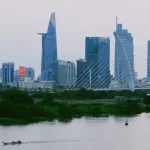
📷 Featured image by Ngân Nguyễn Văn on Unsplash.