On this page
- Tet 2024 and 2025: The Exact Dates and How the Lunar Calendar Works
- How Vietnam Shuts Down During Tet
- The Week Before Tet: The Best Part Nobody Talks About
- What Vietnamese Families Actually Do During Tet
- Travelling Inside Vietnam During Tet: What You Need to Know
- Where to Be (and Where Not to Be) for Tet
- 2026 Budget Reality: What Tet Costs
- Frequently Asked Questions
Tet 2024 and 2025: The Exact Dates and How the Lunar Calendar Works
If you’re planning a trip to Vietnam and Tet falls anywhere near your travel window, you need to understand what you’re walking into. Tet is not a public holiday in the Western sense — it is the single most important cultural event in the Vietnamese year, and it reshapes the entire country for up to two weeks. Getting the dates wrong, or underestimating the disruption, is one of the most common mistakes foreign visitors make.
Tet Nguyen Dan — usually shortened to Tet — is the Vietnamese Lunar New Year. Because it follows the lunisolar Calendar rather than the Gregorian calendar, the date shifts every year. Here are the confirmed dates:
- Tet 2024: Saturday, 10 February 2024 — Year of the Dragon
- Tet 2025: Wednesday, 29 January 2025 — Year of the Snake
The official public holiday period runs for around seven days in each case, but most Vietnamese people take longer. In practical terms, the country begins winding down roughly a week before Tet, and does not return to full speed until about ten days after.
The lunar calendar works by tracking cycles of the moon. Each lunar month begins on a new moon and lasts 29 or 30 days. Because this doesn’t align perfectly with the solar year, a leap month is added every few years — which is why Tet can fall anywhere between late January and mid-February. The Vietnamese calendar also follows a 12-year cycle of animals, which is why 2024 is the Dragon year and 2025 is the Snake year. These animals carry real cultural weight: the Dragon is associated with luck and power, which made 2024 particularly significant for families planning weddings or having children.
How Vietnam Shuts Down During Tet
This is the part most travel guides underplay. During Tet, Vietnam does not merely slow down — large parts of it stop entirely.
Local restaurants, family-run guesthouses, street food stalls, small shops, and local markets close for anywhere from five days to two full weeks. This is because Tet is a family holiday, and the vast majority of Vietnamese workers return to their home provinces. A banh mi vendor who runs a stall in Ho Chi Minh City may have grown up in Quang Ngai, 900 kilometres north — and she will be on a bus home before you’ve had your morning coffee.
What stays open: large hotels, international restaurant chains, tourist-facing businesses in major cities, and some convenience stores. Government offices, banks, post offices, and most local services close for the official holiday period. Hospitals remain operational but with reduced staff.

What this means for you, practically:
- Budget street food becomes very hard to find, especially outside tourist zones
- Guesthouses and smaller hotels may close entirely — always confirm before booking
- ATMs in smaller towns can run out of cash as people withdraw money for holiday spending
- Pharmacies and repair shops may be closed for days at a time
- Tour operators in major cities often keep running, but guides may be limited
The closures are most severe in smaller cities and rural areas. In places like Hanoi’s Old Quarter or Ho Chi Minh City’s District 1, tourist infrastructure keeps ticking — but the authentic local texture of daily life largely disappears.
The Week Before Tet: The Best Part Nobody Talks About
If Tet itself is complicated for visitors, the week leading up to it is genuinely spectacular — and far easier to enjoy as a foreign traveller.
Across Vietnam, flower markets bloom overnight. In Hanoi, the Quang Ba flower market operates through the night in the days before Tet, filled with the heady fragrance of kumquat trees, peach blossoms, and chrysanthemums. Stalls overflow onto pavements and streets. The air smells of flowers and incense simultaneously. Sellers wrap enormous peach branches in coloured paper, and entire streets become corridors of gold and pink.
Streets fill with food vendors selling speciality Tet foods — banh chung (square sticky rice cakes filled with pork and mung bean) in the north, and banh tet (the cylindrical southern equivalent) in the south. Families gather to cook these over open fires, a tradition that can take hours. The smell of wood smoke and simmering glutinous rice is one of the most distinctly Vietnamese things you can experience.
Supermarkets and wet markets are packed with people buying mam (fermented fish paste), dried foods, confectionery, and ceremonial offerings. Families clean their homes top to bottom — sweeping out bad luck before the new year arrives. Red and gold decorations go up everywhere. The energy is anticipatory and genuinely joyful.
If you are visiting Vietnam around Tet, building your itinerary around this pre-holiday window gives you spectacle without the logistical headaches of the holiday itself.

What Vietnamese Families Actually Do During Tet
Understanding the traditions makes the experience far richer, whether you’re watching from the street or invited into someone’s home.
The most important ritual is the family reunion meal on New Year’s Eve — Tat Nien. Extended families gather, often spanning three or four generations, to eat together and honour ancestors. An altar is prepared with food offerings, incense, and flowers. The belief is that the spirits of ancestors return to celebrate with the living during Tet.
On New Year’s Day, the first visitor to enter a home is considered significant — their fortune influences the household’s luck for the entire year. Many families arrange for a person of good character and stable life to be their “first footer.” Foreigners are sometimes invited into this role, which is a genuine honour.
Children and unmarried young adults receive li xi — lucky money in small red envelopes. The amount matters less than the gesture. Adults give these envelopes to children, and younger workers often give them to elderly relatives as a sign of respect.
Fireworks are a major feature of the official New Year’s Eve countdown in cities — in 2025, displays were held at key landmarks in Hanoi, Ho Chi Minh City, and Da Nang. Private fireworks remain banned for civilians, but the municipal displays are significant events.
Throughout the first three days of Tet, visiting relatives and friends is the primary social activity. Pagodas and temples fill with worshippers. Incense smoke hangs thick in the air. People wear new clothes — often in red or other auspicious colours — and greet each other with Chuc Mung Nam Moi (Happy New Year).
Travelling Inside Vietnam During Tet: What You Need to Know
Transport during Tet is one of the most logistically intense periods in the country. Tens of millions of Vietnamese people travel home simultaneously, and the infrastructure strain is real.
Trains, planes, and long-distance buses sell out weeks — sometimes months — in advance. The Hanoi–Ho Chi Minh City train route is particularly difficult to book around Tet. If you need to travel between cities during the holiday window, book the moment tickets open. Vietnam Railways typically releases Tet tickets 30 to 60 days in advance; airlines can open availability up to three months out.

Domestic flight prices spike dramatically. Budget airline fares that normally run 500,000–900,000 VND (roughly USD 20–36) can reach 3,000,000–5,000,000 VND (USD 120–200) or more on peak Tet travel days. If you must fly during this period, book early and be flexible on timing — early morning and late-night flights are often cheaper.
Motorbike and rideshare apps (Grab remains the dominant platform in 2026) function well in cities but driver availability drops as the holiday approaches, since drivers also go home. In smaller towns and rural areas, transport can become genuinely scarce on the first two days of Tet.
Road traffic is chaotic in the days immediately before Tet as long-distance buses and motorcycles fill the highways. If you are self-driving or riding, allow significantly more time than usual and avoid highway travel on the two days immediately before the holiday.
Where to Be (and Where Not to Be) for Tet
The experience of Tet varies enormously by location. Understanding this saves you from either missing the magic entirely or being stranded in an empty town with nowhere to eat.
Hanoi offers some of the most atmospheric Tet celebrations in the country. Hoan Kiem Lake is the centrepiece of the New Year’s Eve countdown. The Old Quarter decorations are extraordinary, and the pre-Tet flower market scene is unmatched. Tourist services hold up reasonably well. The downside: it gets cold in late January and early February (12–18°C), which surprises visitors expecting tropical warmth.
Ho Chi Minh City is warmer and more globally connected. The city keeps moving during Tet more than most places — its population is more transient, and many residents do not travel home. The Ben Thanh area and Nguyen Hue walking street are focal points for celebrations. That said, large sections of the city still go quiet.
Hoi An is a popular Tet destination for foreigners because the Lantern Festival atmosphere intensifies around the New Year period. The town looks extraordinary with lanterns reflected in the Thu Bon River. However, accommodation books out fast and prices are at their yearly peak.
Rural areas and small towns: If you have a genuine invitation from a Vietnamese family to celebrate Tet in their village, take it without hesitation. This is a rare experience that most visitors never access. But don’t travel to a rural area speculatively during Tet — you may find yourself without food options, closed guesthouses, and limited transport for days.

Places to avoid as a tourist hub during Tet: provincial capitals with limited tourist infrastructure, island destinations with reduced ferry schedules, and any area where your accommodation hasn’t confirmed it will remain open.
2026 Budget Reality: What Tet Costs
Tet is the most expensive time of year to visit Vietnam. Understanding the price landscape helps you plan without shock.
Accommodation
- Budget: Hostel dorms in Hanoi or Ho Chi Minh City run 250,000–400,000 VND/night (USD 10–16) during normal periods. Around Tet, expect 400,000–700,000 VND (USD 16–28) if you can find availability at all.
- Mid-range: Standard hotel rooms that normally cost 700,000–1,200,000 VND (USD 28–48) rise to 1,200,000–2,000,000 VND (USD 48–80) during the holiday window.
- Comfortable: Four-star properties in major cities range from 2,500,000–5,000,000 VND/night (USD 100–200) during Tet peak.
Food
- Street food that survives the closures — typically vendors catering to tourists — charges 20–40% above normal prices during Tet week.
- Hotel restaurants and international dining spots maintain or slightly increase their standard pricing.
- Budget on roughly 300,000–500,000 VND/day (USD 12–20) for food if eating at mid-range tourist spots, compared to 100,000–200,000 VND (USD 4–8) during normal travel periods.
Transport
- Domestic flights: 2–4 times normal fares on peak days
- Grab rides in cities: 10–20% surge pricing common on New Year’s Eve
- Train tickets: same price as normal if booked early; no availability if left late
The honest advice: if budget is a priority, Tet is not the cheapest window to visit Vietnam. But if experience is the goal, the extra cost can be completely worth it — particularly for the pre-holiday atmosphere.
Frequently Asked Questions
When exactly is Tet in 2025?
Tet 2025 falls on Wednesday, 29 January 2025, marking the start of the Year of the Snake. The official public holiday runs for approximately seven days, but the effective disruption to normal services — transport, restaurants, local shops — extends for roughly two weeks around that date.
Is it a good or bad idea to visit Vietnam during Tet?
It depends entirely on what you want. The pre-Tet period (five to seven days before the holiday) is genuinely spectacular — flower markets, street food, and festive energy. Tet itself is quieter and more logistically challenging. With good planning and realistic expectations, it can be a remarkable trip. Without preparation, it frustrates most visitors.
Do Vietnamese people mind tourists visiting during Tet?
Generally, yes — Vietnamese people are welcoming during Tet, and many enjoy sharing the holiday with curious foreigners. Being greeted with Chuc Mung Nam Moi (Happy New Year) in Vietnamese goes a long way. Avoid loud, disruptive behaviour near temples or family gatherings, and dress modestly if entering pagodas.

Will restaurants and attractions be closed during Tet?
Many local restaurants and small businesses close for five to fourteen days. Major tourist attractions — temples, museums, national parks — typically stay open, though hours may be reduced. In tourist-heavy areas like Hoi An’s Ancient Town or Hanoi’s Old Quarter, some restaurants and cafes remain open specifically to serve visitors.
How far in advance should I book for a Tet trip to Vietnam?
At minimum, two to three months before your travel dates for flights and accommodation. For train travel between major cities, book the moment tickets become available — typically 30 to 60 days out for Vietnam Railways. Waiting until four to six weeks before Tet almost guarantees you’ll find limited options at high prices.
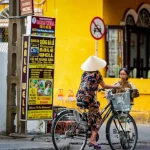
📷 Featured image by Ao Dai Hoi An for rent and sale Ao Dai photography in Hoi An on Unsplash.