On this page
- Why Etiquette Still Matters in Vietnam in 2026
- Greetings and Physical Contact
- Temple and Pagoda Behaviour
- Dining Table Customs
- Shoes, Thresholds, and Sacred Spaces
- Gift-Giving and the Art of Refusal
- Sensitive Topics and Conversational Boundaries
- 2026 Budget Reality: Tipping Culture and Financial Etiquette
- Frequently Asked Questions
Why Etiquette Still Matters in Vietnam in 2026
Vietnam welcomed over 18 million international visitors in 2025, and the number keeps climbing. With that growth comes a familiar friction: travellers who mean well but accidentally offend, or who follow outdated advice from forums written a decade ago. Vietnamese society has modernised rapidly — Ho Chi Minh City’s metro now runs to the airport, Hanoi’s ring roads have changed how the city breathes — but the cultural values underneath have not shifted nearly as much as the skyline has. Respect for elders, careful management of face (thể diện), and communal harmony still shape daily life in ways that catch foreign visitors off guard. This guide gives you specific, usable guidance for 2026 — not vague reminders to “be respectful.”
Greetings and Physical Contact
The standard Vietnamese greeting is xin chào (sin chow), often paired with a slight nod or a small bow of the head. This nod is not deep — a 10-to-15-degree dip is enough. It communicates acknowledgement and basic respect. Younger people, especially in cities, have picked up the handshake from years of international business contact, so you will encounter handshakes frequently in urban professional settings. Accept them naturally.
What surprises many Western visitors is what does not happen. Vietnamese people do not hug strangers or recent acquaintances. They do not kiss cheeks in greeting the way some European cultures do. Initiating a hug with someone you have just met — even warmly — can create an uncomfortable moment they will not know how to refuse politely. Keep physical contact minimal until the other person signals otherwise.
The head carries significant cultural weight in Vietnam. It is considered the most sacred part of the body. Patting a child on the head, which feels affectionate in many Western cultures, is actually disrespectful here. Avoid it entirely, including with children you find charming at markets or guesthouses.
When handing anything to an older person — a business card, a document, money, a gift — use both hands or your right hand supported at the wrist by your left. This is the formal gesture of respect. Tossing something one-handed to an elder reads as dismissive, even if it is entirely unintentional.
Temple and Pagoda Behaviour
Vietnam has thousands of active Buddhist pagodas, Taoist temples, and Confucian communal houses (đình). These are not museums. People pray in them daily, burn incense, and leave offerings. The smell of sandalwood smoke hanging heavy in the air, the low murmur of sutras from an inner chamber — these are signs that you have entered a working spiritual space, not a heritage attraction.
Dress modestly. Both men and women should cover their shoulders and knees before entering. Many major temples in tourist areas now keep sarongs or cloth wraps at the entrance for visitors who arrive underdressed — accept these graciously rather than treating them as an inconvenience. In 2026, several popular pagodas near Hue and Ninh Binh have introduced stricter dress-check gates, so it is simpler to dress appropriately before you arrive.
Photography rules vary by temple. As a baseline: never photograph someone in the middle of prayer without permission. Never use flash near altars or sacred statues. In many inner sanctuaries, photography is prohibited entirely — look for signs, and if in doubt, put the camera away. A photograph is not worth the offence.
When entering the main hall, step over the threshold rather than on it. This is a consistent rule across Vietnamese spiritual spaces — the threshold is considered sacred, and stepping on it disrespects the space. Once inside, do not point your feet toward the altar. Sit with your legs folded to the side or kneel rather than stretching your legs forward.

If incense is available and you wish to participate, hold the sticks with both hands, bow three times toward the altar, and place them upright in the sand-filled urn. You do not need to know the prayers. The gesture of respectful participation is understood and appreciated.
Dining Table Customs
A Vietnamese meal is a communal event. Dishes arrive in the centre of the table and everyone shares. The eldest person at the table typically sits in the seat facing the door — this is the position of honour. Wait for them to be seated and, in more traditional households, wait for them to begin eating before you do.
Pouring drinks is a social act. You do not pour only for yourself. Pour for the people around you first, particularly elders. If someone’s glass is low, refill it. This small habit signals that you are paying attention to others, which is highly valued.
Chopstick rules matter more than most guides admit. The two violations that genuinely offend are: sticking chopsticks upright in a bowl of rice (this mirrors incense offerings at funerals and is deeply inauspicious), and passing food chopstick-to-chopstick (this mirrors how bones are passed at cremation ceremonies). Both are common mistakes foreigners make without knowing. Simply place chopsticks across the rim of your bowl when not in use.
If a host offers you food — especially in a home setting — it is polite to accept at least a small portion even if you are not hungry. Refusing entirely can feel like a rejection of their hospitality. If you have a genuine dietary restriction, explain it once, clearly and without drama. Vietnamese hosts are practical and will accommodate you, but a long explanation of your wellness philosophy at a family dinner table will land awkwardly.
Finishing everything on your plate is generally positive — it means you enjoyed the food. But in more formal or traditional settings, leaving a small amount signals that you were well-fed and the host provided abundantly. In casual settings and street dining, this rule is relaxed entirely.
Shoes, Thresholds, and Sacred Spaces
Remove your shoes before entering Vietnamese homes. This is non-negotiable and consistent across the country regardless of how modern or casual the household appears. You will typically see a cluster of shoes at the door — that is your signal. Wearing outdoor shoes inside a home tracks in the street, which is considered unclean, and shows a fundamental lack of awareness about Vietnamese domestic space.
The same rule applies to many temples, traditional guesthouses, some tailors’ and small shops, and any space where you see shoes collected at the entrance. When in doubt, glance at what locals are doing before you step inside.
Some businesses — particularly boutique hotels, high-end spas, and traditional nhà rường (heritage wooden houses) in Hoi An and Hue — provide slippers at the door. Wear them rather than padding around in socks, which can seem half-hearted to your host.

Socks with visible holes are mildly embarrassing in this context, since you will be removing your shoes more often than you might expect. This is a small, practical detail that regular visitors to Vietnam learn quickly.
Gift-Giving and the Art of Refusal
Bringing a gift when visiting a Vietnamese home is appreciated. Fruit, good-quality tea, sweets, or items from your home country all work well. Avoid clocks (associated with funerals and counting down to death), handkerchiefs (associated with grief), and anything in sets of four (the number four sounds like the word for death in Vietnamese).
When you present a gift, use both hands. The recipient will almost certainly decline it — once, twice, possibly three times. This is not genuine refusal. It is politeness, a way of showing they are not greedy or grasping. Gently insist, and they will accept. If you accept the first refusal and put the gift away, you have misread the social script entirely and may cause genuine confusion.
Gifts in Vietnam are typically not opened in front of the giver. The recipient will set the gift aside to open later. Do not push them to open it immediately — this is considered impolite, as though you are demanding praise for your choice.
In 2026, gifting etiquette among younger urban Vietnamese has relaxed in many ways — friends may tear into a gift straight away among peers. But in any setting involving elders or formal hospitality, the traditional script still applies.
Sensitive Topics and Conversational Boundaries
Vietnamese people are often warm and curious about foreigners. Conversations about family, food, travel, and daily life start easily. Questions about your age, marital status, and salary are considered friendly small talk rather than intrusive — the same information Vietnamese people share freely among themselves. Answer these lightly if you are asked; they are not probing for personal data, they are placing you in their social map.

What to be careful around: The American War (called the Chiến tranh Việt Nam in Vietnam, or more accurately the Kháng chiến chống Mỹ — the Resistance War Against America) is a complex subject. Most Vietnamese people do not want to relitigate it with every foreign visitor. If the topic arises, listen more than you speak, and do not offer opinions about who was right or wrong. The war ended over fifty years ago, but its geography — Agent Orange legacy areas, unexploded ordnance zones — is still physically present in parts of the country.
Avoid criticising the Vietnamese government in conversation with people you do not know well. This is not about what is right or wrong — it is about the practical reality that Vietnamese people are cautious about such conversations in public spaces, and putting someone in that position is unfair to them.
Comparing Vietnam negatively to other Southeast Asian countries — “Thailand does this better” or “Cambodia is cheaper” — is a reliable way to end a warm conversation. It is also just bad manners. National pride is genuine and strong here.
2026 Budget Reality: Tipping Culture and Financial Etiquette
Vietnam does not have a deep-rooted tipping culture, but it has shifted noticeably over the last few years as international tourism has expanded. Here is where things stand in 2026:
- Restaurants (local, budget): Tipping is not expected at phở shops, bún bò stalls, or family-run street spots. Leaving small change is fine but optional. 0–10,000 VND (0–$0.40 USD).
- Restaurants (mid-range, tourist-oriented): A tip of 20,000–50,000 VND ($0.80–$2 USD) per person is appreciated. Some add a 5–10% service charge automatically — check your bill before adding more.
- Upscale restaurants and hotels: A 10% tip on the service total is appropriate where no service charge applies. 100,000–200,000 VND ($4–$8 USD) per table is reasonable at comfortable restaurants.
- Taxi and ride-hailing (Grab, Be, Xanh SM): Rounding up to the nearest 10,000 VND is common. In-app tipping on Grab and Be has become more normal since 2024, but it remains optional.
- Private tour guides: 100,000–200,000 VND ($4–$8 USD) per day for half-day tours; 200,000–300,000 VND ($8–$12 USD) for full-day guides is the standard expectation in 2026, particularly on organised tours.
- Spa and massage: 50,000–100,000 VND ($2–$4 USD) is standard at mid-range spas. Higher-end spas often include service charges already.

Handing money directly to someone at a formal business should always be done discreetly — folded or in an envelope if possible. Slapping a wad of notes on a counter in front of other customers is considered crass regardless of the amount. In temples, use the donation boxes rather than pressing money directly into a monk’s hands.
Frequently Asked Questions
Is it rude to say no when offered food in Vietnam?
In a home or at a hosted dinner, declining food entirely can feel like rejecting the host’s hospitality. Accept at least a small portion even if you are not hungry. If you have a genuine dietary restriction, explain it once, simply. At restaurants or street stalls, declining is perfectly fine and requires no ceremony.
Should I bargain at markets in Vietnam?
Bargaining is expected at traditional markets and street stalls where prices are not displayed. It should be friendly and good-humoured, not aggressive. A common starting point is 50–60% of the initial asking price, then meeting somewhere in the middle. Never make an offer and then walk away once it is accepted — that is genuinely offensive.

What should I wear when visiting temples in Vietnam?
Cover your shoulders and knees. Loose-fitting, lightweight cotton works well in Vietnam’s heat and is appropriate for most temples. Avoid sleeveless tops and short shorts or skirts. Many major temples provide wraps at the entrance, but arriving dressed appropriately is more respectful than relying on borrowed cloth.
Is it acceptable to show affection in public in Vietnam?
Holding hands is fine and very common among Vietnamese couples. Kissing and embracing in public is considered inappropriate, especially in smaller towns, rural areas, or near temples and communal spaces. In major city centres like Ho Chi Minh City, attitudes are more relaxed among younger people, but restraint in public is always the safer and more respectful choice.
How do Vietnamese people feel about foreigners attempting to speak Vietnamese?
Almost universally positive. Even a poorly pronounced xin chào or cảm ơn (thank you) gets a warm reaction. Vietnamese is a tonal language with six tones, so mistakes are expected and forgiven. The effort signals genuine respect. Attempting a few phrases regularly opens doors that fluent English alone will not.
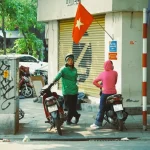
📷 Featured image by Tom Morbey on Unsplash.