On this page
- Phu Yen Province: Vietnam’s Untamed Coastal Paradise
- Cao Bang: Northern Frontier Adventure Beyond Ha Long Bay
- Con Dao Islands: From Prison Colony to Paradise
- Dak Lak Province: Elephant Country and Highland Coffee Culture
- Ha Giang Loop: Extreme Northern Mountains Without the Crowds
- Phu Quoc’s Northern Coast: Beyond the Resort Strip
- Essential Planning: Logistics for Vietnam’s Hidden Gems
- Frequently Asked Questions
💰 Click here to see Vietnam Budget Breakdown
💰 Prices updated: October, 2026. Budget figures are estimates — always verify before travel.
Exchange Rate: $1 USD = ₫25,964.41
Daily Budget (per person)
Shoestring: ₫650,000 – ₫1,550,000 ($25.03 – $59.70)
Mid-range: ₫1,800,000 – ₫3,900,000 ($69.33 – $150.21)
Comfortable: ₫5,200,000 – ₫9,100,000 ($200.27 – $350.48)
Accommodation (per night)
Hostel/guesthouse: ₫120,000 – ₫350,000 ($4.62 – $13.48)
Mid-range hotel: ₫780,000 – ₫1,850,000 ($30.04 – $71.25)
Food (per meal)
Budget meal: ₫60,000.00 ($2.31)
Mid-range meal: ₫250,000.00 ($9.63)
Upscale meal: ₫800,000.00 ($30.81)
Transport
Single metro/bus trip: ₫10,000.00 ($0.39)
Monthly transport pass: ₫300,000.00 ($11.55)
While social media floods with identical shots of Ha Long Bay and Hoi An’s lanterns, Vietnam’s most rewarding destinations remain largely overlooked by international travelers in 2026. These seven hidden gems offer the authentic experiences and untouched landscapes that made you fall in love with the idea of Vietnam in the first place.
Phu Yen Province: Vietnam’s Untamed Coastal Paradise
Phu Yen Province delivers everything travelers seek in coastal Vietnam—dramatic clifftop views, pristine beaches, and fishing village authenticity—without the tour bus crowds. The province gained brief internet fame through the film “Yellow Flowers on the Green Grass,” but most visitors still bypass it for more famous coastal destinations.
Ganh Da Dia, known as the “Giant’s Causeway of Vietnam,” showcases thousands of hexagonal basalt columns stretching into the South China Sea. The morning light transforms these natural sculptures into a photographer’s dream, while local fishermen cast nets from the rocks as their grandfathers did decades ago.
Bai Xep Beach offers 7 kilometers of golden sand backed by coconut palms, with barely a footprint in sight during weekdays. The handful of beachfront homestays serve grilled seafood caught that morning, and the sunset views rival anything in Phu Quoc at a fraction of the cost.
Tuy Hoa, the provincial capital, connects to Ho Chi Minh City via daily Vietnam Airlines flights (1 hour 15 minutes, from 1,800,000 VND / $75) or overnight trains (12 hours, from 450,000 VND / $19 for a hard sleeper). Local xe om drivers charge 50,000-80,000 VND ($2-3) for trips around the city.
Cao Bang: Northern Frontier Adventure Beyond Ha Long Bay
Cao Bang Province shares a border with China and delivers limestone karst scenery that rivals Ha Long Bay, but on land and without the floating hotels. Ban Gioc Falls, Southeast Asia’s largest waterfall, thunders down tiered limestone cliffs while water buffalo graze in the foreground—a scene unchanged for centuries.

The journey through Phong Nha-Ke Bang National Park reveals caves that dwarf their more famous counterparts. Nguom Ngao Cave stretches for 2.5 kilometers underground, with stalactite formations reaching 30 meters high. The cave entrance fee of 30,000 VND ($1.25) includes a local guide who speaks basic English and knows every hidden chamber.
Pac Bo Cave, where Ho Chi Minh lived for several months in 1941, sits in a valley so remote that mobile phone service only arrived in 2025. The surrounding mountains echo with the sounds of rare bird species, and the morning mist creates an almost mystical atmosphere over the Lenin Stream.
Getting to Cao Bang requires commitment: buses from Hanoi take 6-7 hours (180,000-220,000 VND / $7.50-9), while private cars cost 2,500,000-3,000,000 VND ($105-125) for the round trip. The new expressway completed in late 2025 cut travel time by 90 minutes compared to 2024.
Con Dao Islands: From Prison Colony to Paradise
Con Dao transformed from Vietnam’s most feared prison to one of its most pristine archipelagos. These 16 islands, 185 kilometers off the southern coast, offer world-class diving, empty beaches, and a haunting history that few travelers experience firsthand.
The waters around Con Dao support the healthiest coral reefs in southern Vietnam. Dive sites like Cau My Rock feature soft coral gardens at 15-25 meter depths, where you might encounter manta rays, whale sharks, and schools of barracuda. The water visibility regularly exceeds 25 meters—better than most sites in the Philippines.
Dam Trau Beach stretches for 10 kilometers of white sand without a single resort or beach bar. During turtle nesting season (June-September), green sea turtles emerge at night to lay eggs, guided by volunteers from the Con Dao National Park. The experience of watching a 200-kilogram turtle return to the sea feels primordial in the best way.

The contrast with the historical sites creates an unforgettable juxtaposition. Phu Hai Prison, where thousands of political prisoners suffered, now stands as a sobering memorial. Walking through the “tiger cages”—concrete cells barely large enough for one person—in the morning, then snorkeling over pristine reefs in the afternoon, captures Vietnam’s complex layers perfectly.
Vietnam Airlines and Bamboo Airways operate daily flights from Ho Chi Minh City (45 minutes, 2,200,000-3,500,000 VND / $92-146). The high-speed ferry service launched in 2026 offers a cheaper alternative: 6 hours from Vung Tau for 800,000 VND ($33), running three times per week.
Dak Lak Province: Elephant Country and Highland Coffee Culture
Dak Lak Province in the Central Highlands produces some of the world’s finest coffee while maintaining Vietnam’s last significant wild elephant population. The province offers a completely different Vietnam—one of rolling hills, ethnic minorities, and morning mist over coffee plantations.
Yok Don National Park protects 1,155 square kilometers of deciduous forest where Asian elephants still roam wild. Unlike the elephant experiences elsewhere in Southeast Asia, Yok Don focuses on observing wild herds from a respectful distance. Early morning tracking expeditions (starting at 5:30 AM) offer the best chance of sightings, especially near water sources during the dry season.
The aroma of drying coffee beans fills the air around Buon Ma Thuot, Vietnam’s coffee capital. Local farmers still process beans using traditional methods—washing, fermenting, and sun-drying on raised bamboo platforms. Many farms offer overnight stays where you wake to the sound of coffee cherries being hand-picked and can taste coffee so fresh it was growing yesterday.
The ethnic Ede and M’nong communities maintain traditional longhouses built entirely from wood and bamboo. Village visits arranged through local guides (300,000-500,000 VND / $12.50-21 per person) include demonstrations of traditional weaving, bronze casting, and the preparation of ruou can—rice wine drunk through bamboo straws from a communal jar.
Vietnam Airlines flies daily from Ho Chi Minh City to Buon Ma Thuot (1 hour 20 minutes, 1,600,000-2,800,000 VND / $67-117). Buses take 7-8 hours (200,000-300,000 VND / $8.30-12.50) but offer scenic mountain views. The new airport terminal opened in 2025 with expanded international capacity.
Ha Giang Loop: Extreme Northern Mountains Without the Crowds
The Ha Giang Loop delivers the most dramatic mountain scenery in Vietnam, but requires more commitment than the touristy Sapa region. This 350-kilometer circuit through Vietnam’s northernmost province passes through landscapes so remote that some villages only received electricity in the past decade.
The road to Dong Van Karst Plateau Global Geopark winds through valleys carved between limestone peaks that rise straight from rice terraces. During the buckwheat flower season (October-November), entire hillsides bloom white and pink, creating a natural carpet that extends to the horizon. The morning fog often lingers until 10 AM, revealing mountains piece by piece like a slow-motion sunrise.
Ma Pi Leng Pass ranks among the world’s most spectacular mountain roads. The hairpin turns cling to cliff faces 2,000 meters above the Nho Que River, with views that stretch into China. Unlike many famous scenic drives, you’ll often have the road to yourself except for local farmers transporting goods on modified motorbikes.
The Sunday market in Dong Van brings together ethnic Hmong, Tay, and Nung families from remote villages. Vendors sell everything from handwoven textiles to water buffalo cheese, while traditional instruments echo between the limestone peaks. The market operates from dawn until mid-afternoon, with the most activity between 8-11 AM.

Most travelers complete the loop in 3-4 days by motorbike, staying in family-run guesthouses that charge 200,000-400,000 VND ($8.30-17) per night. The route requires confidence on mountain roads—several sections feature steep grades and limited guardrails. Guided motorcycle tours from Hanoi cost 2,500,000-4,000,000 VND ($105-167) for three days.
Phu Quoc’s Northern Coast: Beyond the Resort Strip
While southern Phu Quoc fills with mega-resorts and cable cars, the island’s northern coast remains refreshingly undeveloped. This region offers the tropical island experience that drew travelers to Phu Quoc before it became Vietnam’s answer to Phuket.
Ganh Dau Beach, near the Cambodian border, stretches for 3 kilometers without a single resort. Local fishermen moor colorful boats directly on the sand, and the sunset views across to Cambodia create silhouettes of distant mountains. The beach remains completely empty during weekdays, with only a handful of seafood shacks serving grilled fish caught that morning.
Rach Vem fishing village operates much as it has for generations. Fishermen head out before dawn in basket boats, returning with catches that supply Duong Dong’s markets. The village pier, built entirely from dark hardwood, extends 200 meters into the sea and provides excellent sunrise photography opportunities. The sound of boat engines starting at 4:30 AM signals the beginning of another workday unchanged by tourism.
Pepper farms dot the northern hills, where black peppercorns dry on bamboo mats under the tropical sun. Several farms offer tours that explain the growing and processing methods, followed by tastings of fresh peppercorns that pack incredible heat and flavor. The best farms charge 100,000-150,000 VND ($4-6) for hour-long visits.

Reaching northern Phu Quoc requires a motorbike rental (200,000-300,000 VND / $8.30-12.50 per day) or private taxi. The coastal road improved significantly in 2025 with new asphalt and better signage, making the 45-minute journey from Duong Dong much more pleasant than previous years.
Essential Planning: Logistics for Vietnam’s Hidden Gems
Visiting Vietnam’s underrated destinations requires more planning than the standard tourist trail, but the rewards justify the extra effort. Transportation options improved significantly across all these regions in 2025-2026, making access easier than ever before.
Budget Level (Backpacker): 800,000-1,200,000 VND ($33-50) per day including accommodation (200,000-400,000 VND), meals (150,000-300,000 VND), transportation (300,000-500,000 VND) and activities (150,000-200,000 VND).
Mid-Range Comfort: 1,500,000-2,500,000 VND ($63-105) per day including boutique hotels (600,000-1,000,000 VND), upscale local restaurants (300,000-500,000 VND), private transportation (500,000-800,000 VND) and guided tours (200,000-400,000 VND).
Comfortable Exploration: 3,000,000+ VND ($125+) per day for luxury eco-resorts, top restaurants, private guides and exclusive experiences.
Northern destinations (Cao Bang, Ha Giang) shine during October-March when clear skies reveal mountain views and temperatures stay comfortable for motorcycle tours. Coastal areas (Phu Yen, Con Dao) offer the best conditions from December-April, avoiding the rainy season. Central Highlands (Dak Lak) peak during the coffee harvest season from October-February.
Mobile coverage improved dramatically across remote areas in 2025-2026. Viettel and MobiFone now provide 4G service in most destinations covered here, though speeds may be slower than urban areas. Purchase a local SIM card in major cities before heading to remote regions—data packages cost 200,000-300,000 VND ($8.30-12.50) for 30 days with 50GB.
Frequently Asked Questions
Are these destinations safe for solo travelers? Vietnam maintains excellent safety standards across all regions. Remote areas actually feel safer than cities, with strong community bonds and helpful locals. Basic Vietnamese phrases and a translation app handle most communication needs.

Do I need special permits for border regions like Cao Bang? No special permits required for Vietnamese citizens and most international visitors. Border areas require standard identification (passport), and some sensitive zones near military installations prohibit photography, but these are clearly marked.
What’s the best way to book accommodation in remote areas? Local guesthouses and homestays rarely appear on international booking sites. Arrive during daylight hours and ask locals for recommendations, or contact provincial tourism offices for verified accommodations.
Can I visit these places without speaking Vietnamese? English proficiency varies widely in remote areas, but Vietnamese hospitality overcomes language barriers. Download offline translation apps, learn basic numbers and greetings, and carry a map with your destination written in Vietnamese.
How far in advance should I plan visits to these destinations? Book domestic flights 2-4 weeks ahead for better prices. Remote accommodations work on a walk-in basis, but research transportation connections in advance. Weather-dependent activities like diving or mountain trekking require flexible scheduling.
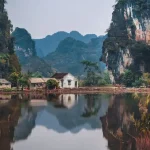
📷 Featured image by Silver Ringvee on Unsplash.